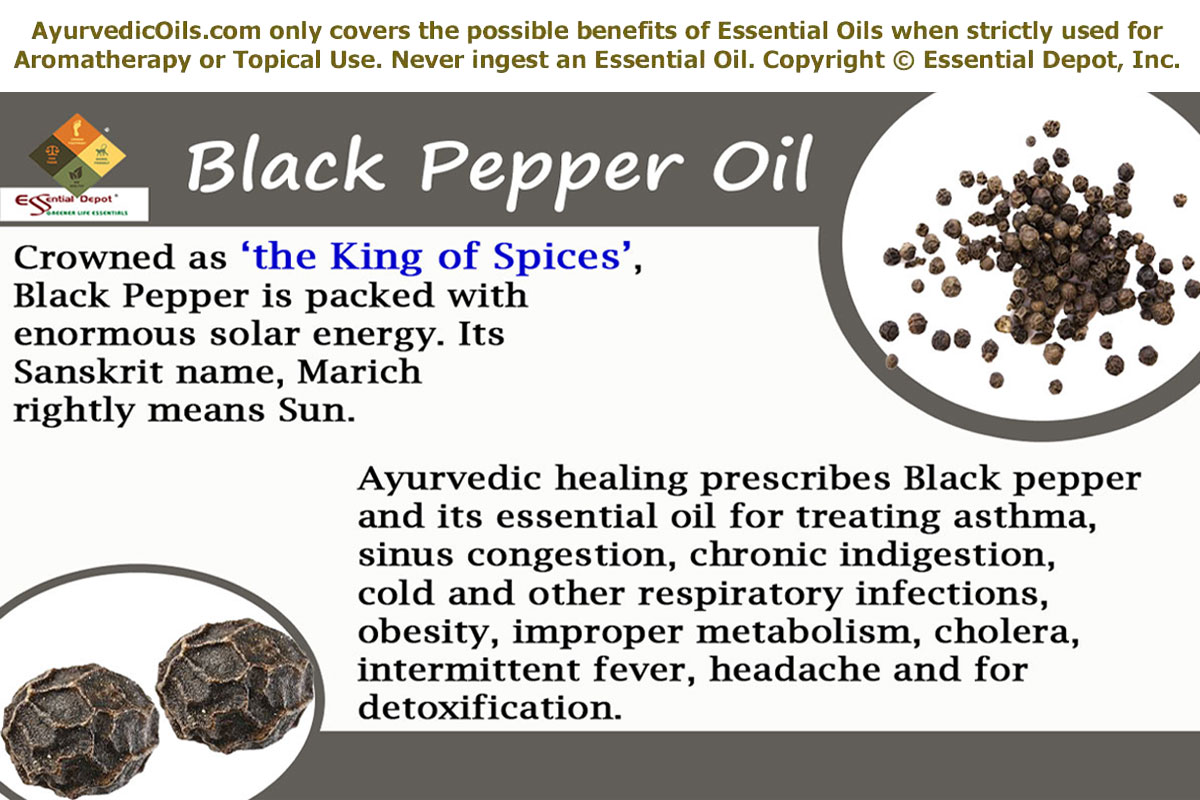
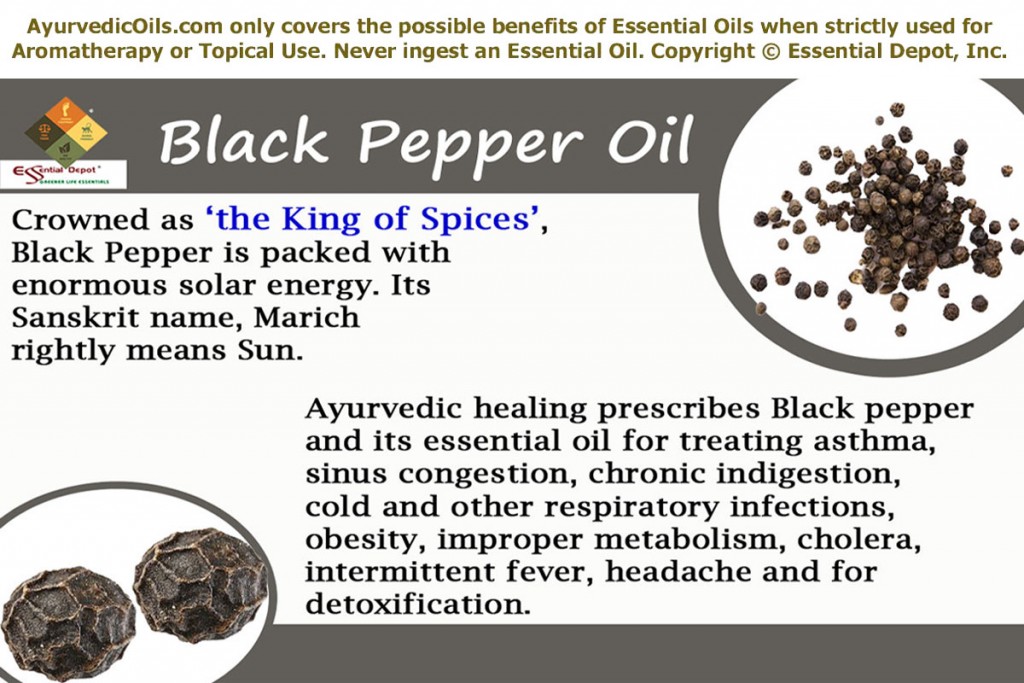
Crowned as ‘the King of Spices’ and wholly packed with large amount of solar energy, Pepper is also called as Marich, which is the Sanskrit name for Sun. These petite seeds with mammoth health benefits have been an admirable natural remedy for treating various illnesses ranging from obesity to cancer.
 Over all its amazing healing values, Black pepper oil has been a vital part of Complementary and Alternative medicinal practices for treating sinusitis, rectal prolapse, cellulites and rheumatism.
Called as Maricha, Vellaja or Kali mirch in Sanskrit and Hindi, Ayurveda recommends Black pepper and its essential oil for treating asthma, sinus congestion, chronic indigestion, cold and other respiratory infections, obesity, improper metabolism, urinary problems, cholera, headache, intermittent fever, toxic remains in the system and for certain other health issues. With the scientific name Piper nigrum, Black pepper is a limb of the plant family Piperaceae.
Purchase Black Pepper Essential Oil – Wholesale – CLICK HERE
Historical uses and importance of Black pepper and its essential oil:
Held high as the most traded spice of the world, Black pepper is indigenous to the southern parts of India especially the Malabar Coast, Kerala. Pepper, originated from the Dravidian word ‘pippali’ meaning long pepper, is the one among the world’s oldest herb and spice dated to 2 BCE, was used for medicinal and culinary purposes.
In the early 1800s, the word ‘pepper’ was used to indicate ‘energy’ or ‘spirit’, after which it was replaced by the word pep. Prized for its value in commodity trading, it was even called as ‘Black gold’.
The legendary Roman book ‘The History of the Decline and Fall of the Roman Empire,’ written by Edward Gibbon quotes pepper as “a favorite ingredient of the most expensive Roman cookery“.
It was used in all most all the predominant cultures of the world. According to certain sources, pepper was said to be used in the treatment of eye problems as salves or in poultices in the 5th century.
Indian saints used pepper for acquiring endurance, especially during fasting and travelling. The traditional Indian medicine is said to have used pepper in treating throat infections, sore throat, congestion, cold and cough.
In general, the most popular uses of black pepper as home remedies accounts to its effectiveness in treating indigestion, gangrene, insomnia, lung diseases, tooth decay, constipation, flu, oral abscesses, hernia, joint pain, diarrhea and certain respiratory problems.
Black pepper is regarded as a priceless natural remedy in Ayurvedic medicine, for its varied uses in treating digestive disorders, respiratory infections, gastrointestinal problems, improper blood circulation, parasitic infections and certain other problems associated with the circulatory system.
The popular Ayurvedic preparation “Trikatu” is a combination of Black pepper, long pepper and ginger is recommended for numerous diseases. It is also used in making Indian chai and is taken for curing headache, cold, sore throat and cough.
The traditional Europeans used pepper as a predominant seasoning in various European cuisines and also as a preservative for perishable goods and meat items.
Herbalists across the world, prescribed Black pepper for treating vertigo, arthritis, rheumatic pain, flatulence, colic, nausea and indigestion. TCM, the traditional Chinese medicine records the use of Black pepper since 2 BCE and recommends its use in healing abdominal spasms, pain, diarrhea and vomiting.
Therapeutic properties and chemical constituents of Black pepper oil:
Black pepper essential oil has various remedial properties and the most important among them are expectorant, febrifuge, antioxidant, diuretic, anti-arthritic, circulatory, analgesic, antibacterial, stimulant, anthelmintic, antiseptic, diaphoretic, antispasmodic, laxative, aphrodisiac, anticatarrhal, rubefacient, anti-inflammatory and carminative.
The major chemical components of Black pepper oil are a-pinene, b-pinene, limonene, myrcene, sabinene, camphene, a-thujone, piperitone, caryophyllene, pinocarveol, p-cymene, b-bisabolene, a-phellandrene, b-farnesene, a-terpinene and linalool. Black pepper is also rich in minerals like iron, potassium, zinc, magnesium, manganese and calcium along with antioxidant vitamins including Vitamin-C and A.
Ayurvedic health benefits of Black Pepper essential oil:
Ayur + Veda simply mean the knowledge of life. It is the oldest medicinal system known to the world with more than 5000 successful years of holistic healing practice. Being the pioneer of all other medicinal systems on earth, Ayurveda focuses on complimenting human beings with absolute health through natural healing methodologies and disciplined lifestyle, leading to prevention of illnesses, aging in the pink and higher life expectancy.
The National Institute of Health precisely articulates this as “The aim of Ayurvedic medicine is to integrate and balance the body, mind, and spirit. This is believed to help prevent illness and promote wellness.”
The earliest Ayurvedic texts namely Sushruta Samhita and Charaka Samhita by the legendary Ayurvedic physicians Sushruta and Charaka educates the world on all kinds of diseases, causes, symptoms, and their treatment methodologies along with various Ayurvedic healing techniques.
Much to our astonishment, these Ayurvedic encyclopedias have talked about intricate surgeries including C-section delivery and plastic surgery even before the dawn of modern medical equipments.
The Ayurvedic philosophy insists that everything on earth including human beings are a part of nature and are made up of the five vital elements of nature namely fire, water, earth, space and air.
Human body is the best representation of these five elements of nature, where earth represents muscles and bones, fire is the vital energy for numerous functions of the body, water stands in the form of blood, air is what we breathe and space/ether is our soul that harmonizes all the functions of the system and keeps us alive.
Ayurveda considers every person as a unique part of nature and states that the handling of diseases should also be unique based upon their individual constitution or prakriti, which comprises of three biological energies or doshas namely vata, pitta and kapha.
Vata is a symbol of air and space and checks the functions of the respiratory and nervous system. Pitta represents fire and water and is responsible body temperature and metabolic functions. Kapha stands for earth and water and is in charge for the sustenance, structure and the movement of fluids in the system.
According to Ayurveda, balance between these three doshas is a symbol of being in harmony with nature and it signifies perfect health, whereas imbalances due to unwholesome food habits, lifestyle changes and climatic conditions denote sickness.
Ayurveda prescribes natural remedies that focus on treating these doshic imbalances with the use of plant essential oils, herbs, and yoga, meditation, Pranayama or breathing practices, simple physical exercises, Ayurvedic routine, prayers, Abhyanga or Ayurvedic massaging and Panchakarma or the detoxification techniques.
The essential oil of Black pepper is believed to reduce kapha dosha and aggravate pitta and vata doshas with its spicy, warming and rich aroma.
The Ayurvedic health benefits of Black pepper essential oil are:
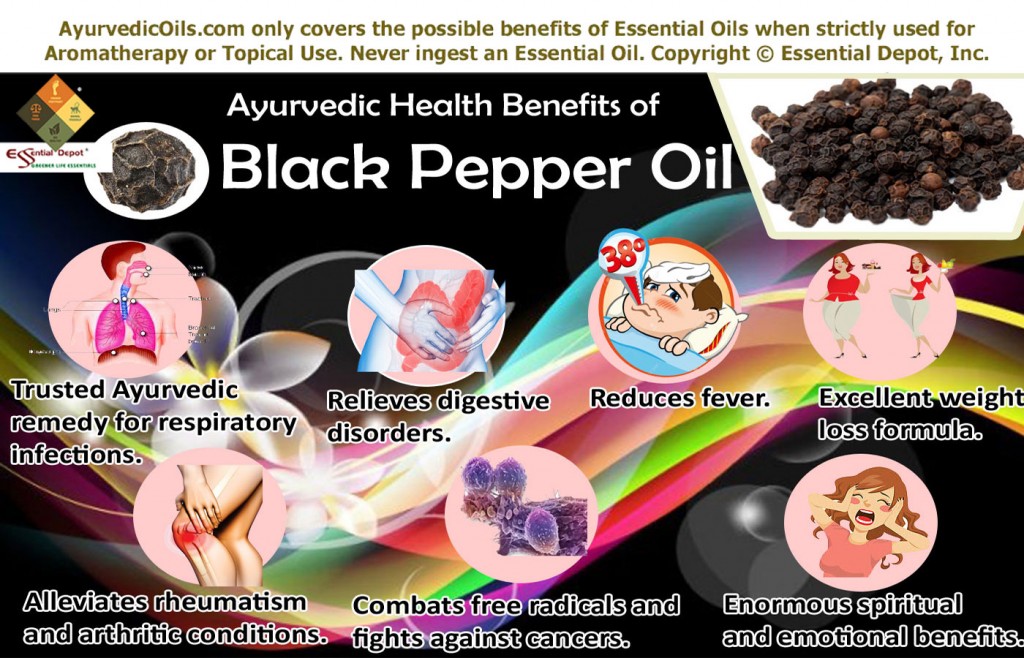 1. Trusted Ayurvedic remedy for respiratory infections:
Black pepper and its essential oil is a vital part of the Ayurvedic remedy especially in the treatment of respiratory problems including congestion, sinusitis, bronchitis and asthma.
The spicy and warming natural aroma and therapeutic properties like expectorant, antiseptic, antimicrobial and decongestant properties of this sovereign spice assists in weakening the phlegm and mucous amassing and controls the increase of micro-organisms that worsen respiratory problems.
According to Ayurveda, imbalance or excess of kapha dosha contributes to the accumulation of fluid deposits including mucous and phlegm, especially in the chest, nasal, respiratory and bronchial passages.
This leads to respiratory problems like whooping cough, sinus congestion, bronchitis and breathing difficulties. With its potent to decrease kapha dosha, Black pepper is a cherished Ayurvedic and Grandmother’s medicine for alleviating respiratory problems.
Warm milk with 1 pinch of Black pepper powder and 1 pinch of Turmeric powder is a popular Ayurvedic remedy practiced in every Indian family for treating nasal congestion, chest congestion, cough, sore throat, headache and other symptoms associated with cold. Adding 1 drop of Black pepper oil in a cup of warm water and gargling with this mixture can help in treating sore throat and throat infections.
Black pepper oil, appropriately 2 drops of it added to steam inhalation followed by a gentle rub of your throat, chest and back with 2 drops of Black pepper oil mixed with your regular vaporizing ointment can help in treating cold, flu, blocked nasal passages, chest congestion, sinusitis and headache. This natural remedy can also assist in improving blood circulation in the lungs.
2. Relieves digestive disorders:
Undoubtedly, Black pepper is one among the best spices for improving digestion, enhancing the flavor of the food varieties and boosting the functions of metabolism. It is for this reason Black pepper powder is often dusted over all kinds of cuisines, be it a relishing vegetable salad or a lip-smacking chicken curry.
With its digestive, antispasmodic, carminative and anti-flatulent properties, Black pepper essential oil acts as a digestive tonic that treats gas, indigestion, colic and other gastro-intestinal disorders.
Massaging your abdomen with 2 drops of Black pepper oil, 2 drops of Ajwain oil, 2 drops of Lemon oil along with 3 ml of sesame oil can help in expelling gas in the stomach and intestines and also aids in preventing the formation of gas. Adding 1 drop of this oil to your handkerchief or a tissue paper and inhaling the aroma of this oil assists in promoting the secretion of digestive enzymes, bile and other gastric juices responsible for trouble-free digestion.
This also aids in enhancing the appetite, treat constipation, intestinal spasms, colic, indigestion, vomiting, nausea, diarrhea, stomach upsets and other gastrointestinal problems.
3. Reduces fever:
Black pepper essential oil has febrifuge properties along with antiseptic and diuretic values that support the system in reducing fever and maintaining the normal body temperature. Massaging your foot soles with 2 drops of Black pepper oil with 1 drop of Cardamom oil mixed with 2 ml of olive oil can help in reducing fever by promoting urine and sweat along with discharging the toxins in the system and combating the growth of micro-organisms that increase fever.
You can also add 1 drop of Black pepper oil to a wet cloth and leave it on your forehead for improved results. It also opens up the sweat pores and reduces the body temperature slowly by granting absolute relief from fever.
4. Alleviates rheumatism and arthritic conditions:
Rheumatism, according to Ayurveda is caused mainly due to the accumulation of toxic substances, water deposits, salt and uric acid especially in the joints, leading to inflammation, redness, soreness, pain and irritation. Black pepper essential oil has the power to discharge excess water deposits, toxic remains known as ama, uric acid and other calcium deposits through urine.
2 drops of this oil mixed with 2 drops of Frankincense oil and 2 ml of coconut oil massaged slowly in circular movements on the affected parts can help in reducing swelling, inflammation, redness, stinging pain and irritation with its diuretic, anti-inflammatory, antioxidant and analgesic properties.
You can also add 2 drops of Black pepper oil along with 2 drops of lemon oil in warm bathing water for relaxing aching muscles and your entire system. This enriching bath along with the soothing massage with Black pepper oil aids in promoting frequent urination through which the harmful toxins and other excess fluid deposits in the system are ejected.
5. Combats free radicals and fights against cancers:
Black pepper tops the list along with Turmeric as a powerful anti-cancer and cancer prevention spice recommended by the American Institute of Cancer Research. Black pepper has excellent antioxidant properties and high amount of Vitamin C that help in fighting the free radicals responsible for the development of cancerous tumors.
The University of Michigan research has established that the mixture of curcumin (Turmeric component) and piperine (Black pepper constituent) enhances curcumin bioavailability and restrains breast stem cell self-renewal.
Piperine have also been tested and proved for its potent anticancer, antioxidant and anti-inflammatory properties in various cellular studies. According to Dr. Joshua Lambert, Associate Professor of Food Science at Penn State University, the combination of piperine along with green tea Polyphenol epigallocatechin-3-gallate (EGCG) augmented the bioavailability of EGCG in studies with human and animal models.
A study on the “In vitro investigation of the potential immunomodulatory and anti-cancer activities of black pepper (Piper nigrum) and cardamom (Elettaria cardamomum) by the Department of Biology and Chemistry, Faculty of Arts and Sciences, American University of Sharjah, UAE states that Black pepper (Piper nigrum) “enhance the cytotoxic activity of the natural killer cells, indicating their potential anti-cancer effects.” In addition to that it concludes the study by stating that “black pepper and cardamom exert immunomodulatory roles and anti-tumor activities, and hence they manifest themselves as natural agents that can promote the maintenance of a healthy immune system.”
This study also states that the anti-inflammatory and anticancer properties of Black pepper helps in lessening the production of nitric oxide by macrophages, which acts as one of the chief inflammatory intermediaries.
Massaging your system with 5 drops of Black pepper oil, 5 drops of Lemon oil, 5 drops of Orange oil, and 5 drops of Cardamom oil along with 10 ml of coconut oil can help in fighting against existing free radicals and prevent the formation of new free radicals.
You can even add 2 drops of Black pepper oil, 2 drops of Cardamom oil and 2 drops of Orange oil in your bath daily for enhancing your immunity against these dangerous free radicals causing oxidative damages to the cellular structure in the body.
Inhaling the warming aroma of Pepper by adding 2 drops of this oil to your burner or diffuser can also support your healing process in a better manner.
6. Excellent weight-loss formula:
Light Miller and Bryan Miller in their book ‘Ayurveda and Aromatherapy’ recommend a natural weight loss formula with Black pepper oil as the key component. Their recipe for the weight loss method says “10 drops black pepper oil, 10 drops lavender oil, 5 drops frankincense oil, 5 drops sandalwood oil in three ounces of mustard, canola, almond oil or a mixture. To be used externally on areas where you wish to lose weight.”
7. Enormous spiritual and emotional benefits:
On the spiritual and psychological side, Black pepper essential oil is the best choice for people who are highly anxious and keep on worrying every time. The presence of the primary chemical constituent piperine in Pepper is a powerful anti-depressant and helps in treating depression and is known to enhance the cognitive ability.
Inhaling the warm, peppery, energizing and musky aroma of Black pepper oil especially during meditation, Pranayama and prayers by adding 2 drops of this oil along with 2 drops of lavender oil in your vaporizer, burner or diffuser can assist in venting out the negative feelings, augmenting self-empowerment, enhancing physical and mental stamina to overcome challenges and accepting one’s own potential besides all the conflicting thoughts.
Other uses:
Ayurveda states that diabetes occurs due to imbalance of kapha dosha and low digestive fire. Black pepper oil is among those natural diabetic remedies with its positive effect in reducing excess kapha dosha and increasing the digestive fire. It also helps in controlling the insulin levels in the system.
It is also recommended for stimulating the endocrine system, treating low blood pressure, hypertension, obesity and certain other cardiovascular problems. Certain modern medicinal systems also suggest the use of Black pepper in the treatment of dandruff, wrinkles, vitiligo, tooth decay, swallowing problems in neurological and post-stroke patients, cigarette de-addiction and postural instability in adults.
Disclaimer:
This article is only for educational purposes and is not proposed to cure, prevent or diagnose any medical condition or substitute any kind of prescribed medications or expert medical advice. We are not health professionals and we contribute to this data only with the concern of circulating the traditional opulence and proven medical miracles of Ayurveda, the world’s oldest and long-established holistic medical system.
Do not ingest essential oils and always ensure that you dilute essential oils before using it for topical application. This is because, pure and organic essential oils are extremely concentrated liquids and may possibly cause allergic or other negative reactions if used on the skin directly. At all times, make sure that you consult your Ayurvedic practitioner/medical professional before picking up the suitable essential oil for your prakriti or unique individual constitution and state of health.
Thought for the day:
Nature patiently waits and we have only to turn back to her to find relief from our suffering – Dr Bach
Suggested Reading:
- Black Pepper Essential Oil (Aromatherapy) by Miriam Kinai
- Black Pepper: Piper nigrum (Medicinal and Aromatic Plants – Industrial Profiles) from CRC Press
- Pepper: A History of the World’s Most Influential Spice by Marjorie Shaffer
- Ayurveda & Aromatherapy: The Earth Essential Guide to Ancient Wisdom and Modern Healing by Dr. Light Miller, Dr. Bryan Miller
- The Black Pepper Supplement: Alternative Medicine for a Healthy Body (Health Collection) by William Wagner M.D.
Reference Links:
- Black Pepper by Wikipedia
- In vitro investigation of the potential immunomodulatory and anti-cancer activities of black pepper (Piper nigrum) and cardamom (Elettaria cardamomum) by Majdalawieh AF, Carr RI, Department of Biology and Chemistry, Faculty of Arts and Sciences, American University of Sharjah, UAE, published in PubMed
- Black Pepper Oil from Ayurveda and Aromatherapy by Light Miller and Bryan Miller
- The spices of Cancer prevention published in the American Institute of Cancer Research’s Update
- Medicinal Uses of Black Pepper by Natural Standard