
Peppermint Essential Oil

Peppermint-bannerAs nature’s immaculate coolant, the world celebrates Peppermint as the most distinguished member of the mint family, Labiatae along with Spearmint, Pennyroyal, Corsican mint, Lemon mint, Watermint, Lavender, Field mint, Apple mint or Chocolate mint, Patchouli, Thyme and Silver mint. Pliny the Elder (23-79 CE), the Roman natural philosopher, scientist and naturalist rightly said “The smell of mint stirs up the mind and appetite to a greedy desire of food.”

Peppermint essential oil is extracted from the aromatic leaves of this plant and is known since ages as an excellent digestive aid with a bundle of other health benefits as well. The encyclopedia of Ayurveda talks about the notable use of Peppermint essential oil as a cooling carminative that enhances digestion and elimination by eradicating blockages and facilitating the flow of energy from within.

Purchase Peppermint Essential Oil – Retail – CLICK HERE

Purchase Peppermint Essential Oil – Wholesale – CLICK HERE

Historical importance of Peppermint and its oil:

Peppermint dates back to 1000 BC when the dried leaves are said to be found in Pyramids. Indigenous to Europe, this herb was first used by the primeval Egyptians as a natural digestive support. Few mythological studies say that the word Peppermint has its origin from Greek myths in the outline of a love triangle involving Hades, his wife Persephone and the nymph Minthe (who was later turned into Peppermint).

Interestingly, Peppermint is a natural hybrid of Spearmint and Watermint. The ancient Romans loved growing Peppermint in their gardens and in the pathways of stepping stones for greeting their guests with its wonderful aroma and for its innumerable medicinal benefits.

It was also used as a form of currency for the kind of esteem and admiration it had in Egypt. Peppermint was used as a tooth polisher by the ancient monks.

The Biblical importance of Peppermint has added even more to its value. Jesus Christ says to the Pharisees,But woe unto you, Pharisees! For ye tithe mint and rue and all manner of herbs, and pass over judgment and the love of God: these ought ye to have done, and not to leave the other undone.” It was also used as a culinary herb in the folklore cooking for seasoning meat and assisting in quicker digestion.

Listed as a natural remedy for treating all kinds of illnesses from venereal disease, cold, sores, headache and digestive problems, Peppermint emerged as a distinguished species in the London Pharmacopoeia in the 16th century.  It was also mentioned in the Icelandic Pharmacopoeias as a much valued herbal remedy in 1240 AD. Peppermint was used as a prized herb by the Native Americans and now the United States is the world’s largest producer of Peppermint essential oil contributing to more than 75% of the total production.

Chemical constituents Gas Chromatography Report of Peppermint essential oil:

According to the Gas chromatography report, Peppermint oil constitutes of 10 major chemical components that contribute to its distinctive fragrance, remedial properties and quality, among which, menthol has an upper hand with about 38.6 percent.

Just click on:

For learning more about the exclusive information of these key constituents of Peppermint oil.

The table below on the Gas Chromatography report talks about the principal chemical constituents and its role in granting the therapeutic properties and other attributes to Peppermint oil.

Pepper-mint-oilTherapeutic properties of Peppermint essential oil:

The therapeutic actions of Peppermint essential oil are carminative, decongestant, immune stimulant, anti-infectious, febrifuge, cardio tonic, nervine, hypertensive, antipruritic, antifungal, sedative, expectorant, antibacterial, mucolytic and anti-carcinogenic.

Ayurvedic health benefits of Peppermint essential oil:

Known as Pudina in Sanskrit, Peppermint is a popular culinary herb used for its minty, fresh and enriching aroma for enhancing taste and adding extra flavor to the lip-smacking dishes. Ayurvedic remedies wholly depend on Mother Nature trusting that every single thing on the earth is an incredible part of nature including human beings.

The strong principles of Ayurveda establish that every individual is made up of three vital energy elements known as doshas (vata-air, pitta-fire and kapha-water), which determine the personality, character, behavior and health conditions of a person. A person is said to be healthy when there is perfect balance between all the three doshas and dosha imbalances cause illness. Peppermint and its essential oil in Ayurveda is said to calm all the three doshas.

Peppermint according to Ayurveda has cooling and heating energy (virya), sweet and pungent taste (rasa), dry, penetrating and light quality (guna), benefits the nerve, blood and plasma tissues (dhatu), with a post-digestive effect (vipaka), Peppermint stimulates the circulatory, nervous, digestive and respiratory channels (srotas).

Let’s have a look at the major Ayurvedic health benefits of Peppermint essential oil:Pepermint-broucher1. Keeps away from harmful bacteria and fungi:

Peppermint is a powerful antibacterial oil mainly because of the presence of menthol that aids in fighting against harmful bacteria like salmonella, e.coli and staph.

A 2010 study on ‘Protective effects of bioactive phytochemicals from Mentha piperita with multiple health potentials’ proved that Peppermint oil has effective antimicrobial and antioxidant effect that fights against harmful microbes and supplemented for nutritional benefits and food preservation. Bacterial infections are responsible for wounds becoming septic and other skin problems like acne.

The Tehran University of Medical Sciences in Iran proved that the menthol component in Peppermint oil is defiant to fungus including candida. The State University of Brazil also established that Peppermint essential oil varieties have anti-candida effects. For all these reasons Peppermint oil acts as a natural remedy for treating fungal infections like athlete’s foot, ringworm, jock itch and other yeast infections.

Applying 2 drops of Peppermint essential oil blended with gentle carrier oils like coconut oil aids in treating bacterial and fungal infections. You can also add 2 drops of this oil in warm foot bath or in bathing water for fighting against such detrimental microbes.

2. Enlivens the mind:

The invigorating, refreshing, cooling and reassuring aroma of Peppermint essential oil boosts mental power.  Inhaling the aroma of this oil grants a complete stream of freshness to fight the challenges of a rising day.

Adding 2 to 3 drops of drops of Peppermint oil in your air freshener, diffuser or in your handkerchief can grant you immense energy and confidence throughout the day. This therapy employed in your study room can help improve your memory skills and concentration power.

3 to 4 drops of Peppermint oil blended with Sesame oil can act as an efficacious massage oil and as a bathing oil for enhancing your mental strength, treating stress, reducing fatigue and anxiety. It also helps in treating anger, mental strain, confusion, nervousness, palpitations, vertigo and depression.

3. Alleviates tension headache better than the other alternative therapies:

Peppermint essential oil is also an effectual natural remedy for treating tension headache. A clinical trial on ‘Effectiveness of Oleum menthae piperitae and paracetamol in therapy of headache of the tension type’ witnessed “Peppermint oil thus proves to be a well-tolerated and cost-effective alternative to usual therapies for alleviating tension-type headache.” This study also proved that there was not much significant difference in efficacy between acetaminophen and Peppermint oil and there are no reported adverse effects as well.

4. Clears all kinds of stagnation:

Peppermint essential oil is a proven stimulant and tonic especially to the brain, pancreas and heart. It is known for clearing away all kinds of stagnations including physical and mental. Peppermint oil clears stagnation in the blood, lymph, stomach and gallbladder. It also breaks emotional blockages.

The expectorant and decongestant properties of this oil help in open the blocked sinus passages and aid in clearing mucus deposits from the respiratory tract by adding 2 drops of this oil in steam inhalation.

The diaphoretic quality of Peppermint oil aids in reducing the body temperature in the early stages of fever by releasing the heat of the body through sweat. Applying two drops of Peppermint oil blended with coconut oil on your foot helps in quicker recovery from fever. This blend can also be rubbed on the chest, back and neck for treating congestion, cough and blocked nose.

5. Stimulates the digestive system:

The essential oil of Peppermint and the herb itself are known to the world as a promising digestive remedy. Numerous research studies have proved that Peppermint oil is effective in relaxing gastrointestinal smooth muscle, more or less due the antagonistic effect on calcium channels in the gut.

The American Family Physician Forum states that Peppermint oil is effective in treating irritable bowel syndrome symptoms, non-ulcer dyspepsia, tension headache and lessening spasm at the time of gastrointestinal procedures.

Peppermint oil along with the combination of caraway oil has been proved in reducing the symptoms of non-ulcer dyspepsia like bloating, fullness and gastro-intestinal spasm. Gently rub 3 drops of Peppermint essential oil with Sesame oil on the stomach and abdomen to help relieve indigestion, nausea, diarrhea, flatulence, bloating, constipation and pain.

6. Absolute care for hair and skin:

The skin-friendly attributes of Peppermint oil aids in treating eczema, lesions, acne, insect bites, rashes, allergies, irritation and itchiness. Gently massaging your skin with 2 drops of Peppermint oil blended with sweet almond oil helps in nourishing and hydrating dry, dull and lifeless skin. You can also add 2 to 3 drops of oil in your daily lotions and creams and apply it on the affected area.

Dandruff, dry itchy scalp and lice are the major problems associated with hair. Peppermint oil has stimulating and cooling effects. When added to sesame oil and massaged on the scalp helps improve blood circulation, enrich the scalp, conditions your hair and improves hair growth. Adding 3 to 4 drops of Peppermint oil to your shampoo or hair conditioner can add shine to your hair and make it look smooth and silky.

Other health benefits:

Few believe that adding 1 drop of Peppermint oil besides your pillow can bring dreams that reflect your future. Peppermint essential oil when used in massage, added to diffuser or diluted in bath can help relieve menstrual cramps, muscular pain, urinary infections, belching, nerve pain, uterine spasms and much more. The presence of menthol makes Peppermint, a much valued oil in making toothpastes, mouthwashes, cough syrups, ointments, shampoos and soaps, vaporizing rubs etc.

Disclaimer: Never use essential oils internally or apply directly on skin as essential oils are highly concentrated liquids. Always remember using essential oils blended with carrier oils or diluted in bath or in diffusers. Speak with your Ayurvedic Practitioner before using essential oils for your specific body type and your unique state of health.

The MSDS (Material Safety Data Sheet) of Peppermint oil is readily available for your enhanced safety and better usage.

Gas Chromatography Report of Peppermint essential oil.

Thought for the day:

The world is like a little marsh filled with mint and white hawthorn.
-Mary MacLane

Suggested Reading:

  1. HEALING POWERS OF PEPPERMINT OIL (The Aromatherapy Professional: Healing with Essential Oils) by KG Stiles
  2. How to Use Peppermint Essential Oil (Aromatherapy) by Miriam Kinai
  3. Digestive Wellness: Strengthen the Immune System and Prevent Disease Through Healthy Digestion, Fourth Edition by Elizabeth Lipski
  4. Integrative Gastroenterology (Weil Integrative Medicine Library) by Gerard Mullin

Reference Links:

  1. Peppermint History by Indepthinfo on Peppermint
  2. Peppermint Oil by American Family Physician
  3. Protective effects of bioactive phytochemicals from Mentha piperita with multiple health potentials by Shahed University, Tehran published in PubMed
  4. Effectiveness of Oleum menthae piperitae and paracetamol in therapy of headache of the tension type, published in PubMed
Heeng Oil (Asafoetida)

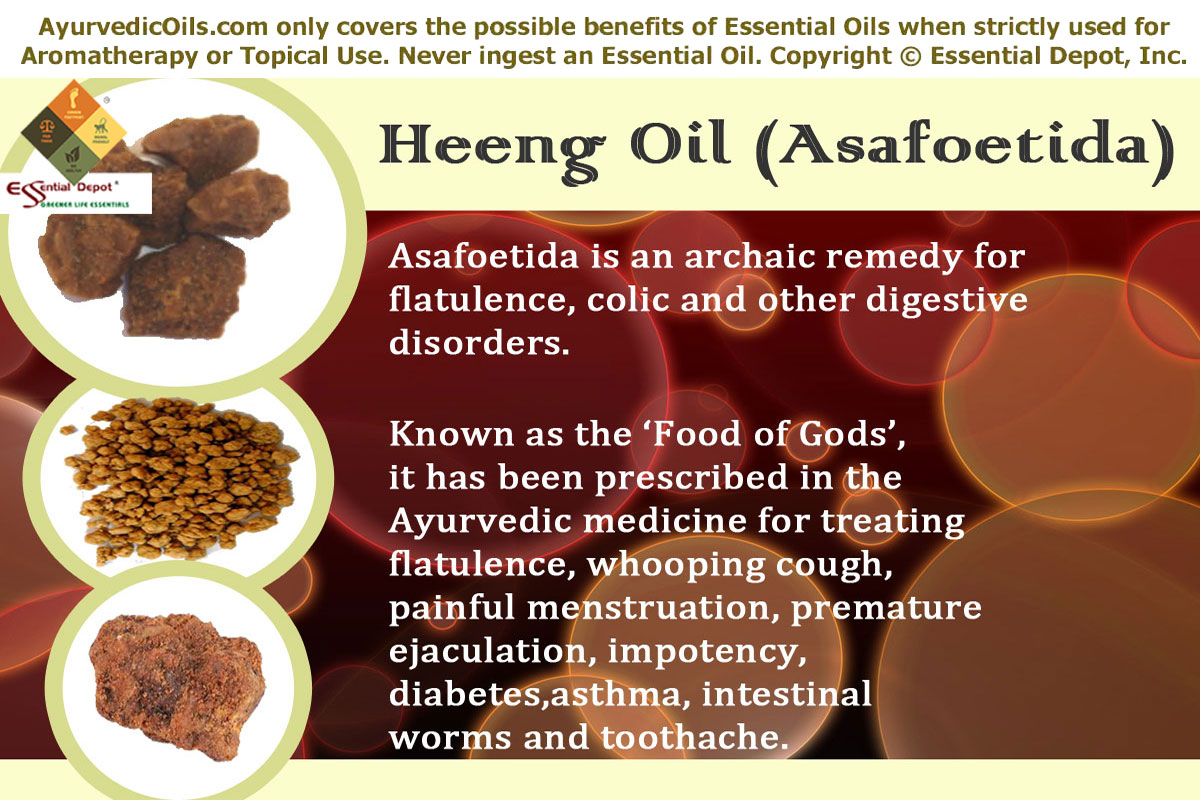
Heeng-bannerAsafoetida is seen as an archaic remedy for flatulence, colic and other digestive disorders but the truth is that this ‘Food of Gods’ is still boasting its potent of treating various disorders from toothache to impotency for more than 5,000 years, where it’s use has been documented in Ashtanga Hridaya, which is one of the ancient text of the world’s oldest healing science known as Ayurveda.

Highly carped for its pungent aroma, Asafoetida has never failed in adding that extra spice to numerous traditional dishes in various countries including India, Europe, North Africa and the United States.

Known as Rāmaha, Badhika and Sahasravedhi in Sanskrit, Heeng and its essential oil has been prescribed in the Ayurvedic medicine for treating flatulence, whooping cough, painful menstruation, premature ejaculation, impotency, diabetes, asthma, intestinal worms and toothache.

Purchase Heeng Oil (Asafoetida) – Wholesale – CLICK HERE

Historical importance of Heeng (Asafoetida):

Asafoetida is native to Pakistan, Iran and Afghanistan. Botanically known as Ferula assa-foetida, it is a member of the Apiaceae plant family and the commercial part used is the oleo-gum resin extracted from the thickened roots and rhizomes. It is also known by other famous names like hing, narthex, heeng, food of Gods, devil’s dung, haltheeth, giant fennel, ting and stinking gum.

Ayurveda quotes “Asafoetida is a grounding herb that can therefore balance an overactive, over emotional, turbulent system“. It was one among the common herbs prescribed for the treatment of hysteria. It was used in 1918 to combat the Spanish influenza pandemic. It was also used as a topical remedy for relieving abdominal injuries.

Heeng is a popular spice all over the world and is used as a digestive aid, flavoring agent and as a condiment in food varieties and in pickles. It is used in daily food preparations in India especially by the followers of Vaishnavism, Jainism and by the merchant caste. Asafoetida was the most prevalent folk remedy for treating flatulence, colic and cold in children and as a contraceptive medicine.

The Arabian pharmacists and scientists like Avicenna, Fakhr al-Din al-Razi and Ibn al-Baitar have talked about the positive effects of Asafoetida on digestive system and the respiratory system. It is used in magic spells in the African-American Hoodoo tradition for its power to protect as well as to curse.

Asafoetida is also used in the Jamaican culture for protecting babies from evil spirits. The Jewish literatures like Mishneh Torah and Mishnah have also talked about this spice.

Chemical constituents and therapeutic properties of Heeng oil:

The remedial properties of Heeng essential oil are nervine, carminative, aphrodisiac, vermifuge, abortifacient, antispasmodic, stimulant, anti-flatulent, antimicrobial, analgesic, antiseptic, anti-epileptic, fertility enhancer, contraceptive, anthelmintic, expectorant, bronchodilator and emmenagogue. The major chemical constituents are phellandrenes, α-pinene, hendecyl-sulphonyl acetic acid, ferulic acid and ethers of sesquiterpenes with coumarines like farnesi feroles.

Ayurvedic health benefits of Heeng (Asafoetida) oil:

Asafoetida is a promising Ayurvedic remedy for treating digestive and respiratory disorders for thousands of years. Known as the oldest of all the healing systems on earth, Ayurveda is the mother of all medicinal practices in the world having its roots deeply vested with India, the world’s oldest historical tradition.

Ayurveda is considered as the only healing methodology that considers human body as a temple where the real soul dwells in. It also states that Mother Nature is made up of five vital elements namely fire, water, earth, air and ether. Being a part of Nature, human beings are also made up of these five fundamental elements that pair together and form the biological energies called as doshas.

Just like an individual’s fingerprints, each one of us on earth has a unique individual constitution that comprises of these three doshas namely vata, pitta and kapha. Vata is a representation of air and space and is responsible for respiration, nervous functions, circulation, excretion and creativity.

Pitta stands for fire and water and is accountable for digestion, absorption, metabolism and thinking capacity. Kapha represents water and earth and is in charge for structure, movement of fluids, sustenance and love.

Every individual has a dominance of any one of these doshas and it determines their characteristics, temperament and behavioral attributes. Balance between these doshas indicates health and imbalance causes illnesses. Ayurvedic remedies are prescribed in a such a manner to set right these doshic imbalances.

Heeng and its essential oil in Ayurveda is said to increase Pitta energy and balance vata and kapha dosha with its pungent taste and enormous healing properties. In the Ayurvedic text Ashtanga Hridaya Su Chapter l it is mentioned that “Asafoetida mitigates vata and kapha, relieves flatulence and colic pain. It is pungent taste and at the end of digestion. It aggravates pitta, enhances appetite, taste and digestion. It is easy to digest”.

The major Ayurvedic health benefits of Heeng oil are:

Heeng-broucher

1. Benefits to the digestive system:

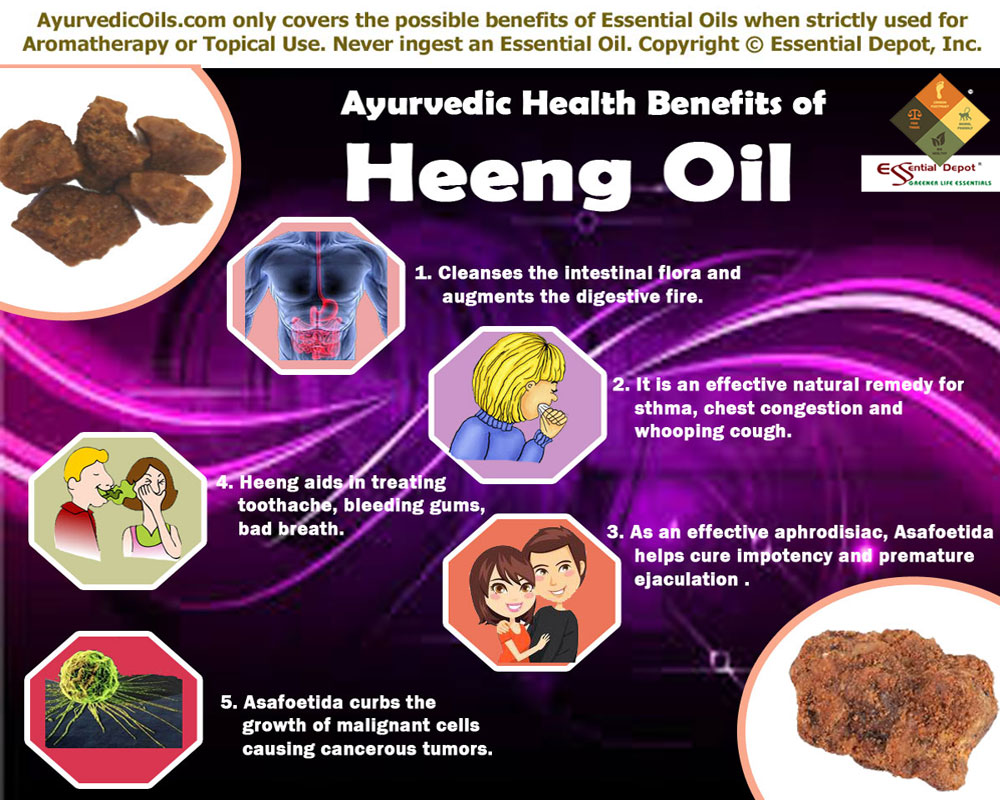
Just by hearing the word ‘Asafoetida’ anyone in India would just say that it is the best natural remedy for treating flatulence, colic and indigestion in children as well as elderly people. With its anti-flatulent, anti-oxidant and anti-inflammatory properties, Heeng essential oil aids in relieving from abdominal gas, stomach pain, intestinal gas and bloating.

It cleanses the intestinal flora and augments the digestive fire. By this way it eliminates all kinds of stagnation in the gastrointestinal tract, relieves cramping and drives out intestinal gas. The strong herbaceous aroma of this oil assists in soothing the lining of the stomach and intestines, reducing distention, treating spasms and increasing the appetite.

Gently massaging your tummy and abdomen with 2 drops of Asafoetida oil blended with 1 ml of sesame oil will be of great help in treating all types of stomachic and intestinal problems in a comforting manner.

You can also add 1 drop of Heeng oil to warm bathing water or to diffuser in the dining hall to stimulate the process of metabolism and for enhancing the stamina, as this oil is known to nurture the earth element that is responsible for strength and vigor.

Asafoetida is used as a traditional medicine for treating constipation and flatulence in 60% people of Jammu and Kashmir, India and this wonder herbal medicine lessens the development of indigenous microflora in the gut, thus helping in reducing flatulence. It has also been used in western medicinal system as a topical remedy for treating abdominal injuries since the 18th century.

2. Benefits to the respiratory system:

Heeng and its essential oil is an ancient folk remedy for treating cold especially in children. This is mainly due to its antimicrobial and expectorant properties along with its ability to reduce kapha dosha, which is responsible for excess phlegm and mucous deposits causing cold and other respiratory problems.

Add 2 drops of Heeng oil to steam inhalation or to vapor rub and massage it on your chest, neck and back for expelling mucous and phlegm deposits in the bronchial, nasal and respiratory passages. Asafoetida has antimicrobial values that arrest the growth of infectious organisms that worsen cold and cough and pave way for chronic respiratory conditions.

It has been proven effective in the treatment of asthma, bronchitis, chest congestion, whooping cough and other respiratory problems. There are numerous home remedies with Asafoetida for treating respiratory disorders and various other health conditions.

One popular home remedy with Heeng is mixing half teaspoon of asafoetida powder with fresh betel leaf juice and white onion juice along with honey every day for treating whooping cough, bronchitis and asthma.

A 2009 study on ‘Influenza A (H(1)N(1)) Antiviral and Cytotoxic Agents from Ferula assa-foetida’ have proved the effectiveness of Asafoetida in combating the harmful effects of H1N1 virus with its antiviral and cytotoxic elements. This study concluded that Asafoetida exhibited greater potency against influenza A virus and against HepG2, Hep3B, and MCF-7 cancer cell lines, correspondingly.

3. Benefits to the reproductive system:

Asafoetida addresses male and female reproductive problems in a natural way. It is known to cure impotency, premature ejaculation and spermatorrhoea in men by increasing the libido and it also acts as an effective aphrodisiac.

Mix 2 drops of Heeng oil with 1 ml of olive oil and gently massage on your lower abdomen or add 1 drop of this oil to your bathing tub before going to bed. Regular use of this therapy can show effective results as the therapeutic molecules present in this oil penetrate deeply into the system through the skin and stimulate the male reproductive system.

Heeng as a powerful herb and a strong essential oil has emmenagogue properties and has been in use as a natural contraceptive. It will be of great assistance in treating dysmennorhea or painful menstruation, excessive bleeding, irregular or delayed periods, leucorrhea, nausea, fatigue, anxiety and other symptoms associated with menses.

The best way to use Heeng oil for menstrual discomforts is by massaging your lower abdomen with 2 drops of this oil mixed with 1 ml sesame oil or add it in a hot compress for improved results.

As a contraceptive or abortifacient, Heeng oil can be used in treating unplanned abortion, sterility in women and premature labor. It is also effective in improving the quality and quantity of breast milk in nursing women. Using Asafoetida in post-pregnancy period is recommended for relieving colic, indigestion and other digestive difficulties in both the mother and the baby.

4. Benefits to oral health:

Human mouth has the highest possibilities of being affected by millions of micro-organisms that not only cause hazards to oral health but also to the entire body. Heeng essential oil has potent antimicrobial and antiseptic properties that aids in treating toothache, bleeding gums, bad breath or halitosis and harmful cavities.

Add 1 drop of Heeng oil in a cup of warm water and use it as a gargle for getting rid of various oral problems. You can also add 1 drop of this oil to a piece of cotton and dab it on your aching tooth for immediate relief.

5. Benefits to the entire system:

Asafoetida and its essential oil are beneficial to the entire system in a number of ways. It has been proven effective in stimulating the pancreatic cells to secrete more insulin as improved insulin levels are known to bring down the blood sugar levels to normal.

According to certain studies, the antioxidant and anti-carcinogenic properties of Asafoetida curbs the growth of malignant cells causing cancerous tumors. Since the ancient times, this condiment has been used as a powerful antidote for opium as it is identified to counter the effect of the ingested drug.

Asafoetida is defined as ‘Tamasic’ in Ayurveda for its properties of resistance, dullness, inertia and darkness on the mind and it can balance the over emotional, hyperactive and chaotic system.

This condiment is also used as a pesticide and insecticide for protecting crops from pests and for repelling mosquitoes and certain other insects.

Disclaimer:

This article is only for informational purpose and is not directed to diagnose or replace any prescribed medicines or professional medical advice. Never take essential oils internally and always dilute essential oils before using it topically. This is because organic and pure essential oils are highly concentrated liquids and can cause allergic reactions if used in an undiluted manner.

Remember to consult your Ayurvedic practitioner before choosing the most suitable essential oil for your unique constitution and health condition. Avoid using Heeng oil if you are a pregnant woman as it has strong abortifacient properties.

Thought for the day:

Deep in their roots, all flowers keep the light. -Theodore Roethke

Suggested Reading:

  1. Ayurveda & Aromatherapy: The Earth Essential Guide to Ancient Wisdom and Modern Healing by Dr. Light Miller, Dr. Bryan Miller
  2. Ayurvedic Healing Cuisine by Harish Johari
  3. Herbs: An Inside Look Into The World of Alfalfa, Basil, Asafoetida, Burdock, Catnip and More by Vanesa Payne
  4. The Yoga of Herbs: An Ayurvedic Guide to Herbal Medicine by David Frawley, Vasant Lad
  5. Alternative Medicine: The Definitive Guide by Burton Goldberg Group

Reference Links:

  1. Asafoetida by Wikipedia
  2. Asafoetida (Hing) Benefits by Speedy Remedies.com
  3. Asafoetida by The Spices Board India
  4. Asafoetida – A Grounding Herb by American Botanical Council
  5. Influenza A (H(1)N(1)) Antiviral and Cytotoxic Agents from Ferula assa-foetida by Lee, CL; Chia-Lin Lee, Lien-Chai Chiang, Li-Hung Cheng, Chih-Chuang Liaw, Mohamed H. Abd El-Razek, Fang-Rong Chang, Yang-Chang Wu, College of Pharmacy, China published in PubMed

Lavandulyl acetate

Lavandulyl acetate is the acetate ester of lavandulol, and an important component of lavender oil. It has several biological activities and is known for the treatment of acne, anxiety, athlete’s foot, itching, asthma, bruises, allergies, burns, headache and insect bites.

It has been a proven component in essential oils like Lavender that support the treatment of colic, cuts, chicken pox, cystitis, dermatitis, depression, dysmenorrhea, earache, flatulence, hypertension, labor pains, migraine, oily skin, rheumatism, scabies, sores, scars, sprains, stress, stretch marks, strains, vertigo and whooping cough.

Therapeutic uses of Lavandulyl acetate:

Helps maintain skin health:

Lavandulyl acetate of lavender oil is used to treat various skin disorders like psoriasis, acne, eczema, and wrinkles. It can also help soothe insect bites and itchy skin, help form scar tissues, which may be essential in healing wounds, cuts, and burns. It’s also a natural anti-inflammatory, so it helps reduce itching, swelling, and redness.

Relieves respiratory disorders:

It can be applied on your neck, chest, or back, or inhaled via steam inhalation or through a vaporizer. By this method of treatment, it can help alleviate respiratory problems like throat infections, colds and flu, cough, whooping cough, sinus congestion, asthma, bronchitis, tonsillitis, and laryngitis.

Keeps your hair healthy:

When used on your hair, Lavender oil aids in killing lice and nits. According to ‘The Natural Medicines Comprehensive Database (NMCB)’ lavender is possibly effective for treating dandruff, alopecia areata (hair loss), and boosting hair growth by up to 44 percent after just seven months of treatment.

Relieves pain and soothes the nervous system:

The constituent of Lavandulyl acetate in Lavender oil may also help to reduce pain after an insertion of needle acting like a topic anesthetic. By massaging the oil onto the affected area it can be used to relax tensed muscles, ease pain in joints, which also includes conditions of rheumatism, and treat sprains, backache, and lumbago.

A 2013 study on ‘Lavender and the Nervous System’ reported to be useful in the treatment of acute as well as chronic or intractable pain.

Studies that have been conducted prove that foot massages using aromatic oils like lavender among a group of 100 ICU patients, of whom 50% were receiving artificial ventilation proved to be extensively positive in treating patient by increasing the wakefulness, reducing blood pressure, respiratory rate, heart rate and pain.

In the case of recurrent aphthous ulceration, a study was conducted on 115 patients and usage of lavender oil did make a difference.

From the very first dose, many experienced significant pain relief, speedy mucosal repair, reduction in the size of the ulcer, and complete to partial healing within three day from the initiation of treatment. In another group of 30 volunteers, the bispectral index, stress levels, intensity of pain felt after a needle insertion was said to be minimal to nil after receiving oxygen with a face mask coated with lavender oil for a period of 5 minutes.

The result, “Forty-seven patients suffering with migraine issues were studied, and most of them reported decline in pain, the severity of the occurrence of migraines also decreased. This result was noted with jut as simple remedy of rubbing lavender oil on the upper lip of the person. Relief was felt within 15 minutes after the application. Off-course this was only monitored during the early stages of the migraine attack.”

Cognition:

Medicinal plans have been analyzed and used as cognitive enhancers’ right from the medieval ages. It is said that the aroma of the essential oil have the characteristics to boost the mood.

To study the effect of essential oil on cognition abilities, Lavender oil, proven neuro-protective oil was used in 144 healthy participants. It was extremely effective in augmenting general mental health and quality of life in neurasthenia (post-traumatic stress disorder) patients.

Reference Links:

Lavender and the Nervous System by Universitätsklinikum Münster, Germany, published in the Evidence Based Complementary and Alternative Medicine and PubMed

Lavender oil by Wikipedia