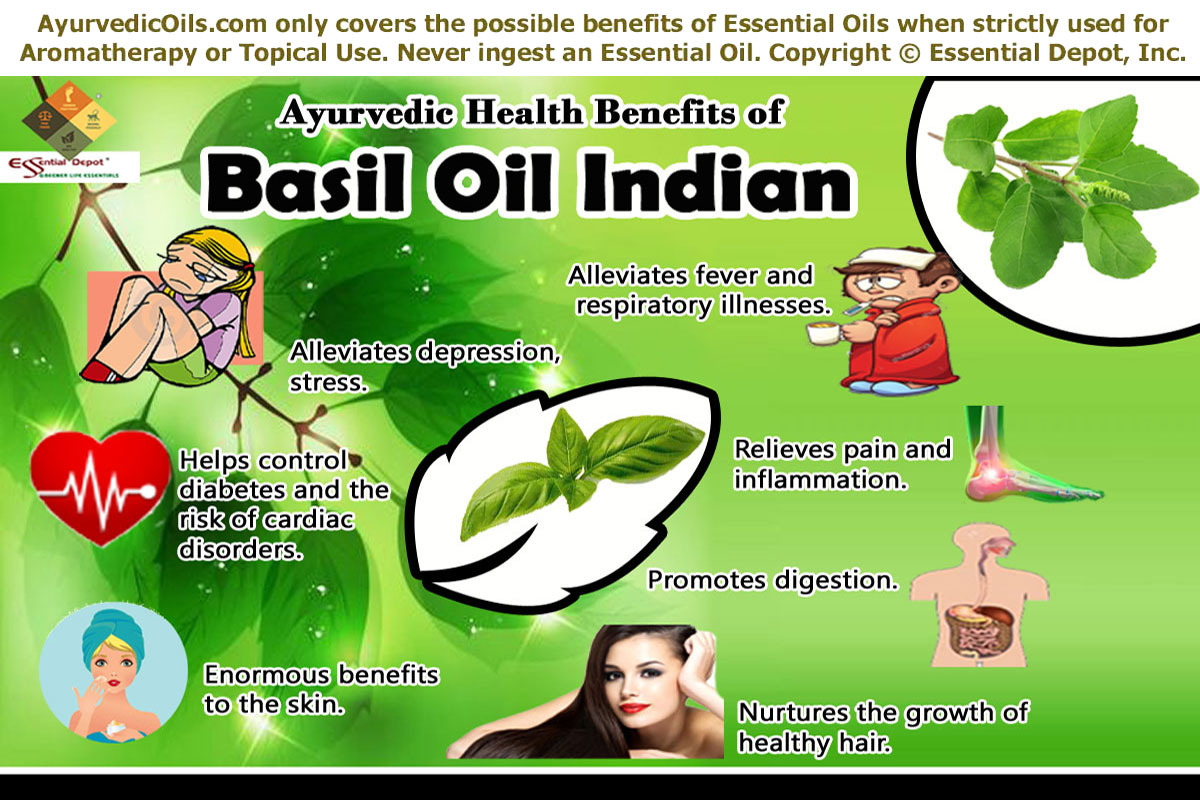
St John’s Wort Essential Oil

What comes to your mind when I say ‘Amber Touch-and-heal’? Sounds like a magical spell right? But won’t you be surprised and delighted if I say that it’s the other popular name of St. John’s Wort herb? Absolutely yes! The star-shaped bright yellow flowers are the most mesmerizing part of St. John’s Wort herb.
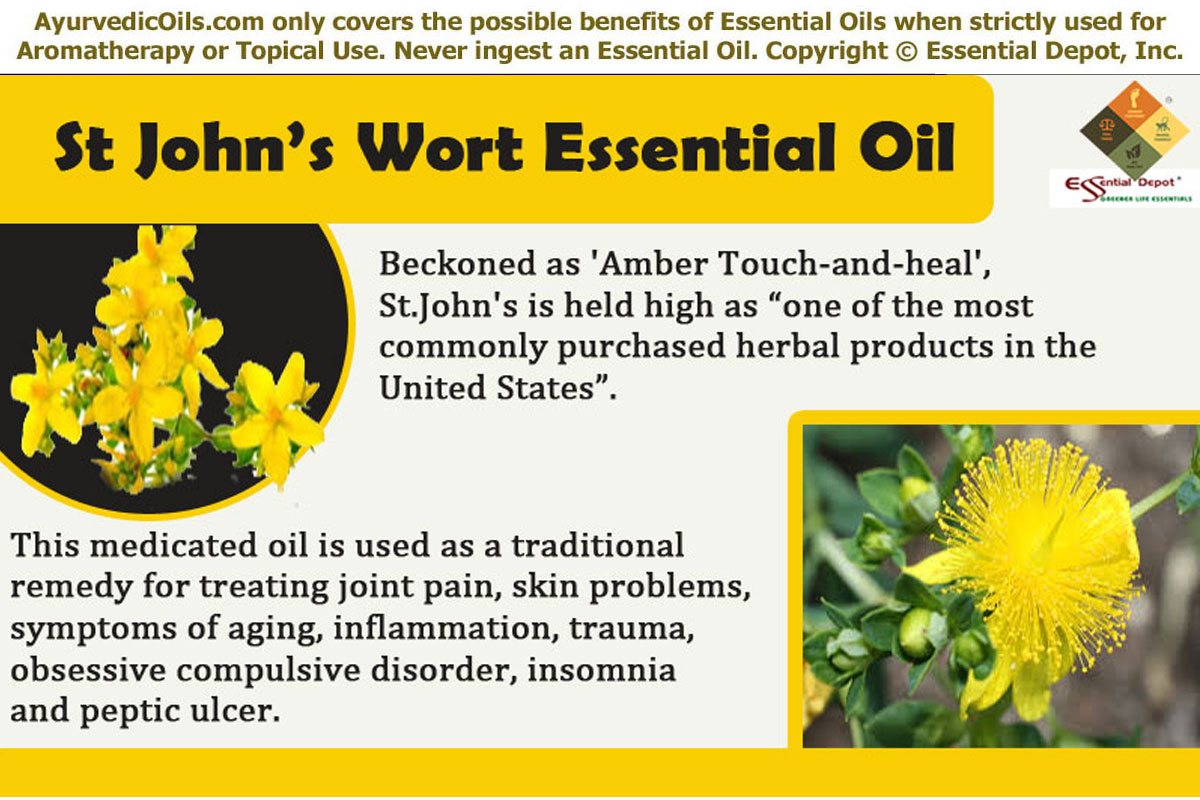
St-john-bannerNature’s beauty meets healing quality through these flowers as the essential oil of St. John’s Wort is extracted by steam distillation from these flowers. St. John’s Wort herb is claimed as “one of the most commonly purchased herbal products in the United States”.

This herb is named after St. John, the Baptist mainly because the admirable flowers of this plant were said to bloom initially around 24th June when the birthday of St. John is celebrated. Scientifically known as Hypericum Perforatum L, this herb is a member of the Guttiferae plant family. Ayurvedic system of healing use this medicated oil as a traditional remedy for treating joint pains, skin problems, symptoms of aging, inflammation, trauma, cracking and irritation.

Purchase St Johns Wort Essential Oil – Wholesale – CLICK HERE

Historical Uses of St. John’s Wort:

St. John’s Wort herb and its essential oil have a long history and were used by Naturopaths and Physicians of all the predominant traditions in the world. This herb is indigenous to Europe, Western Asia and North Africa and is used for various therapeutic applications for more than 3,000 years. St. John’s Wort was popularly known as ‘Arnica of the nerves’ during the thirteenth century from the time it was used to treat psychiatric problems by the Swiss Physician Paracelsus.

The impeccable use of this herb starts from Greece, where the renowned Greek physicians like Hippocrates, Dioscorides, Theophrastus and Galen used this herb for treating numerous illnesses including neuralgic conditions, nervous disorders and wounds.

Native Americans used St. John’s Wort herb as a natural antiseptic and was also used for its astringent and anti-inflammatory properties for treating pain, inflammation, spinal irritation and certain other health conditions. This herb was also used as a traditional abortifacient agent. St. John’s Wort is also an important part of many well-liked dietary supplements in various forms like oil infusion, aqueous infusion, capsules, powders, alcoholic tinctures etc, in the United States.

The American Physicians of the nineteenth century prescribed St. John’s Wort herb to treat nervous afflictions with depression and hysteria. This herb was also trusted to ward off evil spirits and helps in getting the blessings of St. John, the Baptist for another year. The anti-depressant properties of this herb are attributed to the presence of the active components hyperforin and hypericin.

Studies prove that this healing quality has made this herb vital in treating depression and it is demonstrated to have lesser side effects than many other over-the-counter antidepressants.

With all these historical importance, St. John’s Wort is regarded as an official herb in the national pharmacopeias of Russia, Czechoslovakia, Romania, France and Poland. It is also approved as a standardized medicine by the Commission E monographs and is listed in the German Drug Codex.

Ayurvedic health benefits of St. John’s Wort Essential Oil:

Ayurveda is a common sense science that aims at bringing perfect health and harmony through natural and practical methodologies. The ancient Ayurvedic texts like Charaka Samhita and Sushruta Samhita talk about all kinds of illnesses and the simple Ayurvedic approaches to treat those health conditions.

In addition to this, these Ayurvedic encyclopedias also insist on following an Ayurvedic routine that helps us to follow a systematic living for healthy aging and longevity.

According to Ayurveda human body is made up of a combination of 3 energy elements known as doshas. They are vata, pitta and kapha. Every individual has all the 3 doshas with the predominance of any 1 of these and this predominant Ayurvedic body type determines the characteristics and behavior of an individual. The imbalance of any one of these doshas causes illnesses indicating that the body is of out of balance with nature.

Before suggesting Ayurvedic remedies, every Ayurvedic physician will thoroughly examine your medical history, Ayurvedic body type, your preferences, dislikes and other factors affecting your physical, mental, social, environmental, emotional and spiritual well-being.

Herbs, yoga, essential oils, meditation, physical exercises, Abhyanga or Ayurvedic massage therapy and a balanced lifestyle are all the major pillars of an Ayurvedic treatment. St. John’s Wort herb and its oil according to Ayurveda is good for reducing the excess of pitta and kapha doshas and aids in supporting vata deficiency (P K- and V+).

Claimed as ‘The long-time favorite herb of Herbalists’, St. John’s Wort essential oil is said to have numerous health benefits and the most predominant ones among them are:
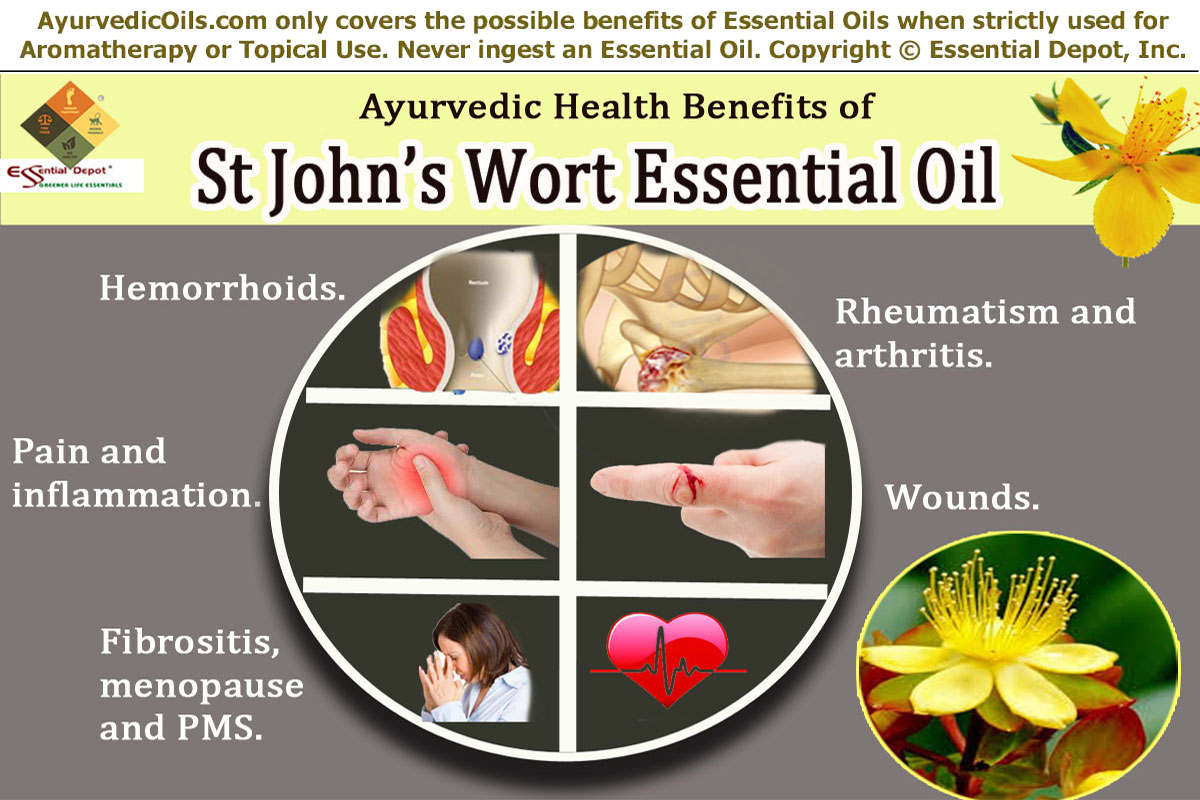
St-john-broucher1. Hemorrhoids:

Adding few drops of St. John’s Wort essential oil to soothing carrier oils like jojoba oil aids in treating the painful symptoms of hemorrhoids. The flavonoids and hypericin compounds in this oil assists in reducing the burning and itching sensation while alleviating inflammation.

You can also add few drops of this oil to any of your skin care creams or lotions and apply it directly on the affected area to treat both external and internal hemorrhoids. Few drops of this oil added to your warm bathing water can also grant relief from external hemorrhoids.

2. Rheumatism and arthritis:

Swollen and inflamed joints along with excruciating pain are the predominant symptoms of rheumatism and arthritis. Using St. John’s Wort essential oil for treating rheumatic conditions remains as a popular herbal remedy since the primordial times.

Applying few drops of this essential oil blended with mild carrier oils like coconut oil can help reduce inflammation and pain associated with rheumatism.

Ayurvedic texts say that rheumatoid arthritis occur due to excess of pitta, the fire element and kapha, the water element along with the deficit of vata, the air element. As St. John’s Wort oil has the potential to control the excess of pitta and kapha and normalize vata shortfall, using this oil as therapeutic massage oil, bath oil or in vapor therapy can help control the symptoms of rheumatism.

3. Pain and inflammation:

The anti-inflammatory, analgesic and antiseptic properties of St. John’s Wort essential oil makes it an ideal remedy for treating muscular pains, bruises, sores, sprains, tennis elbow, nervous afflictions, stiff achy joints, varicose veins and burns.

You’ll be amazed to know that St. John’s Wort oil is prescribed to neuropathic patients and also for treating incision pain after surgery. Using this oil as massage oil or remedial oil for external application along with any of your skin creams and lotions can grant you relief and foster speedy recovery.

4. Wounds:

St. John’s Wort essential oil has astringent and antibacterial properties that help in killing microbes and other harmful foreign bodies that worsen wounds and other skin infections. This oil can be used as a tincture and topical application of this oil on the affected areas augments the epithelialization of wounds. The presence of flavonoids and tannins supports the protein precipitating action for quicker healing.

5. Fibrositis, menopause and PMS:

These 3 disorders looks like a chain of womanly problems that often cause sharp pain and interrupt the normal functioning of the body. Fibrositis or fibromyalgia means pain in the muscle and connective tissue.

Numerous research studies have proved the effectiveness of St. John’s Wort essential oil in treating physical pain and emotional disturbances of premenstrual syndrome along with cramps, nausea, breast tenderness etc., anxiety and mood fluctuations during menopause and the muscular and tissue pains associated with fibromyalgia.

Massaging with few drops of St. John’s Wort oil added to soothing carrier oils like sesame oil can grant you complete relief. You can also use it as a bath oil by adding 2 drops of this oil to warm bathing water for assisting your health in a refreshing manner.

6. Other health benefits:

Kurt Schnaubelt rightly quoted the aroma of St. John’s Wort essential oil as “The penetrating smell can be felt as a warm pleasant relaxed feeling, travelling from the nose to the brain”.

The cooling and moisturizing energies of this oil aids in treating anxiety, social phobia, Obsessive compulsive disorder, stomach inflammation, smoking cessation, nervous pain, insomnia, sciatica, dysentery, pulmonary complaints, elimination of toxins in the body, bed-wetting, peptic ulcers and many other health disorders. ‘The Aromatherapy Book’ by Jeanne Rose states the use of this oil in the treatment of AIDS.

Disclaimer:

This is only for information purpose and is not recommended to replace any prescribed medicines or the consultation of your medical professional. Do not use essential oils directly on your skin or take it internally without the advice of your Ayurvedic Practitioner as it may cause negative effects.  Essential oils are highly concentrated so keep it away from children.

Thought for the day:

Earth laughs in flowers.    –Ralph Waldo Emerson

Suggested Reading:

  1. St. John’s Wort: The Herbal Way to Feeling Good by Norman Rosenthal
  2. St. John’s Wort: The Premier Herb for Relieving Depression, Healing Wounds and Easing Nerve Pain (Keats Good Herb Guide Series) by Roy Upton
  3. Natural Care Library St. John’s Wort: Safe and Effective Self-Care for Anxiety, Inflammation and Pain Relief by Stephanie Pedersen

Reference Links:
  1. St. John’s Wort by American Botanical Council
  2. St. John’s Wort by University of Maryland Medical Center
  3. St. John’s Wort by American Family Physician

Basil Oil Indian

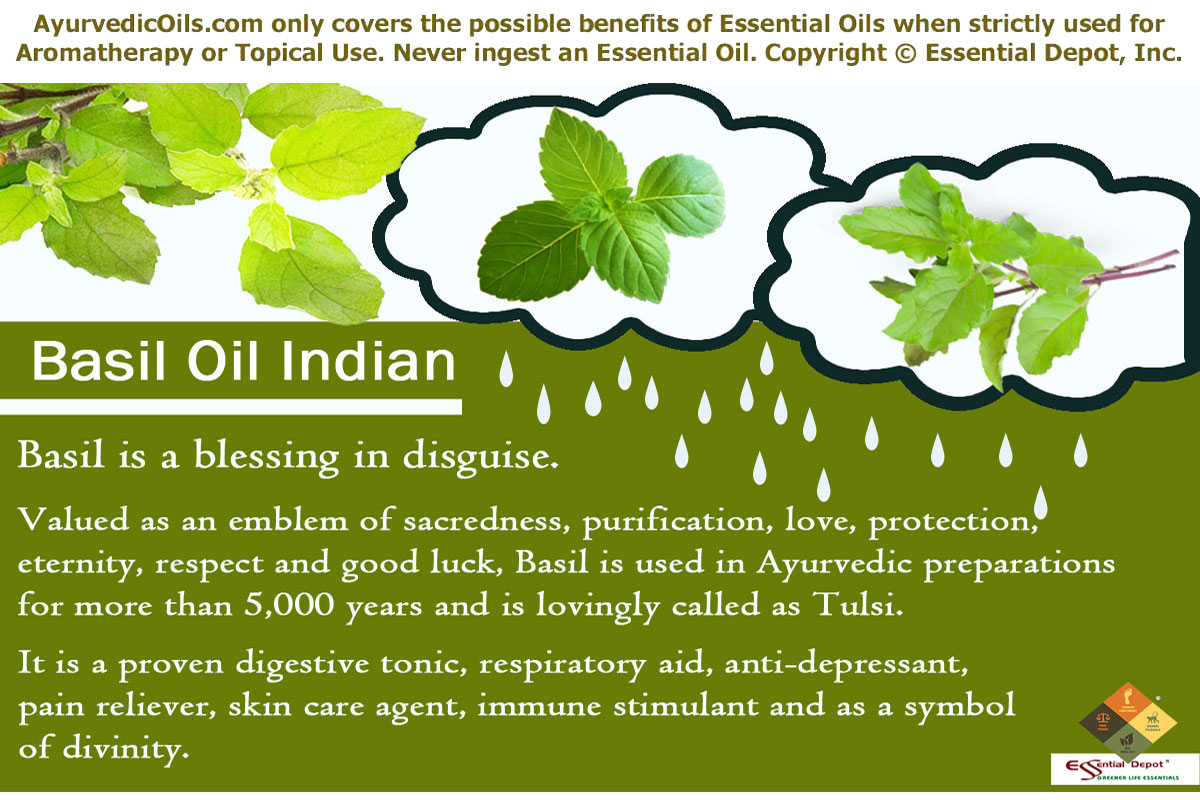
basil oil indianBasil is a blessing in disguise for the rest of the world but for most of the traditional Indian families, every day begins with the blessing of Lord Krishna through Basil leaves. This holy plant is being worshipped by the Hindus in India since thousands of years and is a familiar thing to find a Basil or Tulsi plant in every home. It is known to the world of medicine as a digestive tonic, respiratory aid, anti-depressant, pain reliever, skin care agent, immune stimulant and as a symbol of divinity.

Valued as an emblem of sacredness, purification, love, protection, eternity, respect and good luck, Basil is used in Ayurvedic preparations for more than 5,000 years. It is lovingly called as Tulsi in Hindi and Surasa in Sanskrit and has been a vital part of Ayurvedic healing of a plethora of illnesses.

The most notable among them are nervous tension, constipation, rheumatism, whooping cough, asthma, sinus congestion, bronchitis, stress, bruises, diabetes, fever, poor memory, poisonous bites and stings, acne and kidney disorders.

Historical uses and importance of Basil leaves and its essential oil:

Popularly known as the ‘Queen of herbs’ in Ayurveda, Basil is botanically called as Ocimum sanctum. It is grown throughout the world for its spiritual and medicinal uses. Highly regarded as a symbol of ‘Good luck charm’, Basil plant has myriad references in the history of world medicine.

Basil plant has been talked about in the ancient sacred books like Rig Veda and in the Ayurvedic texts including Charaka Samhita. Respected as an elixir of life in Ayurveda, this plant is said to pave way to absolute balance and longevity for its enormous medicinal values.

The oldest historical mention of Basil leaves is in the ancient Hindu mythology, where Basil or Tulsi plant is said to symbolize Vishnupriya, the wife of Lord Vishnu and the incarnation of Goddess Lakshmi. God Vishnu is honored with the garland made with Basil leaves.

Few other sources state that Tulsi is trusted as a form of Goddess Tulsi and this plant is considered as a symbol of blessedness because it is believed to have grown from the ashes of Goddess Tulsi. Basil plant is worshipped by the married Hindu women in India for being blessed with the faithfulness of Goddess Tulsi.

Known as Bacia-nicola (meaning kiss me Nicholas) in Italy, Basil is regarded as a representation of love and luck and is said to attract man to his lady love. It was used in the ancient Greece in the crowning ceremonies of Kings for purification.

Besides its medicinal values, Basil leaves are also used for culinary purposes for its strong aroma and astringent flavor, especially in Asian cooking. The seeds and leaves of this plant are used in the preparation of an herbal tea, which is said to gift good health and fortune.

The native populace of the Indian subcontinent including the Himalayan areas generally grind the leaves and seeds of Basil plant and blend this with Safflower (Carthamus tinctorius), Katuka (Picrorhiza kurroa), Bel Fruit (Aegle marmelos), Sugandi root (Hemidesmus indicus), and Blue Lotus (Nelumbo nucifera). This herbal mixture is then smoked for persuading the vision and dreams.

The tribal population in Australia has reported the use of Basil leaves in the preparation of an herbal tea for supporting the system as a tonic for treating fever, respiratory problems and few other illnesses. The essential oil extracted from Basil leaves also finds its use in the field of herbal cosmetics and in the treatment of skin disorders and numerous other illnesses.

Therapeutic properties and chemical constituents of Basil essential oil:

The remedial values of Basil oil are cephalic, antifungal, diaphoretic, anti-asthmatic, emmenagogue, antispasmodic, antiseptic, anti-cancer, antidote, anti-oxidant, diuretic, anti-fertility, expectorant, anti-diabetic, anti-malarial, hepatoprotective and anti-inflammatory.

The primary chemical components of Basil oil are eugenol, ursolic acid, b-caryophyllene, linalool, oleanolic acid, carvacrol, germacrone D, b-elemene and linolenic acid. Vitamin A, vitamin C, iron, zinc, potassium, calcium and magnesium are few among its nutritional constituents.

Ayurvedic health benefits of Basil Indian essential oil:

Adorably called as Tulsi in India, Basil is the most respected and often talked about herb in the history of Ayurveda. With its divine aroma and holiness, Tulsi is esteemed high for its healing values. These holy leaves are chewed daily in the morning after performing the ritual prayers for cleansing the system, stimulating metabolic functions, supporting the respiratory functions and strengthening the immune system.

Ayurveda is by far the pioneer of the medicinal world with more than 5,000 years of promising existence. It has its roots vested with the ancient India, where its origin has been referred to Atharvaveda, one among the four sacred books of the Indian mythology.  With the literal meaning of ‘knowledge of life’, Ayurveda means more than a method of treating illnesses.

Holding all these prominent reasons, Ayurveda is known as a common sense science. It leads mankind towards a holistic life with the gifts of absolute health, harmony and longevity. The medications prescribed in Ayurveda simply rely on Mother Nature as it trusts that everything on this globe is a vital part of Nature.

With this philosophy, Ayurvedic texts denote that all things on earth including human beings are built up with the same 5 vital building blocks of nature. They are fire, air, water, earth and space. Earth stands for the bones and muscles in the body and represents braveness, stability and vitality. Air is responsible for the functions of the lungs, heart, intestines and joints.

Ether is found all over the body, where the presence of emptiness and cavity exist. Few parts among them are blood vessels, nostrils, bladder and heart. Fire controls the body temperature, metabolic functions and intellectual power. Water is in charge of the fluid functions of the body, including saliva, blood, plasma and mucus.

According to Ayurveda, every individual is a unique entity with a unique individual constitution or Prakriti, which is an arrangement of the 3 biological energies known as doshas. Ayurvedic principles revolve around the pillars of these dynamic forces, which are a combination of the vital elements of nature. They are vata, pitta and kapha doshas.

Every person has a predominance of any one of these doshas, which determines the character, personality, health conditions and behavioral attributes of a person. An individual is claimed to be healthy when there is absolute balance between all the three doshas and imbalances between these doshas end up in illnesses.

Ayurveda prescribes natural remedies like plant essential oils, herbs, meditation, yoga, prayers, Ayurvedic routine along with Ayurvedic healing techniques like Panchakarma (the Ayurvedic detox techniques), Pranayama (art of balanced breathing), Abhyanga (Ayurvedic massaging) etc. These remedies aim at correcting the imbalances of doshas, prevent illnesses and sustain a healthy life even in the late 60s and 70s.

Basil essential oil has heating and neutral energies (virya) and sharp and bitter taste (rasa). It is known for reducing excess of vata and kapha doshas and aggravates pitta dosha. Basil is said to have amazing beneficial effects on the respiratory system, circulatory system, reproductive organs and the digestive system.

The major Ayurvedic health benefits of Basil essential oil are as follows:

Basil-oil-bro1. Alleviates depression, stress and disorders of the autonomic nervous system: Visceral or the autonomic nervous system supports the generation of hormones and its resultant responses in the human system.  It controls the vital functions of the system including breathing, salivation, digestion, heart rate, urination, perspiration, respiratory rate, breathing and sexual feelings.

Problems in the functioning of this involuntary nervous system can result in indigestion, breathing problems, heart disorders, improper blood circulation, depression, nervousness, anxiety, headache, sexual problems and kidney disorders.

Basil essential oil has a balancing effect on the nervous system. This aids in treating anxiety, stress, depression, nervousness, loss of interest and negative emotions. When inhaled by adding 1 drop of Basil oil, 1 drop of Rose Geranium oil and 1 drop of Lavender oil in diffuser or air freshener, can aid in alleviating stress, inspiring positive feelings, elevating the spirits, augmenting memory power and grant the strength to face challenges.

According to the Ayurvedic texts like Charaka Samhita, Tulsi “opens the heart and the mind and distributes the energy of love and devotion.  Basil is sacred to Vishnu and Krishna and strengthens faith, compassion, and clarity.

Tulsi stalks are worn as garlands and strengthen the energy of attachment. Basil imparts divine protection by purifying the aura and invigorating the immune system. It contains natural mercury that, as the seed of Shiva, imparts the germinative power of pure consciousness.”

According to a 2010 study on “Ocimum sanctum Linn. A reservoir plant for therapeutic applications: An overview by Priyabrata Pattanayak,Pritishova Behera, Debajyoti Das and Sangram K. Panda, published in PubMed says, “Tulsi is considered to be an adaptogen, balancing different processes in the body, and helpful for adapting to stress.

Adding 2 drops of Basil oil in bathing water every morning and night helps in bringing in abundant of constructive thoughts, progressive ideas, encouraging feelings and new-fangled energy to face your new day and relax for a peaceful night. 2 drops of Basil oil added to your air freshener in the night can aid in granting absolute solace and calmness.

Basil has strong effects on the emotions, and can be very strengthening when we are suffering fear or sadness”, says Bryan Miller and Light Miller in their book Ayurveda and Aromatherapy.

2. Enormous benefits to the skin:

Tulsi is a darling remedy when it comes to the protection of skin from various infections and disorders. With its antioxidant and detoxifying properties, Tulsi acts as an excellent skin cleansing and nourishing agent that gifts your skin with a flawless beauty and younger look.

The antifungal and anti-microbial properties of this oil acts as a shield against microbes and aids in the treatment of acne, eczema, scabies, itches, ringworm, athlete’s foot and infectious wounds. The rich presence of Vitamins A and C nourish the skin from within and help in exploring and retaining its natural glow.

The book ‘Ocimum sanctum: The Indian Home Remedy In Current Medical Scene’ have talked about various studies, where the essential oil of Basil “has been found to inhibit in-vitro growth of E. coli, B. anthracis and P. aeruginosa proving its anti-bacterial activity.” It is also said that this oil contains anti-viral and anti-fungal properties.

Massaging your skin with 2 drops of Basil oil blended with 1 drop of Lemon oil, 1 drop of Bergamot oil and 1 drop of Lavender oil along with 2.5 ml of olive oil helps in removing the dead skin cells, reducing pimples, black heads and fading away marks left behind by wounds and acne. You can also apply this blend on wounds, eczema, psoriasis, athlete’s foot, ringworm, scabies, wounds and itches for quicker healing.

3. Nurtures the growth of healthy hair:

Basil has been an important ingredient in numerous Ayurvedic and other herbal preparations for hair care. Take 5 drops of Basil oil, 5 drops of Rosemary oil, 2 drops of Lime oil along with 10 ml of Almond oil and heat this mixture slightly.

Massaging your scalp with this herbal blend helps in promoting the growth of hair by strengthening the hair follicles, reducing dandruff, moisturizing dry scalp and rough hair, controlling itching and enriching the scalp.

4. Alleviates fever and respiratory illnesses:

The anti-viral, anti-microbial and anti-malarial properties of Basil essential oil aids in reducing fever. Numerous research studies have reported that Basil oil contains 100 percent insecticidal and larvicidal activities especially against Culex mosquitoes.

Massage your foot soles with 2 drops of Basil oil and 2 drops of Lavender oil blended with 2 ml of coconut oil for reducing fever. Adding 2 drops of Basil oil in your air-freshener or diffuser can be of great assistance in keeping away from insects with its insect-repellant properties.

The therapeutic properties of Basil oil including its anti-microbial and anti-viral attributes helps in arresting the growth of bacteria, virus and other micro-organisms that worsen cold, cough and other respiratory infections. Mucus and phlegm deposits in the system are again a result of excess kapha dosha.

Basil oil is an effective Ayurvedic remedy for lowering excess of kapha dosha that aids in loosening the phlegm and mucus accumulation in the body. 2 drops of Basil oil and 2 drops of Eucalyptus oil added to steam inhalation can grant you instant relief from cold, cough, stiff nose, congestion, sinusitis, whooping cough and blocked nasal passages.

You can also massage your chest, back and throat with 1 drop of Basil oil and 1 drop of Eucalyptus oil mixed with your vaporizing ointment for supporting quicker relief. This oil also helps in strengthening the immune system and helps in fighting against infectious and communicable diseases.

5. Helps control diabetes and the risk of cardiac disorders:

The essential oil of Basil has anti-diabetic properties that aids in the treatment of diabetes by controlling the level of blood sugar. With its diuretic properties, Tulsi promotes frequent urination through which the toxic elements in the system are flushed out and helps to stay energized.

A 2005 study published in the Journal of Indian Physiology and Pharmacology says “eugenol in Basil oil have been found to reduce raised blood sugar, triglyceride and cholesterol levels and activities of LDH, GPT, GOT and alkaline phosphatase in blood serum explaining the therapeutic potentials of Ocimum sanctum as antidiabetic, cardio-protective, hypolipidaemic and hepatoprotective agent.”

The decoction extracted from the whole plant has been recommended in Ayurveda for lowering the level of blood glucose in case of diabetes mellitus. The presence of eugenol and other therapeutic constituents in this oil are also effective in reducing blood cholesterol and blood pressure. With its antioxidant properties, Basil oil is also known for protecting the heart from the effects of harmful free radicals.

Massaging your system with 5 drops of Basil oil, 5 drops of Juniper oil, 5 drops of Myrtle oil and 2 drops of Clove oil along with 20 ml of coconut oil, once in a week can help in controlling blood sugar, blood pressure and blood cholesterol. You can also add 2 drops of Basil oil in your diffuser every day and inhale this magical aroma for enhancing your heart health.

6. Relieves pain and inflammation:

The pain relieving quality of Basil oil is attributed to the presence of eugenol. This contributes to the analgesic, relaxant, nervine and anti-inflammatory qualities of this oil.

Tulsi oil reduces inflammation and swelling with its kapha reducing attribute. Kapha dosha represents the water element in the body and excess of which leads to the amassing of water deposits, built up of toxic substances, uric acid and salts in the system.

Gently massaging the painful and affected parts with 3 drops of Basil oil, 3 drops of Eucalyptus oil and 3 drops of Camphor oil with 5 ml of coconut oil aids in treating pain, rheumatic conditions, arthritis, headache, stiff joints and back pain.

This works by spreading heat in the painful areas with its heating energy, induce frequent urination where the excess water deposits and toxic remains in the system are eliminated.

7. Promotes digestion:

Basil oil has the power to increase ‘Agni’ or the digestive fire in the system with its pitta-enhancing attribute. Pitta dosha symbolizes fire and is responsible for metabolic functions, including digestion, absorption and excretion.

Adding 5 drops of Basil oil in warm compress or massaging your abdomen with 2 drops of Basil oil, 2 drops of Lavender oil and 2 drops of Bergamot oil with 4 ml of sesame oil can aid in promoting the secretion of bile, digestive juices and gastric acids.

This assists in treating indigestion, formation of gas in the stomach and intestines, vomiting, motion sickness, colic, sluggish digestion and intestinal spasms. The anti-microbial property of this oil helps in killing germs and harmful micro-organisms in the stomach and intestines.

Also useful in:

Basil essential oil is also helpful in the treatment of eye problems, oral infections, migraine pain, kidney stones, mouth ulcers, cancerous tumors, Alzheimer’s disease, labour pain and certain other medical conditions.

Disclaimer:

This post is only for the use of education and information. It is not intended for diagnosing, treating or preventing illnesses or substituting expert medical advice or prescribed medicines. We are not medical professionals and this information is shared only for spreading the glory of Ayurvedic remedies, the mother of all healing systems on earth.

Never ingest essential oils and always dilute essential oils before using it for topical applications. This is due to the fact that 100% pure and organic essential oils are extremely concentrated substances.

Avoid using Basil oil if you are pregnant or a nursing mother as it has anti-fertility and anti-estrogenic effects that may cause harm. Speak with your Ayurvedic practitioner/ healthcare professional before selecting the appropriate essential oils for your prakriti or unique individual constitution and medical condition.

Thought for the day:

He that will enjoy the brightness of sunshine, must quit the coolness of the shade.  -Samuel Johnson

Suggested Reading:

  1. Tulsi Holy Basil: The “Queen of Herbs” in Ayurveda, TCM and Homeopathy (Learning Medicinal Herbs within India’s Ancient Ayurvedic Medicine Book 2) by Ryder Management Inc.
  2. Fragrance & Wellbeing: Plant Aromatics and Their Influence on the Psyche by Jennifer Peace Rhind
  3. Ayurveda: The A-Z Guide To Healing Techniques From Ancient India by Dr. Helen Mary Thomas
  4. Basil Recipes: Cooking with the King of Herbs (Quick and Easy Series) by Dogwood Apps
  5. The Basil Supplement: Alternative Medicine for a Healthy Body (Health Collection) by William Wagner

Reference Links:

  1. Ocimum tenuiflorum by Wikipedia
  2. Therapeutic uses of Ocimum sanctum Linn (Tulsi) with a note on eugenol and its pharmacological actions: a short review by Prakash. P and Gupta. N published in the Indian Journal of Physiology and Pharmacology
  3. Ocimum sanctum Linn. A reservoir plant for therapeutic applications: An overview by Priyabrata Pattanayak,Pritishova Behera, Debajyoti Das and Sangram K. Panda, published in Pharmacognosy review (PubMed)
  4. Health Benefits of Basil or Tulsi Value Food Info
  5. Basil by Bryan Miller and Light Miller published in the book Ayurveda and Aromatherapy: The Earth Essential Guide To Ancient Wisdom and Modern Healing

Geranyl acetate

Geranyl acetate is an organic compound that is present in the essential oils of Ceylon Citronella, Palmarosa, Geranium, Coriander, Neroli, Lemongrass, Petitgrain, Carrot and Sassafras. It is also obtained semi-synthetically by the condensation of Geraniol with acetic acid.

Geranyl acetate is a monoterpene with the chemical formula C12H20O2. It is an ester which is also identified by various other names such as Geraniol acetate, Bay pine (oyster) oil, Geraniol ethanoate and so on.

Attributes of Geranyl acetate:

Geranyl acetate is a colorless transparent liquid. In the condensed form, Geranyl acetate is slightly pale yellow in colour. It has sweet lavender smell or floral or fruity smell of rose. It owns a tempting fruity taste similar to those of banana, pear, apple and peach. It is not soluble in water but it dissolves in organic solvents like oils and alcohol.

Antifungal and anti-inflammatory effect of Geranyl acetate:

A study titled “Composition and biological activity of the essential oil from Thapsia minor, a new source of geranyl acetate” was conducted to evaluate the biological activity of the essential oil from Thapsia minor which is a source of Geranyl acetate. It was found that Geranyl acetate exhibit antifungal and anti-inflammatory effect.. Further, it also acts as the main contributor of these attributes to the essential oil of Thapsia minor.

Antimicrobial effect:

According to the study “Antimicrobial Activity of Essential Oils of Four Lemongrass (Cymbopogon flexuosus Steud) Varieties“, the essential oils of four varieties of lemongrass and their constituents were evaluated for their antimicrobial activity against bacteria Staphylococcus aureus, Escherichia coli, Bacillus subtilis and Salmonella typhi and two fungi, Aspergillus flavus and Aspergillus fumigatus. It was found that Geranyl acetate was reasonably active against Staphylococcus aureus.

In another study titled, “Antimicrobial Activity and Chemical Composition of Essential Oil from the Seeds of Artemisia aucheri Boiss”, the chemical composition and antimicrobial activity of essential oil in Artemisia aucheri Boiss was evaluated. It was found that Geraniol and Geranyl acetate found in the essential oils in the aerial parts of the plant are responsible for the antimicrobial activity of the oil.

Commercial Uses:

As a fragrant and flavouring agent:

Geranyl acetate finds its use in perfumery because of its sweet floral rose or lavender fragrance. It is used for its fragrance in soaps and creams and also as flavor enhancer. It is used in the formulation of rose, lavender and geranium flavors to impart a sweet fruity or citrus smell.

In the food industry:

In the food industry, it is used to enhance the flavor. It is recognised as safe to be used by the U.S. Food and Drug Administration (FDA).

References:

  1. Geranyl acetate by Wikipedia
  2. Geranyl acetate by PubChem
  3. Composition and biological activity of the essential oil from Thapsia minor, a new source of geranyl acetate
  4. Antimicrobial Activity of Essential Oils of Four Lemongrass (Cymbopogon flexuosus Steud) Varieties
  5. Antimicrobial Activity and Chemical Composition of Essential Oil From the Seeds of Artemisia aucheri Boiss