 ‘Bitter’ has been the most neglected taste all around the world and the truth is that bitter things are often better for your fitness regime. On a deeper note, most of the medicines are bitter and they pave way for the sweet fruit of health and harmony.
Unlike the sweet oranges, bitter oranges are not much favored mainly for its tart, astringent and acidic taste. Since the ancient times, bitter oranges and the essential oil cold pressed from the rind of these fruits have carried away the world of medicine with its enormous medicinal values.
Known as Narange in Sanskrit, bitter orange is used in Ayurveda in the treatment of gout, gastrointestinal problems, lack of appetite, anxiety and digestive disorders.
Purchase Orange Bitter Oil – Retail – CLICK HERE
Purchase Orange Bitter Oil – Wholesale – CLICK HERE
Scientifically known as Citrus aurantium, bitter orange is an evergreen tree indigenous to the tropical parts of Asia and Africa. Almost all the parts of this tree are used in extracting essential oils due its healing values.
Essential oil extracted from the leaves and twigs of this tree is known as Petitgrain oil, the oil distilled from the flowers of this tree is the celebrated Neroli oil and the oil extracted from the peel of the bitter orange fruit is called as Bitter orange essential oil.
Historical importance of Bitter Orange:
The Traditional Chinese Medicine used bitter oranges as a natural carminative and tonic for treating dyspepsia. They also used dried bitter oranges in the treatment of diarrhea, ptosis of the anus and uterus, blood in feces and abdominal distention.
The rind of bitter orange fruits were used in Homeopathy for relieving abdominal pain, headache, constipation, digestive disorders, weight loss and high blood pressure. Due to the presence of the active ingredient synephrine, bitter oranges are used in herbal medicinal system as an appetite suppressant and as a stimulant.
The Brazilian folklore medicine used bitter orange and its oil in treating insomnia and anxiety. The ancient Europeans used it as a prophylactic and as a sedative for curing nervous problems, gastrointestinal disorders, insomnia, sore throat and gout.
This medicinal herb has been in use in various cultures across the globe in the treatment of cancer, anaphylactic shock, cardiac exhaustion, heartburn, fungal infections and certain other heart problems.
The native Latin Americans used it in the preparation of a tonic for treating insomnia, lessening anxiety and also as a laxative. It is also used in the United States as an effective aid in preventing colon, breast and skin cancer.
In addition, bitter orange essential oil is used in flavoring baked goods, alcoholic beverages, gelatins, candies, puddings, meat products, frozen desserts and certain other condiments. It is also used as a marinade for meat in the Haitian, Cuban, Nicaraguan and Dominican cooking.
Therapeutic properties and constituents of Bitter orange essential oil:
The remedial properties of this oil are antiseptic, carminative, sedative, stomachic, digestive, antidepressant, anti-hyper cholesterolemic, tranquilizer, anti-inflammatory, choleretic, antifungal and antibacterial. Synephrine, tyramine metabolites N-methyltyramine, pinene, carotenoids, limonene, cymene, camphene, octopamine, ocimene and few other alkaloids are its major chemical constituents.
Ayurvedic health benefits of Bitter orange essential oil:
Ayurveda is the oldest of all the healing methodologies in the world and it still flourishes due to the simplicity it preaches and practices in its remedial rule. According to this ancient science, every individual is a part of nature and his/her poor health and good health depends upon their harmony with nature.
Sickness in Ayurveda is a strong symbol that the individual’s system is out of balance with nature and needs immediate assistance with natural remedies like essential oils, herbal medications, yoga, healthy lifestyle and meditation.
Ayurvedic remedies aim at treating the actual root cause of an illness instead of treating the illness alone and suggests an Ayurvedic routine for preventing such illnesses in the future as well.
Every human being according to Ayurvedic principle is unique with an individual constitution that comprises of three energy elements known as doshas, namely vata, pitta and kapha. The predominance of any one of these doshas determines the personality and characteristics of an individual and imbalance of any of these doshas leads to diseases.
Ayurvedic treatments vary from individual to individual based upon their dosha predominance and unique constitution. Bitter orange essential oil is said to increase vata and pitta doshas and pacify kapha dosha.
The Ayurvedic health benefits of Bitter orange oil are:
1. Treats skin problems:
Bitter orange essential oil has been proved effective in treating numerous skin problems with its antiseptic, antibacterial and antifungal properties. The rind of this fruit from which its essential oil is extracted contains non-bitter flavonoids, which is known to have considerable venotonic properties.
It is for this reason; bitter orange essential oil is used in cosmetics for preventing capillary fragility. Bitter orange extracts are also used in the treatment of cellulite as it has the potent to normalize the affected parts and stimulate the cutaneous tone of the skin.
The effects and unique properties of bitter orange essential oil in the Aromatherapy Workbook by Shirley Price states bitter orange essential oil “help restore an acne skin to normal and is prophylactic against the signs of ageing”. When applied to the affected area after blending 2 drops of bitter orange oil with coconut oil, the antifungal properties of this oil help in treating fungal infections like athlete’s foot and ringworm.
Bitter orange oil also acts as a natural antiseptic and aids in clearing acne, cold sores, wounds, psoriasis, eczema and certain other skin problems due to excessive stagnation of oil. You can add 2 drops of bitter orange oil with refreshing carrier oil like jojoba oil or to your skin care creams and lotions and gently massage onto the affected parts for quicker effects.
2. Enhances the digestive mechanism:
For more than thousands of years, bitter orange has been used in the world of Complementary medicine for treating digestive problems like flatulence, dyspepsia, constipation, sluggish digestion, loss of appetite, intestinal gas, nausea and indigestion.
Gently massaging your stomach with 2 drops of bitter orange oil blended with sesame oil can help you enhance the entire process of digestion. You can also add 2 drops of this oil to your bath tub to help with digestive disorders.
3. Assists in weight-loss:
Weight loss supplements with bitter orange formula are the most popular and the recent use of bitter oranges in the therapeutic world. Numerous researches have proved the effectiveness of bitter orange supplements in treating obesity.
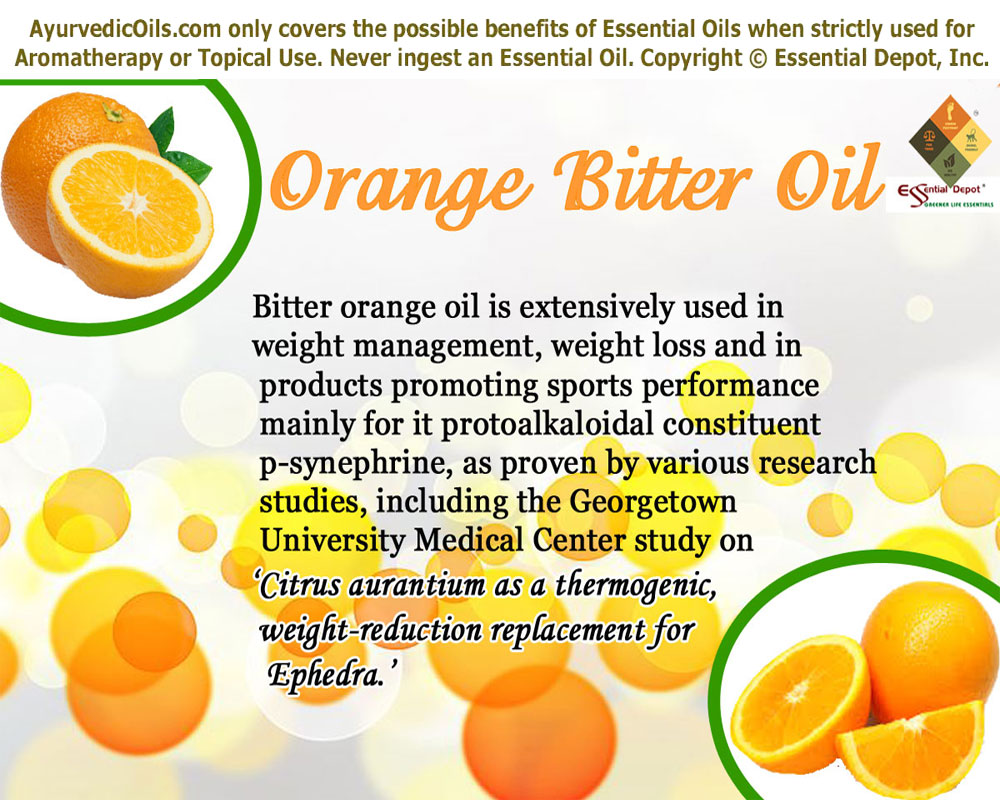
“At present, Citrus aurantium may be the best thermogenic substitute for Ephedra” reveals the Georgetown University Medical Center study on ‘Citrus aurantium as a thermogenic, weight-reduction replacement for Ephedra’.
A recent research on ‘The safety of Citrus aurantium (bitter orange) and its primary protoalkaloid p-synephrine’ states “The data indicate that based on current knowledge, the use of bitter orange extract and p-synephrine appears to be exceedingly safe with no serious adverse effects being directly attributable to these ingredients”.
It also notes that bitter orange extract and its principal protoalkaloidal constituent p-synephrine are extensively used in weight management, weight loss and products promoting sports performance.
A 2006 study on ‘Citrus aurantium and synephrine alkaloids in the treatment of overweight and obesity’ by Johns Hopkins University School of Medicine, MD, USA states that there are certain promising evidences that Citrus aurantium containing several compounds including synephrine alkaloids is a safe alternative to Ephedra, which is a weight-loss supplement banned in US for its adverse health effects.
To boost your metabolism and lessen energy absorption, you can massage your body with 2 to 3 drops of bitter orange oil blended with coconut oil or add 3 drops of this oil to your bath tub.
4. Alleviates stress and reduces anxiety:
Bitter orange oil has a much similar aroma to that of fresh tangy oranges. Inhaling the energizing and enlivening fragrance of this oil especially during the early hours of the day promises a serene atmosphere and instills complete calmness in your mind.
This is why Ayurvedic healing suggests the use of bitter orange oil during your meditation practice. Add 1 drop of bitter orange oil to your diffuser or air freshener and start your deep meditation after which you will feel a never before freshness and increase in your confidence level.
The Aromatherapy expert, Dr. Vivian Lunny recommends an invigorating bath blend with 2 drops of bitter orange oil, 1 drop of neroli oil and 2 drops of petitgrain oil for reducing anxiety, lethargy and tiredness.
When added to your warm bathing water especially after a tiring and stressful day, this blend is said to give a new lease of life, augment stress relief, promote relaxation and stimulate positive feelings. You can also add 1 drop of bitter orange oil to your handkerchief or to your pulse points to renew yourself throughout the day.
Other benefits:
Bitter orange essential oil is also used in treating chronic fatigue syndrome, intestinal ulcers, lowering blood sugar level in diabetic patients, sleep disorders, joint pain, muscular aches, bruises, cold and certain other liver and gall bladder problems.
It is also used in making soaps, cleaning products, disinfectants, cosmetics, perfumes, pharmaceuticals, eau de colognes and certain other household cleaners. Bitter orange oil is also used as a commercial flavoring agent in foods and beverages in many countries.
Disclaimer:
Pure and organic essential oils are highly concentrated liquids so always use it after diluting in suitable carrier oils. Never use essential oils internally. Citrus oils in general have a photo-toxic effect so avoid going out in the sun immediately after using it on your skin.
Pregnant women, nursing mothers, children and people suffering from hypertension and glaucoma should avoid using bitter orange oil. Always consult your Ayurvedic practitioner before choosing the right essential oils for your unique individual constitution.
Bitter Orange Essential Oil – Possible Skin Issues:

Greener Life Diamond – Bio-Healthy Score => 3 Possible Skin Issues:
See => http://www.essentialdepot.com/GreenerLifeDiamond.html
Bitter orange oil exhibits mild photosensitivity effects if the oil is oxidized, which might cause irritation and hyper-pigmentation of the skin and this happens when visible sunlight gets in touch with the skin for up to 12 hours of usage. The major cause being the response of the chemical components that are photoactive in nature attracts light and ends up in toxicity via molecular alterations.
The safe dermal use level of Bitter orange oil by the International Fragrance Association (IFRA) is 1.25%, specifically to thwart phototoxicity in the products used for topical application and not for soaps, shampoos and other bath preparations. This No-observed-adverse-effect-level (NOAEL) is based on various studies with Bitter orange oil on mice and swine, where the No-observed-effects-level (NOEL) was proved as 6.25%.
Besides, Bitter orange oil is Generally Recognized As Safe (GRAS) by the FDA (Food and Drug Administration). “There are no contraindications but that photosensitization may occur in fair-skinned individuals”, quotes The German Commission E monograph for Bitter orange peel.
The major chemical constituent responsible for the skin sensitization and mild irritation of Bitter orange oil is Limonene, which accounts to about 90% of this oil and certain other furanocoumarins.
According to European regulations, essential oils with furanocoumarins should be used in such a way that the overall level of bergapten does not surpass 15 ppm (parts per million) in ready-to-use cosmetic products meant for use on the skin surface that are exposed to sunlight (other than wash-away products) and 1 ppm in sunscreen and bronzing items.
Use Bitter orange oil only for external use and ingestion of this oil should be avoided strictly, as internal use of this oil has adverse effects according to various reports. Medical research studies state that the presence of stimulants like octopamine, amines synephrine (an alkaloid with almost the related chemical structure to ephedrine in Ephedra – Ma-Huang) and N-methyltyramine are responsible for the cardiovascular toxicity of Bitter orange and this is also reported to cause increase in blood pressure and vasoconstriction.
It is recommended to avoid the use of Bitter orange in patients with tachyarrhythmia, hypertension and narrow-angle glaucoma, mainly due its potent to cause additive effects. Overdose of synephrine in children overdose ended up in tachycardia, nausea, quick increase in blood pressure and irritation. Certain researches witness the effect of Bitter orange in restraining human cytochrome P450 3A (CYP3A) in the test tube studies.
Just like Grapefruit, Bitter orange is said to hold back a vital enzyme in the small intestine, and this may possibly have an effect on the levels of blood, when taking certain medications like antiviral, anti-anxiety, antidepressant drugs, statins and calcium channel blockers and along with the intake of caffeine.
Care should be taken if Bitter orange oil is used in massage in the abdominal area, as essential oils penetrate quickly through the skin, reach the bloodstream and may cause adverse effects. It is not recommended to take Bitter orange products when using other prescribed medications, except under strict medical supervision.
Furocoumarins are also used in various remedies on par with the long-wave ultraviolet light therapy for the healing of mycosis fungoides, vitiligo and psoriasis.
Reference Links Substantiating Possible Skin Issues of Bitter Orange Oil:
- Bitter Orange by University of Michigan Health System
- Bitter Orange, Sour News by University of California, Berkeley Wellness
- Bitter Orange Peel and Synephrine by American Botanical Council
- Bitter Orange, American Herbal Products Association’s Botanical Safety Handbook, Second Edition by Zoe Gardner, Michael McGuffin
- Bitter Orange by Drugs.com
- Essential Oil Safety: A Guide for Health Care Professionals By Robert Tisserand, Rodney Young
Thought for the day:
The trees that are slow to grow bear the best fruit. -Moliere
Suggested Reading:
- Citrus Essential Oils: Flavor and Fragrance from Wiley
- Citrus Oils: Composition, Advanced Analytical Techniques, Contaminants, and Biological Activity (Medicinal and Aromatic Plants – Industrial Profiles) from CRC Press
- Aromatherapy Workbook: A Complete Guide to Understanding and Using Essential Oils by Shirley Price
- Ayurveda & Aromatherapy: The Earth Essential Guide to Ancient Wisdom and Modern Healing by Dr. Light Miller, Dr. Bryan Miller
Reference Link:
- Bitter orange by Wikipedia
- Citrus aurantium and synephrine alkaloids in the treatment of overweight and obesity by Johns Hopkins University School of Medicine, MD, USA published in PubMed
- Bitter Orange by Drugs.com
- The safety of Citrus aurantium (bitter orange) and its primary protoalkaloid p-synephrine by Creighton University Medical Center, NE, USA published in PubMed

Your resource for quality Essential Oils. Every batch is
GC tested to ensure purity and authenticity.