Ginger Oil

Ginger-oil-bannerGinger oil is known as the “Oil of Empowerment” and is called in Ayurveda as Mahaushadha, meaning “universal medicine”, predominantly for its ability to heal the mind, body and soul, which are the three vital pillars of perfect health in Ayurveda.

Along with turmeric, galangal and cardamom, Ginger is yet another potent limb of the Zingiberaceae plant family. As a common culinary spice, Ginger is found in countless kitchens across the world and takes the pride of being used as a natural home remedy for addressing digestive and respiratory disorders.

Botanically named as Zingiber officinale, this powerful herb is called as Singara, Katubhadra and Srngaveram in Sanskrit. Ginger in any form, say fresh ginger, dried ginger or ginger extracts like juice, essential oil or powder has a bunch of absolute healing wisdom.

Ayurveda, the oldest healing system on earth prescribes Ginger as a remedy for indigestion, flatulence, nausea, loss of appetite, morning sickness, bronchitis, menstrual cramps, respiratory infections, arthritis, cancer and for enhancing the immune power. It is also recommended for treating fear, hopelessness, instability and for rekindling the inner fire for ultimatum.

Purchase Ginger Oil – Retail – 1 oz – CLICK HERE

Purchase Ginger Oil – Retail – 4 oz – CLICK HERE

Purchase Ginger Oil – Wholesale – CLICK HERE

Historical importance of Ginger:

Ginger is one among the oldest of spices used for more than 4400 years across different cultures universally. With more than 1,200 species, Ginger has been proved scientifically for treating numerous health disorders. Its name is extracted from a Sanskrit word ‘srngaveram’, which means ‘horn root’.

According to the report by the University of Maryland Medical Center, “It has a long history of being used as medicine in Asian, Indian, and Arabic herbal traditions.” It has also been said that Ginger has been used in the Traditional Chinese Medicine for treating toothache, nausea, stomach upset, diarrhea and certain other digestive disorders.

Ginger and its other extracts have been a vital part of the ancient Ayurvedic remedies for obesity, poor metabolism, abdominal pain, motion sickness, impotence, weak memory, arthritis, flu, menstrual pain and as a heart tonic. It has its name etched in the most respected epic of India, Mahabharata.

This aromatic spice was recommended by King Henry VIII of England in the 16th century for fighting against the great plague. Greeks used Ginger as to combat the harmful effects of poison.

It is said that the West African women in Senegal knit belts of Ginger to restore their partner’s reproductive potency. Even today, Ginger is used in various dishes across the world for granting the finesse flavor and taste of this miraculous spice with mammoth health benefits.

Chemical constituents and therapeutic properties of Ginger essential oil:

The major chemical components of Ginger essential oil are camphene, a-pinene, b-pinene, zingiberene, geraniol, borneol, neral, geranyl acetate, 1,8-cineole, citral, b-bisabolene, linalool, nerol, geranial and y-terpineol.

These components contribute to its healing properties like carminative, antibacterial, anti-inflammatory, expectorant, analgesic, aphrodisiac, antioxidant, stimulant, antiseptic and emmenagogue.

Ayurvedic health benefits of Ginger essential oil:

Nothing is as astonishing as Mother Nature and the best wonder in the world is the human body that works like a magic to keep one going on and on. Ayurveda states that human beings are a part of nature and their illness and health depends upon their harmony with nature.

It further lights up this thought by stating that nature is made up of five vital elements, namely earth, water, fire, air and space and to our wonder, it’s also been said that a human being also has all these five elements.

Where earth is the muscles and bones, water is the blood, fire is the energy for various vital functions, air is our breath and space is the soul that co-ordinates all other functions and keeps us living.

The concept of healing in Ayurveda solely depends upon nature as it says that all the other things on earth are made for making mankind happy and healthy. For example, earth has 92 elements like calcium, potassium, magnesium, iron etc, and the human body also has all these 92 elements.

When a person lacks magnesium or calcium energy, he/she can take Ginger, which is rich in magnesium and calcium, whereas Ginger grows by absorbing the magnesium and calcium element from earth. How interesting it is, right?

Ayurveda regards every individual as a unique part of nature and suggests that the treatment should also be unique depending upon their individual constitution that is made up of three doshas namely vata, pitta and kapha.

Vata is a representation of air and ether, pitta stands for fire and water and kapha symbolizes earth and water. Vata controls respiratory and nervous functions, pitta takes care of metabolism and body temperature and kapha governs the structure, sustenance and movement of fluids in the body.

Balance between these three doshas indicates health, and imbalance due to unhealthy food habits and change in lifestyle symbolizes illness. Ayurvedic remedies aim at correcting these dosha imbalances with the help of herbs, essential oils, yoga, meditation, physical exercises, Ayurvedic routine, balanced diet and prayer.

Ginger essential oil is said to pacify kapha and vata dosha and aggravate pitta dosha with its warming, spicy, rich, woody and drying energy and aroma.

The Ayurvedic health benefits of Ginger essential oil are:
Ginger-oil-broucher1. Benefits to the digestive system:

Ginger is popularly known as Adrak in India and is a quick natural remedy for relieving indigestion, bloating, flatulence, dyspepsia, vomiting, spasms, nausea, loss of appetite, piles and colic.

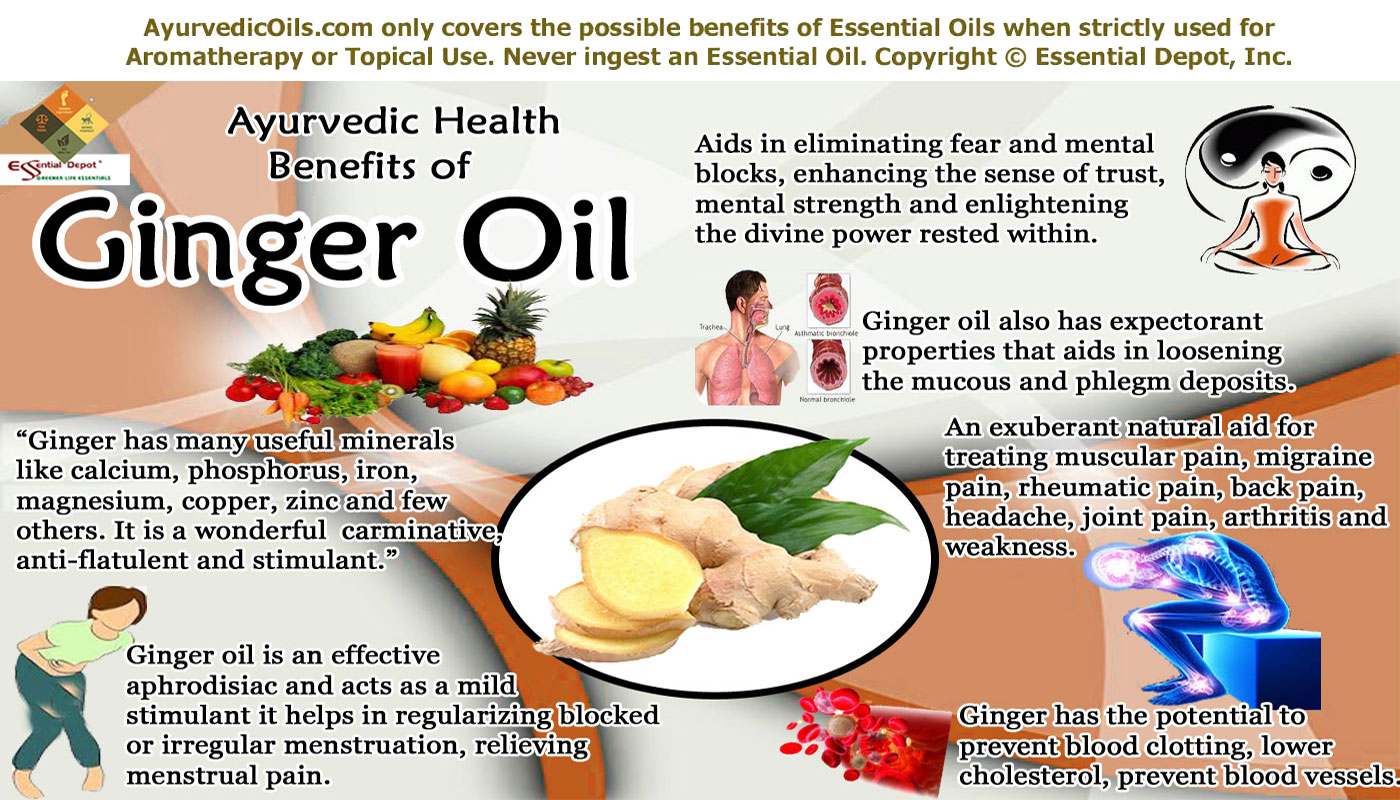
Dr. Jaishree Bhattacharjee, a renowned Ayurvedic Consultant says, “Ginger has many useful minerals like calcium, phosphorus, iron, magnesium, copper, zinc and few others. It is a wonderful carminative, anti-flatulent and stimulant.”

Ginger essential oil has the potential to increase pitta energy that is responsible for the digestive fire. Add 2 drops of Ginger essential oil to your diffuser or air freshener before meals and let it stay there till you complete your food.

Inhaling the warming aroma of this oil enhances the appetite and improves the process of digestion, supports absorption of essential nutrients by the body and aids in alleviating the toxic substances with its hot potency, but for which the toxins or ama may otherwise cause serious illnesses.

You can also add 2 drops of Ginger oil to warm bathing water before going to bed or before starting a hectic day. This refreshing bath aids in promoting peaceful sleep, free from bloating, indigestion, gastric pain and other digestive disorders. If it is for the morning, Ginger has a handful of bright benefits like stimulating your nerves, rejuvenating your cells, improving your appetite and augmenting your mental power for facing your day to day challenges.

Ginger and its essential oil have been proven best for treating motion sickness even in children. Numerous studies have witnessed the effectiveness of Ginger is better than the effects of dimenhydrate, which is the most important ingredient in over-the-counter motion sickness and seasickness remedies like Dramamine.

It works by stimulating the flow of saliva and other digestive juices, pacifies the stomach, relieves pain due to gas and diarrhea, controls vomiting and supports easy discharge of stools. Mix 1 drop of Ginger essential oil with 10 drops of sesame oil and massage it gently on your stomach and abdomen for treating constipation and motion sickness.

2. Benefits to the mind:

Ginger essential oil is an effective natural remedy for treating emotional problems like fear, abandonment, and lack of self-confidence and of motivation. Using 2 drops of Ginger essential oil in diffuser, aromatic candles or in bath can help in improving memory power, treat mood swings, tendency to procrastinate, disconnectiveness, hopelessness, stress, anxiety, exhaustion, restlessness and depression.

Ginger oil is an excellent stimulant to the mind, body and soul. The encouraging aroma of this oil rekindles the inner fire and grants the power and confidence to step ahead and lead with courage and confidence.

Massaging your upper and lower abdomen (the root, sacral and solar plexus chakra) with 2 drops of Ginger oil with 1 ml of coconut oil aids in eliminating fear and mental blocks, enhancing the sense of trust, mental strength and enlightening the divine power rested within.

3. Benefits to the reproductive system:

Ginger is simply hot to support your intimacy with your partner as it has enormous aphrodisiac properties that have been assisting in the treatment of impotency, loss of libido, loss of sexual interest and premature ejaculation.

Gill Farrer-Halls in his book ‘The Aromatherapy Bible’ states that Ginger oil is an effective aphrodisiac and acts as a mild stimulant also. 2 drops of Ginger oil blended with 1 drop of Sandalwood oil and 1 drop of Rose oil added to your diffuser can drive in the positive energy required both physically and mentally for a complete “we time” together, by toning up the sexual organs and pacifying your mood.

Massaging your lower abdomen with 2 drops of Ginger oil blended with 1 ml of olive oil can be of great help in treating the problems of the female reproductive system by regularizing blocked or irregular menstruation, relieving menstrual pain and treating other problems associated with menstruation like nausea, dizziness, fatigue and mood fluctuations. Inhaling the reviving aroma of Ginger oil can aid in treating nausea and morning sickness during pregnancy.

4. Benefits to the respiratory system:

Ginger essential oil has the power to reduce kapha dosha. According to Ayurveda, excess of kapha energy is the main reason for respiratory problems like bronchitis, cold, sinusitis, asthma and congestion.

Ginger oil also has expectorant properties that aids in loosening the mucous and phlegm deposits and with its antiseptic properties, it assists in curbing the growth of microbes that spread respiratory infections.

Researchers of the Columbia University have proved that the components in Ginger root have properties that help asthma patients to breathe easily. The post-doctoral research fellow in the Columbia University Department of Anesthesiology, Elizabeth Townsend says, “In our study, we demonstrated that purified components of ginger can work synergistically with β-agonists to relax ASM.”

Adding 2 drops of Ginger essential oil in steam inhalation can assist in reducing cough, clear chest and nasal congestion, relieving sinusitis and helping in treating cold and flu symptoms. You can also rub your chest, back and throat with your regular Vapor rub mixed with 1 drop of Ginger oil for quick relief. Even today Ginger tea is a delicious and healthy way to keep away from cold, cough and flu in the Indian kitchens.

5. Benefits to the muscular system:

Muscular pain is a common illness that most of us experience in our day to day lives. Headache, back pain, knee pain and pain all over the body after a strenuous work are not a surprise to many of us.

What we all do is, rush to the pharmacy and grab pain relieving creams and sprays that grant relief. Most of us fail to realize that these over-the-counter remedies give temporary relief only and force us to use them again when the pain peeps out even worse the next time.

Ginger essential oil has anti-inflammatory, anti-rheumatic and analgesic properties that make it an exuberant natural aid for treating muscular pain, migraine pain, rheumatic pain, back pain, headache, joint pain, arthritis and weakness.

Excess of vata and kapha energy in the body lead to swelling, water stagnation, accumulation of toxic substances, inflammation, sore muscles, weakened nerves and muscular tension.

With its potent to reduce vata and kapha dosha and increase pitta or the fire energy, 3 drops of Ginger essential oil blended with 1 teaspoon of almond oil massaged gently on the painful area, spreads warmth in the body, reduces swelling and inflammation by eliminating toxic substances and water deposits from the body through urine and sweat and relieves pain by causing numbness in the painful parts.

6. Benefits to the entire system:

Ginger and its essential oil also act as a heart tonic and helps in improved circulation. According to the University of Maryland Medical Center, few studies have proved that ginger has the potential to prevent blood clotting, lower cholesterol, prevent blood vessels from getting blocked, which may otherwise lead to stroke or heart attack.

Ginger essential oil has antioxidant properties that have been proved efficacious in the prevention and treatment of cancerous cells.  A 2011 study on ‘Antioxidant activity of the volatile oils of Zingiber officinale (ginger)’ published in Spatula-DD, A peer reviewed journal on complementary medicine and drug discovery says “Ginger extracts have reduced total cholesterol, triglycerides and phospholipids levels, as well as cellular cholesterol accumulation, reduce DPPH absorption, scavenge free radicals and it has potential to improve the histopathological lesion occurring in different layers of the arterial tissue. In other word it is effective in attenuating of atherosclerosis development.”

This dominant herb has also been witnessed effective in the treatment of ovarian cancer. A 2006 study by the University Of Michigan Comprehensive Cancer Center presented in the annual meeting of the American association for Cancer Research stated that using Ginger solution (made with Ginger powder and water) on ovarian cancer cells ended up in their death. These cancerous cells died either due to autophagy (attacked/digested themselves) or due to apoptosis (committed suicide).

The book “A Complete Guide To Understanding and Using Aromatherapy For Vibrant Health and Beauty,” says that Ginger essential oil is effective in treating varicose veins and cellulites.

With rich vitamin C, Ginger oil can also help in treating scurvy. Mix 1 drop of Ginger oil with 10 drops of jojoba oil and apply it on the affected area for enhancing the skin health and reducing the symptoms of aging with its antioxidant properties.

Other health benefits:

Ginger essential oil can also assist in treating rheumatism, arthritis, muscular pain, loss of libido, problems of the lymphatic system, sore throat, chills, disconnectiveness, improper blood circulation, increased blood sugar levels, back pain and mood swings.

Disclaimer:

This article is only for the purpose of information and is not meant for treating or replacing any prescription drugs or professional medical advice. Always consult your Ayurvedic practitioner before choosing the right essential oil for your unique health condition and individual constitution.

Never use essential oils internally and always use essential oils in a diluted manner as pure and organic essential oils are highly concentrated liquids and may cause allergic reactions if used directly on the skin. Care should be taken, if you are a pregnant or nursing woman.

Thought for the day:

Deep in their roots, all flowers keep the light.
-Theodore Roethke

Suggested Reading:

  1. Ginger: Common Spice and Wonder Drug by Paul Schulick
  2. A Spoonful of Ginger: Irresistible Health-Giving Recipes from Asian Kitchens by Nina Simonds
  3. The Chopra Center Herbal Handbook: Forty Natural Prescriptions for Perfect Health by David Simon M.D., Deepak Chopra M.D.
  4. Ayurveda & Aromatherapy: The Earth Essential Guide to Ancient Wisdom and Modern Healing by Dr. Light Miller, Dr. Bryan Miller
  5. Ginger Recipes: 33 Mouth-Watering Recipes Using Natures Super Spice for Weight Loss, Health, and Beauty. (The Simple Recipe Series) by Ready Recipe Books

Reference Links:

  1. Ginger by The University of Maryland Medical Center
  2. Ginger Beats Drugs in Defeating Cancer, Motion Sickness and Inflammation by Health Impact News Daily
  3. Ginger is a powerful aphrodisiac and increases sexual prowess by Namini Wijedasa published in infolanka.com
  4. What are the benefits of Ginger? By Medical News Today
  5. Ginger – Ayurveda’s Root To Good Health by Ayurveda Acharya
Jatamansi Oil

Jatamansi-bannerRespected as a divine herb in Ayurveda, Jatamansi is used as a tonic for the brain and the nervous system. It has been suggested by numerous Ayurvedic texts for treating sleeping troubles, depression, stress, anxiety, chronic fatigue syndrome and nervous problems.

Charaka Samhita, the celebrated Ayurvedic Encyclopedia recommends Jatamansi herb for improving memory power, treating insomnia, hysteria and mental instability. Scientifically known as Nardostachys jatamansi, this herb is known as Balchara or Mamsi in Ayurveda and is also known by other names like Indian Spikenard, Nardus root, Jaila, Musk root, Nardin and Nard.

Purchase Jatamansi Oil – Wholesale – CLICK HERE

Historical uses of Jatamansi and its essential oil:

Indigenous to the Himalayas, Jatamansi grows up to 1 m at an altitude of 3,000 to 5,000 feet. This plant bears red, pink or blue color flowers and has been used in various traditional medicines for its medicinal and aromatic rhizomes.

There are many Biblical references of this herb and it is used to represent St. Joseph in the Catholic iconography. It is mentioned in the New Testament where Mary, the sister of Lazarus uses a pint of pure Jatamansi oil to anoint the holy feet of Jesus Christ. It is also noted in the Song of Solomon as nard and is included in the coat of arms of Pope Francis in reference to St. Joseph.

Jatamansi oil was an important part of the Ayurvedic tradition since the primordial times where the medicated oil is known to cure insomnia, digestive problems, epilepsy, hysteria, weak mental health, improper blood circulation and as a tonic to the entire system. This herb was used as a diuretic and as a herb for the heath of heart and liver in Unani medicine.

The powdered rhizomes of Jatamansi were taken internally to treat hepatitis, infertility, menstrual disorders, cleanse the uterus, mental agitation, enhance the appetite and helpful in the treatment of Parkinson’s and Alzheimer’s disease.

Jatamansi was also used by renowned Physicians like Dioscorides and Apicius. The Persian and Arabian Physicians praised this herb as Sumbul-i-Hindi. The medicated Nard oil was offered on the precious incense altar when Tabernacle was positioned in the First and Second temples of Jerusalem.

Spikenard or Jatamansi was also used as a flavoring agent in the ancient Roman cuisines and as a seasoning in the Medieval European food varieties. It is used in making attars, perfume (L’eau De Jatamansi), incense sticks, hair care products and numerous beauty products. Jatamansi is also used along with certain other herbs in Vedic prayers performed with fire since the ancient period.

Therapeutic properties and chemical constituents of Jatamansi oil:

The principal constituents of Jatamansi oil are valeranone, nardostachone, bornyl acetate, jatamansinol, dihydrojatamansin, isobornyl, terpineol, jatamansinone, tetramenthyloxatricylodecanol, oroselone, aromadendrene, Menthylthymyl-ether, nardosinone, seselin, nardostachyin, valeranal, cineol-1,8, spirojatamol and jatamansic acid and few other coumarins. The remedial properties of this oil are nervine, antiseptic, diuretic, laxative, anti-inflammatory, tonic, anti-pyretic, deodorant, fungicidal, sedative, anti-depressant and calmative.

Ayurvedic health benefits of Jatamansi essential oil:

Ayurveda is a righteous science that trusts that every creature on earth is a part of nature and it believes that one’s illness and wellness depends upon their balance or imbalance with nature. Ayurvedic texts strongly state that human body is a temple where the spirit dwells in, so it is very important to keep the body, mind and spirit clean and composed just like preserving a place of worship.

Ayurveda is called as a holistic healing methodology as it approaches health as being mentally, physically, emotionally and spiritually fit. It is for this reason; Ayurvedic physicians recommend herbs, essential oils, yoga, physical exercises, balanced diet, meditation, Ayurvedic routine and prayers to keep one hale and hearty.

Every individual is treated in a unique manner even if they are affected by the same illness because the theory of Ayurveda identifies every human being as a unique part of nature and as a distinct creation with a unique individual constitution. This constitution is built up of three major bio-energies known as doshas. They are vata, kapha and pitta. These doshas govern various functions of our body and imbalance of these energies cause sickness.

Each and every human being has a predominance of any one these Ayurvedic body types that determine their personality, physique, mental attributes, behavior and preferences. Ayurvedic remedies aim at balancing the dosha imbalances as perfect balance between these doshas are a clear sign of healthy and heartiness.

Jatamansi is a promising Ayurvedic remedy that has the potent to pacify all the three doshas, especially pitta and kapha energies.

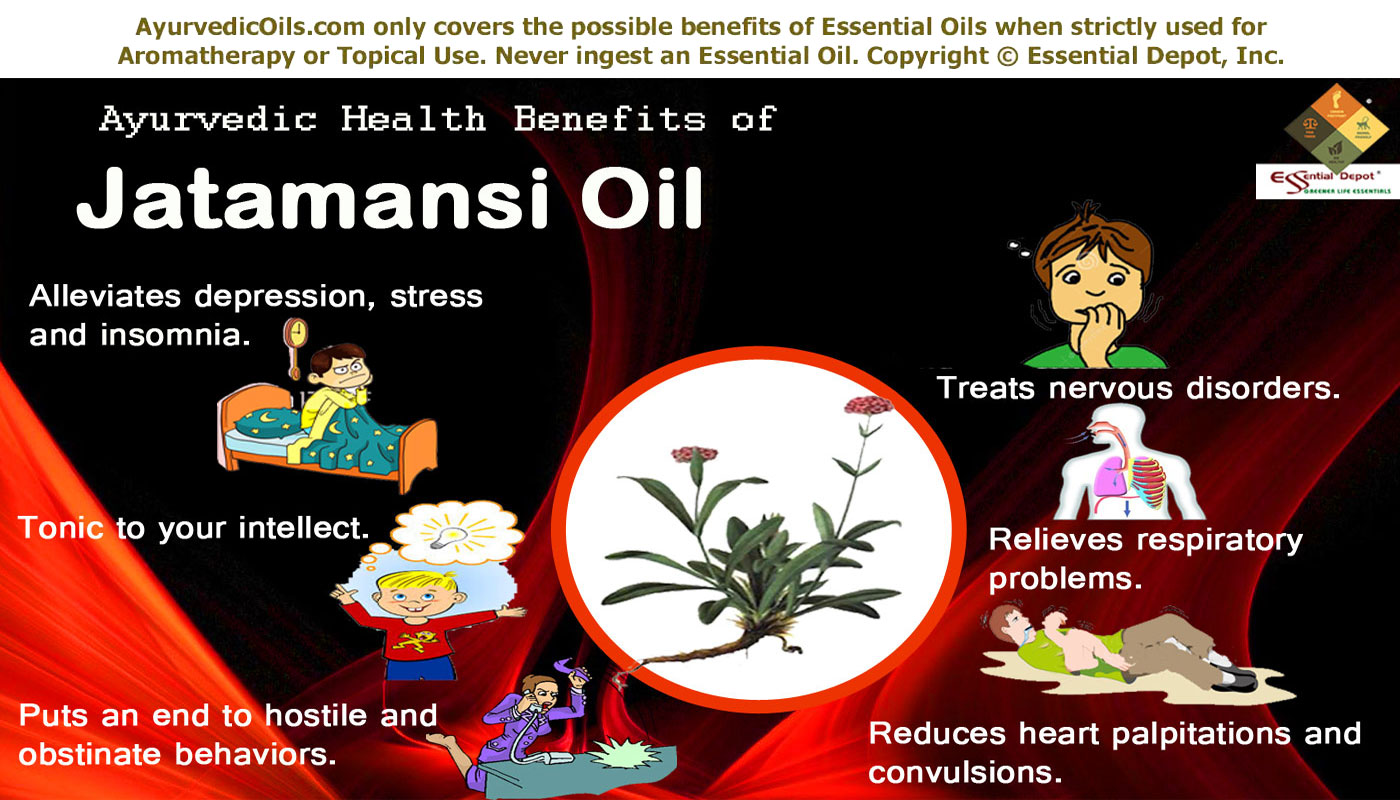
And it’s time to look at the amazing Ayurvedic health benefits of Jatamansi essential oil.jatamansi-broucher-11. Alleviates depression, stress and insomnia:

The rhizomes of Jatamansi herb have strong anti-depressant properties that calms the mind, relaxes the body and grants absolute peace to the entire system. 2 drops of Jatamansi oil added to your diffuser, burner, vaporizer or to bathing water is said to alleviate depression, chronic stress, anxiety, insomnia and tension.

Blend 5 drops of this oil with 2.5 ml of sesame oil and massage your body for relieving from chronic fatigue syndrome, nervous headache, negative feelings, sleeping difficulties, lack of self-confidence and sluggishness. Jatamansi is loved as a herb for the mind and emotions with its anti-depressant, anti-stress and antioxidant properties that help in lessening oxidative stress thus mitigating chronic fatigue syndrome.

Since the traditional times, several studies have proved the effectiveness of Jatamansi as a promising de-stressing and sedative agent by increasing the rest time. A 2012 study on ‘Nardostachys jatamansi protects against cold restraint stress induced central monoaminergic and oxidative changes in rats’ stated that this herb has potent anti-stress qualities representing its therapeutic significance in disorders related to stress.

A 2008 study on ‘Inhibition of MAO and GABA: probable mechanisms for antidepressant-like activity of Nardostachys jatamansi DC. in mice’ revealed that the ethanolic extracts of Jatamansi emerges to be a potent anti-depressive means when compared to reference drugs like Sertaline and Imipramine in decreasing depressive signs in mice. This study also state that “the extract may have potential therapeutic value for the management of mental depression.”

2. Tonic to your intellect:

Jatamansi and its essential oil have been used in many Ayurvedic preparations as a neuro-protective agent and brain tonic for improving memory power, cognitive performance and thinking capacity. It has been trusted to promote intellectual power, improve mental weaknesses, instability and mental sluggishness.

A 2006 study on ‘Nardostachys jatamansi improves learning and memory in mic’e by Joshi and Parle, Department of Pharmacognosy, College of Pharmacy, India proved that Jatamansi extracts significantly enhanced memory power and learning in both aged and young mice.

This study also reiterates the clinically proven use of Jatamansi herb in Ayurveda as an antioxidant, anti-ischemic, neuro-protective and anticonvulsant agent and it also states that Jatamansi can also be used as a memory uplifting agent in the healing of dementia in elderly people.

You can wear 1 drop of Jatamansi oil on your wrist, handkerchief or a tissue paper at the time of studying or in your room whenever you feel like refreshing your mind power. You can also add 2 drops of this oil in air freshener, diffuser, burner or vaporizer for adding muscles to your brain power and intellect.

3. Puts an end to hostile and obstinate behaviors:

The essential oil of Jatamansi has calming, soothing, cooling, restoring and relaxing qualities that assist in holding back the burning sensation of the mind and body. Being a natural coolant that calms pitta or the fire energy, Jatamansi essential oil can work wonders in controlling your negative emotions like anger, aggressiveness, stubborn behaviors, tension and intimidating attributes.

Adding 2 drops of Jatamansi oil in warm bathing water or in your diffuser or aromatic lamp can effectively control resentment by tranquilizing your mind and body. You can also opt for a calming massage by blending 5 drops of Jatamansi oil with 2.5 ml sesame oil.

4. Treats nervous disorders:

Jatamansi is held high in Ayurveda as a powerful neuro-protective agent that calms vata energy, clears pitta force and decreases kapha dosha. By this way, Jatamansi nourishes and cools the worn out and burning nervous system.

It aids in treating various nervous disorders along with bipolar disorders, delusions and certain other psychological problems. Jatamansi have been clinically proven effective since the primeval period in the treatment of epilepsy, insomnia, Parkinson’s disease, nervous breakdown and hysteria.

Abhyanga or the art of Ayurvedic massaging is the best method to use Jatamansi for treating nervous disorders. Mix 5 drops of Jatamansi oil with 2.5 ml of coconut oil and massage it gently on the affected parts. The deep penetrating quality of this oil supports in improving nervous problems.

5. Relieves respiratory problems:

Jatamansi oil has the potent to reduce kapha energy, the excess of which is responsible for the creation of mucus and phlegm. This oil assists in expelling the excess mucous deposits and phlegm accumulated in the chest, nasal passages and respiratory tract.

Adding 2 drops of Jatamansi oil to 1ml of coconut oil or your cold rub and massaging it on your throat, back and chest can aid in opening up blocked nasal passages, clear chest congestion, treat cough and cold, spasmodic cough, asthma, whooping cough and sinusitis. You can also add 2 drops of this oil in steam inhalation for quick relief from respiratory troubles.

6. Reduces heart palpitations and convulsions:

Palpitations of the heart are caused when vata energy shoves pitta dosha and leads it to rush through the channels characterized by unnoticed skipped beats, increased heart rate, breathing difficulty and dizziness.

The oil of Jatamansi is used in the treatment of palpitations of the heart and convulsions mainly because of its anti-convulsive and anti-arrhythmic activity. 2 drops of Jatamansi oil added to warm foot bath or bathing water or gently massaged on the affected area after blending it with 1 ml olive oil can ease tension and grant relief from convulsions and palpitations.

Other health benefits:

Jatamansi is indeed a miraculous part of nature that has innumerable healing properties ingrained in it. The essential oil of Jatamansi has been used as a uterus stimulant for promoting menstruation, cleansing the uterus, treating dysmennorhea and inflammation of the uterus. It was also used as an aphrodisiac in treating impotence and seminal debility. It is also known for promoting the growth of hair, retain its natural color and slow down the process of graying.

Jatamansi oil is a natural antiseptic that assists in healing wounds, eczema, burns, rashes, allergies and certain other skin infections due the infestation of microbes like bacteria and fungi. It is also effective in the treatment of renal colic, liver enlargement, hepatitis, jaundice, pancreatitis, fever and lung problems.

Disclaimer:

This article is only for the purpose of information and is not destined to substitute any professional medical advice or prescribed medication. Never take essential oils internally and use it topically in a diluted form only, as organic and pure essential oils are highly concentrated liquids and can harm you if used in a concentrated form. Remember to consult your Ayurvedic practitioner before using the appropriate essential oil for your health condition and unique individual constitution.

Thought for the day:

Change your opinions, keep to your principles; change your leaves, keep intact your roots.     -Victor Hugo

Suggested Reading:

  1. Ayurvedic Herbs: A Clinical Guide to the Healing Plants of Traditional Indian Medicine by Virginia M Tyler, M.S. Premila
  2. THE COMPLETE BOOK ON JATROPHA (BIO-DIESEL) WITH ASHWAGANDHA, STEVIA, BRAHMI & JATAMANSI HERBS (CULTIVATION, PROCESSING & USES) by NIIR BOARD OF CONSULTANTS AND ENGINEERS
  3. Healing Depression the Mind-Body Way: Creating Happiness with Meditation, Yoga, and Ayurveda by Nancy Liebler, Sandra Moss
  4. The Chopra Center Herbal Handbook: Forty Natural Prescriptions for Perfect Health by David Simon M.D., Deepak Chopra M.D.
  5. Ayurveda & Aromatherapy: The Earth Essential Guide to Ancient Wisdom and Modern Healing by Dr. Light Miller, Dr. Bryan Miller

Reference Links:

  1. Spikenard (Nardostachys jatamansi) by Wikipedia
  2. Nardostachys jatamansi by Examine.com
  3. Benefits of Jatamansi by Ayurveda Yogashram
  4. Inhibition of MAO and GABA: probable mechanisms for antidepressant-like activity of Nardostachys jatamansi DC. in mice by Dhingra D, Goyal PK, Department of Pharmaceutical Sciences, Guru Jambheshwar University of Science and Technology, India published in PubMed
  5. Nardostachys jatamansi protects against cold restraint stress induced central monoaminergic and oxidative changes in rats by Lyle N, Chakrabarti S, Sur T, Gomes A, Bhattacharyya D, Department of Pharmacology, Institute of Post Graduate Medical Education and Research, India published in PubMed

Lavandin (Grosso) Oil

Lavendin-bannerThe dream of filling your garden and your home with the mesmerizing fragrance of Lavender blossoms is not a distant dream anymore as Lavandin is such a simple medicinal plant that resembles Lavender and its enriching aroma never fails to fill your home any lesser than Lavender does. As a hybrid of Lavender vera and Spike lavender, Lavandin Grosso is an excellent remedy for scabies and certain other infectious skin problems.

World is a global village and it is this strong reason that turns the world towards the path of Traditional healing methodologies. Ayurveda, the mother of all healing sciences on earth is the pioneer of Complementary and Alternative Medicine. Lavandin is used in Ayurvedic healing for treating respiratory problems, breathing difficulties, acne, eczema, stiff joints, varicose veins, pain and depression.

Purchase Lavendin (Grosso) Oil – Retail – 4 oz – CLICK HERE

Purchase Lavendin (Grosso) Oil – Wholesale – CLICK HERE

History of Lavandin (Grosso):

It is a hybrid variety of plants developed in the early 18th century and the essential oils extracted from these hybrid varieties were initially used for manufacturing soaps, perfumes and certain other personal hygiene products.

France is known as the major producer of Lavandin plants and essential oils. Lavandin essential oils are comparatively cheaper than True Lavender varieties. This is because unlike Lavender, these hybrid varieties can be grown as a commercially viable crop and are more tolerant to various climatic and growing conditions.

Lavandin Grosso is named after its discoverer Grosso and it reflects true qualities of both of its parentage with the camphoric aroma of Lavandula latifolia and the frost hardiness of Lavandula angustifolia. Among the numerous other Lavender hybrid plants, Lavandin Grosso is the most predominantly chosen plant by the commercial Lavender farm growers as it is easy to grow in most regions and produce abundant Lavandin flowers that contain ample amount of essential oils.

The big and bright flowers of this plant are also used for making sachets (keeps your clothes fresh and protect from moths and other insects) and the long stems are used in making Lavender wands. Initially, Lavandin and its essential oil were used as an analgesic and antiseptic for relieving pain, inflammation and for healing wounds and skin infections. Lavandin flowers were also used in making tea that was trusted to discharge excess mucous deposits and to assist breathing difficulties.

Chemical constituents or Gas Chromatography Report (GC) of Lavandin Grosso oil:

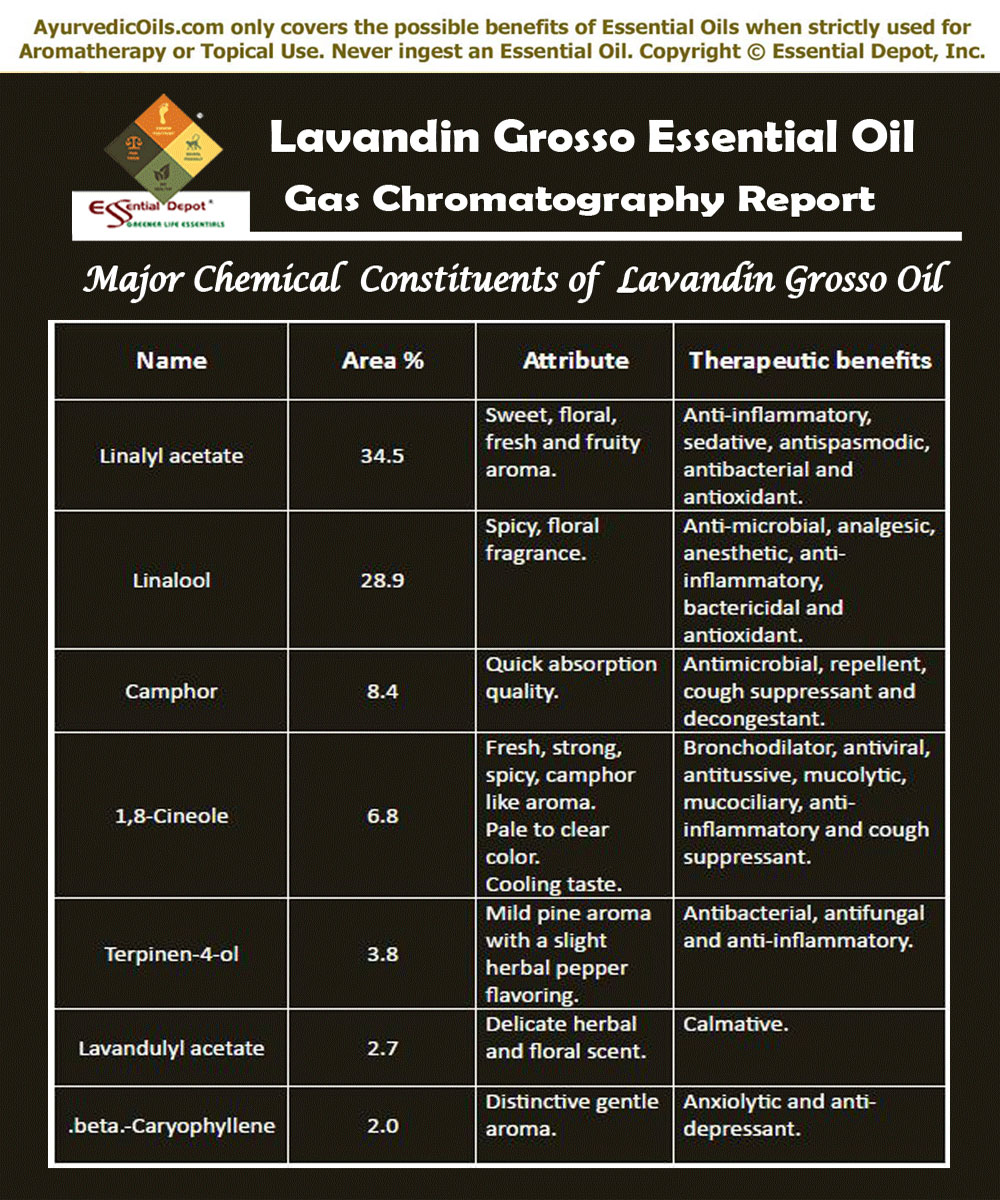
According to the Gas chromatography report, Lavandin Grosso oil constitutes of 25 chemical components that contribute to its fragrance, therapeutic attributes, consistency and quality. Of which, Linalyl acetate contributes to the highest proportion of Lavandin Grosso oil constituents with about 34.5% of its total composition.

Just click on:

I believe that this must certainly help you in getting to know the exclusive information about these prime chemical constituents of Lavandin Grosso oil.

The table crafted below clearly depicts the unique nature and contributions of these biochemical constituents to the healing magnificence of Lavandin Grosso essential oil.

lavandin-oil

Therapeutic properties of Lavandin Oil:

The remedial properties are antiseptic, antidepressant, analgesic, vulnerary, expectorant, cicatrisant, nervine, antispasmodic and stimulant.

Ayurvedic health benefits of Lavandin Essential Oil:

Many of us misconstrue that Ayurveda and the other traditional healing practices are meant for the old people or people who are still attached to the Stone Age. Ayurveda is the first and foremost healing methodology to love human beings and appreciate their individual identity, feelings, characteristics and behavioral patterns.

When all other medical sciences in this world aim at treating illnesses, this ancient healing system focused on treating individuals and not just their illnesses.

Ayurvedic philosophy declares that human beings are a part of nature and a person’s wellness or sickness depends upon his balance or imbalance with nature. Diseases occur when an individual’s mind and body is out of balance with nature. It is for this reason Ayurvedic remedies are based upon natural medicines for striking perfect balance with an archway to prevention and healthy aging.

Every individual is distinctive with a unique individual constitution that comprises of three biological energies known as doshas. They are vata, pitta and kapha. Each of these doshas governs certain functions of our body where vata is responsible for nervous functions and circulation, pitta controls metabolism and body temperature and kapha governs fluid movements, consistency and skin health.

Predominance of any of these doshas determines the personality, character, physical set up and the mental makeup of a person.

Imbalance between any of these doshas causes illness and Ayurvedic medications are prescribed in such a way that the imbalances are treated. Lavandin essential oil is said to reduce kapha and pitta dosha and has a neutral effect on vata dosha.

Let’s take a look at the Ayurvedic health benefits of Lavandin essential oil:

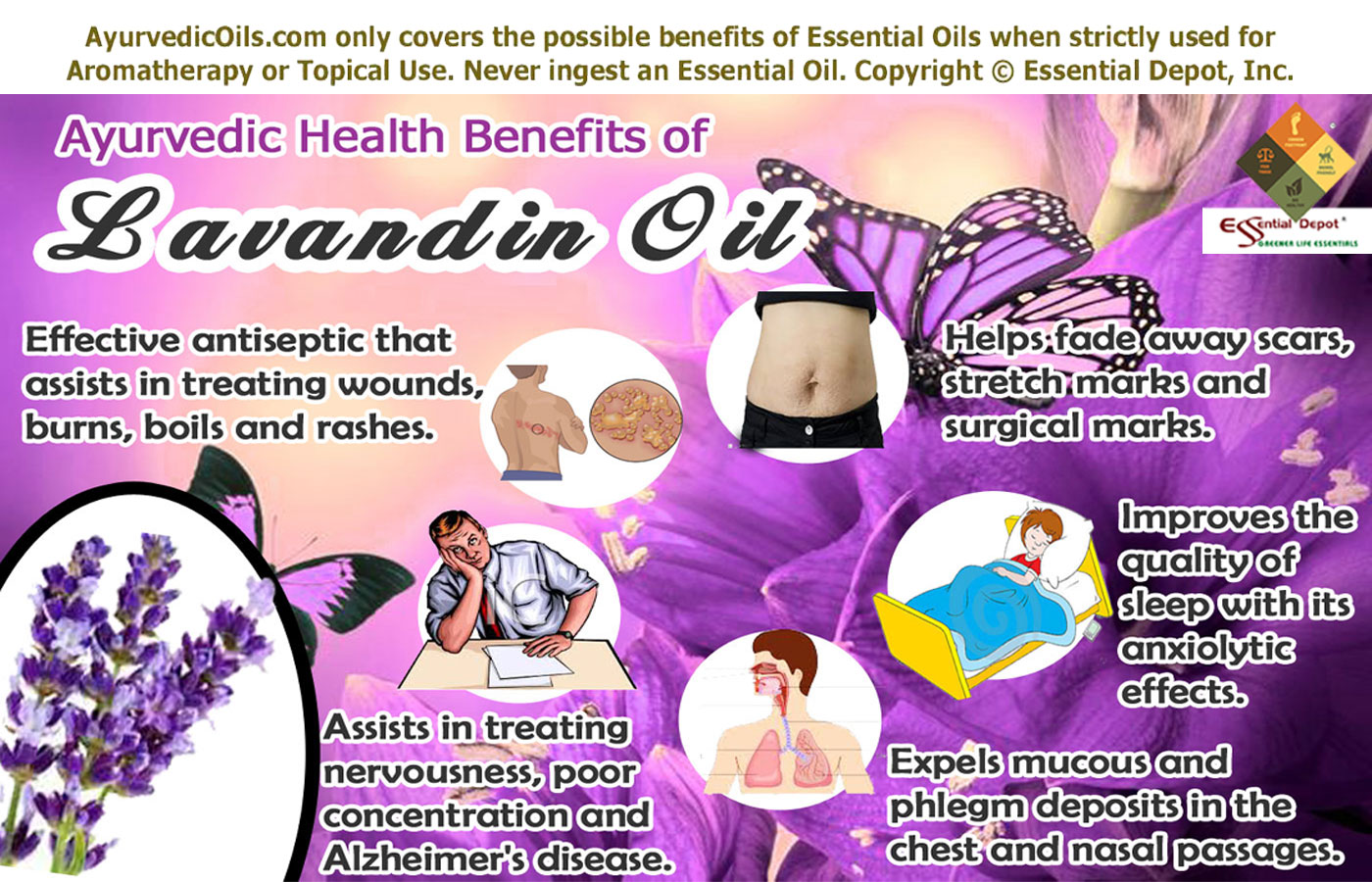
lavandin-broucher1. Benefits to the skin:

Popular author Susanne Fischer-Rizzi states that Lavender has more than 167 tested and proven medicinal uses. Bryan Miller and Light Miller in their book ‘Ayurveda and Aromatherapy’ says that Lavender is a must have essential oil in your first-aid kit or travel bag. With much similar aroma and healing properties like Lavender, Lavandin essential oil is also beneficial in a number of ways especially for nurturing skin health.

With excellent antiseptic, vulnerary and cicatrisant properties Lavandin essential oil has been proven effective for treating numerous skin problems. It keeps the skin clean and fights against various germs.

The ability of this oil in killing germs contributes to its effectiveness in treating dermatitis, scabies and few other infectious skin disorders. Being an effective antiseptic Lavandin essential oil can assist in treating wounds, cuts, burns, boils and rashes. It protects the open wounds from being septic or getting affected by the harmful organisms in air like tetanus.

The vulnerary properties of this oil helps in speeding up the process of healing wounds especially in case of incisions, surgical wounds, cuts or other accidental wounds. Applying 2 drops of Lavandin essential oil mixed with 1 ml of coconut oil is a sure-shot remedy for quick healing of wounds, protecting from infections and for fading away the scars and marks left by wounds, acne, stretch marks, surgical marks, cracks and other marks related to pregnancy.

Lavendin essential oil improves blood circulation and encourages the growth of new skin cells which contribute to its natural anti-scarring properties. You can also blend 3 to 4 drops of Lavendin oil in 2 ml of olive oil or to your regular skin care lotion and gently massage on to the skin to clear blemishes, treat sluggishness, dry skin and for improving the natural glow of the skin.

2. Benefits to the mind:

Lavandin essential oil has a rejuvenating and calming aroma that acts as an admirable antidepressant oil. The presence of camphor, linalyl acetate and terpineol-4 enhances its soothing and stimulating attributes that benefit the mind and heart in numerous ways. Lavandin Grosso oil is regarded as a great natural remedy for alleviating stress, fatigue, anxiety and depression. Certain studies have proven that Lavandin essential oil have anxiolytic effects that aid in improving the quality of sleep and save you from insomnia and nightmares.

Feelings of loneliness, lack of self-confidence, insecurity, loss of love or your near ones and work pressure may drag you down and waive a red flag to all your endeavors. All you need to do is to waive back the pleasant Lavandin flag that can uplift your spirit, enhance your self-confidence, fight against depressive feelings and reassure your success.

Adding 2 to 3 drops of Lavandin oil in your vaporizer, burner, diffuser, aroma lamp or bath tub can help in combating negative thoughts and grant the power to swim against the tide.

A 2009 study on ‘The use of the essential oil of Lavandin to reduce preoperative anxiety in surgical patients’ by the United Hospital, MN, USA tested about 150 adult patients to assess the effectiveness of Lavandin essential oil in reducing preoperative anxiety than other standard care methodologies. This study came up with an amazing result stating “Controlling for baseline anxiety and pain, the lavandin group had significantly lower anxiety on OR transfer, suggesting that lavandin is a simple, low-risk, cost-effective intervention with the potential to improve preoperative outcomes and increase patient satisfaction.”

3. Benefits to the respiratory system:

Adding 2 to 3 drops of Lavandin essential oil in steam inhalation or blending 2 drops of Lavandin oil with 1 ml of coconut oil and massaging it on chest, throat and back aids in treating cough, cold, bronchitis, sinusitis, chest congestion and other breathing problems. This is mainly due to the antiseptic properties of Lavandin oil that is proven to combat germs causing respiratory problems and its expectorant values that expel mucous and phlegm deposits in the chest and nasal passages causing cough and congestion.

4. Benefits to the entire body:

Lavandin Grosso oil benefits the entire body by supporting the functions of the nervous system. Using it as a massage oil by mixing 5 drops of this oil with 2.5 ml of jojoba oil aid in strengthening the nervous system and activate the nerves that pass on to different parts of the body. This is of great assistance in treating nervousness, sluggishness, convulsions, Alzheimer’s disease, lack of concentration and reflexes and certain other nervous problems.

Jane Buckle says “Lavandin Grosso was shown to be very effective against non-tubercular opportunistic mycobacteria (NTM) which is common in AIDS. Grosso is high in linalool for infections.” Lavandin essential oil also aids in treating pain, inflammation, rheumatism, influenza, headache, stiff joints, muscular problems etc, with its analgesic and anti-inflammatory properties.

Disclaimer:

This article is only for the purpose of information and is not destined for diagnosis or to substitute any prescribed medicines or professional advice. Never use essential oils internally and always use them in a diluted form for topical application as pure and organic essential oils are highly concentrated liquids and may cause harm if not used properly. Prevention is better than cure and it is always advisable to consult your Ayurvedic practitioner before choosing the right essential oils for your unique constitution and health condition.

The MSDS (Material Safety Data Sheet) of Lavandin Grosso oil is readily available for your enhanced safety and better usage.

Gas Chromatography Report (GC analysis) of Lavandin Grosso oil.

Thought for the day:  

The Universe is one great kindergarten for man. Everything that exists has brought with it its own peculiar lesson.     -Orison Swett Marden

Suggested Reading:

  1. Lavender: The Genus Lavandula (Medicinal and Aromatic Plants – Industrial Profiles) from CRC Press
  2. ISO 8902:1999, Oil of lavandin Grosso (Lavandula angustifolia Miller x Lavandula latifolia (L.f.) Medikus), French type by ISO TC 54
  3. The Lavender Garden: Beautiful Varieties to Grow and Gather by Robert Kourik
  4. The Lavender Lover’s Handbook: The 100 Most Beautiful and Fragrant Varieties for Growing, Crafting, and Cooking by Sarah Berringer Bader

Reference Links:

  1. The use of the essential oil of Lavandin to reduce preoperative anxiety in surgical patients’ by the United Hospital, MN, USA published in PubMed
  2. Lavandula by Wikipedia
  3. Lavandula x intermedia ‘Grosso’ by Missouri Botanical Garden
  4. Health Benefits of Lavandin Essential Oil by Organic Facts