Castor Oil

‘Don’t judge a book by its cover’ is a celebrated phrase and it promptly applies to Castor oil, the often overlooked oil. Castor is indeed a Master in healing colossal medical conditions including alopecia, wrinkles, ovarian cysts, fibroids, constipation, phantom tumor, piles, asthma, rheumatoid arthritis, neuralgia and the list goes on.

Castor-bannerCalled as Gandharvahasta or Eranda taila in Ayurveda, Castor oil is the handiest remedy for alleviating abdominal tumors and uterine fibroids in women and certain other inflammatory conditions.

It is also prescribed for enhancing sperm quality, cognitive functions, memory power, skin health, digestive ability, muscular strength, immunity and in cleansing vagina, semen and the abdomen.

Purchase Castor Oil – Retail – 1 Quart – CLICK HERE

Purchase Castor Oil – Wholesale – 1 Gallon – CLICK HERE

Therapeutic properties and chemical constituents of Castor oil:

The primary chemical components of Castor oil are ricinoleic acid that contributes to about 85 to 95 per cent of its oil along with other constituents like oleic acid, stearic acid, palmitic acid, a-linoleic acid, linoleic acid and dihydroxystearic acid.

Anti-inflammatory, emmenagogue, anti-infectious, anti-rheumatic, fungicidal, laxative, immune stimulant, insecticidal, anti-viral, labor inducing, anti-allergic, anthelmintic, rejuvenative, anti-aging, germicidal, disinfectant, and analgesic are the major remedial attributes of pure Castor oil.

Historical uses and importance of Castor oil:

Castor oil is extracted from the attractive and ornamental Castor seeds by cold press method. It is one among the most commonly used oil since the pre-historic times for cleansing the colon, reproductive system and as a powerful detoxifying agent.

Ricinus communis is the botanical name of the Castor plant from which this healing vegetable oil is extracted.

You’d be shocked to know that Castor oil was given as punishment to mischievous children and it was later restricted by the Physicians for using medicines as punishment.

Mussolini is known for the use of Castor oil as a penalty for political dissidents and it was popularly quoted that Mussolini’s supremacy was supported by the ‘bludgeon and castor oil’.

These negative facts about Castor oil vanished gradually after few decades of Mussolini’s death in the Western world and with its enormous medical benefits that had proven positive effects.

The ancient Ayurvedic healing records the use of Eranda or Castor oil since 2000 BC as a traditional analgesic, purgative and laxative for treating arthritis, constipation and infestation of worms. It has also been used in lamps.

Castor oil is the hero in the Asian and African provinces and was regarded as a panacea for various infectious diseases and chronic health conditions.

Ayurveda and other alternative medicinal practices prescribe Castor oil as an effective remedy for rheumatism, lumbago, hair fall, wrinkles, cysts, warts, menstrual discomforts, constipation, yeast infections, acne, ringworm, arthritis and inflammatory nerves.

Castor oil has been listed as ‘Generally recognized as safe and effective’ (GRASE) by Food and Drug Administration (FDA) of the United States as an over-the-counter laxative.

Kolliphor EL is one among the most common Castor oil derivative that is included in various modern drugs as follows:

“Xenaderm ointment, a topical treatment for skin ulcers, is a combination of Balsam of Peru, castor oil, and trypsin.

Paclitaxel, a mitotic inhibitor used in cancer chemotherapy.

Miconazole, an antifungal agent.

Nelfinavir mesylate, an HIV protease inhibitor.”

Even today, Castor oil is used as a natural emollient and moisturizer in numerous soaps, shampoos and various other cosmetics manufacturing.

Ayurvedic health benefits of Castor oil:

Castor oil is an excellent detoxifying, cleansing, nourishing and pacifying oil for the mind, body and spirit, especially when used in Abhyanga or Ayurvedic massage. Abhyanga is an ancient art of repairing and rejuvenating the tensed muscles and the system with the use of therapeutic Ayurvedic oils.

Charaka, the most celebrated Ayurvedic philosopher quotes massaging as:

The body of one who uses oil massage regularly does not become affected much even if subjected to accidental injuries, or strenuous work. By using oil massage daily, a person is endowed with pleasant touch, trimmed body parts and becomes strong, charming and least affected by old age.”

Charaka Samhita Vol. 1, V: 88-89.

Many Ayurvedic experts and philosophers beckon Castor oil as ‘the only oil that eliminates ama (toxic remains in the system mainly due to improper digestion) and crammed mala (faeces) and kapha vitiation (stagnation of water deposits).’ Castor oil works best when it is employed with heat on the affected parts of the body.

Often rated as the best oil for treating vata imbalances, Castor oil has the potent to treat chronic constipation, Gastro-intestinal congestion, benign tumors, uterine fibroids, infections, cysts, dry skin conditions, matured skin, brittle hair, discards morbid vata, stiff joints, gout and bloating.

Castor oil pacifies vata and kapha dosha in excess and enhances pitta energy. It augments circulation with its warm attributes, thus encouraging the movement of lymph.

Being the oldest of all remedial sciences on earth, Ayurveda is the real inspiration and the root for all other medical systems on earth. This includes Siddha, Homeopathy, TCM (Traditional Chinese Medicine), Unani, Aromatherapy, Acupressure and Chiropractic.

Ayurveda abides by a ‘cause and effect’ technology that sticks to the popular adage, “There’s no smoke without fire.”

Any health condition, according to Ayurveda does not occur instantly and Ayurveda believes that there is a strong underlying root cause behind every illness. The mind, body and the spirit are interconnected with each other and imbalance of any of these factors would affect the others.

Ayurvedic healing endeavors to identify the root cause of a sickness and treat it for complete cure and prevention, instead of treating its symptoms that might be of temporary relief.

Ayurveda states that good state of health is a blend of emotional, physical and spiritual wellness of an individual. It aims at self-realization and attaining Divinity through purity along with hale and heartiness.

Thus, Acharya Charaka, the renowned Ayurvedic Guru and the author of Charaka Samhita, the first Ayurvedic encyclopedia says The three – body, psyche, and soul – act as a tripod. The world stands upon them, and within them, the world abides.”

Every person in this universe is a unique individual with a distinct individual constitution known as Prakriti. This is a combination of three doshas, namely vata, pitta and kapha.

World is made up of five fundamental elements called as Panchamahabhutas (earth, air, fire, space and earth.) Doshic energies are an arrangement of these five vital forces.

All the human beings have a predominance of any one dosha, which decides the physical, mental, spiritual and behavioral attributes.

Ayurveda strives to strike absolute balance between these doshas and treat the unevenness with Nature as imbalance with the natural buoyancy is often the beginning of any medical condition.

The most common Ayurvedic medications are herbs and herbal medicines in the form of powder, syrup and paste; Ayurvedic essential oils, Panchakarma or the practice of Ayurvedic detoxification, Pranayama or conscious breathing, Abhyanga or Ayurvedic massaging, yoga, Ayurvedic routine or Dinacharya, simple physical exercises, prayers and meditation.

The most effective but the less known Ayurvedic health benefits of Castor oil are:Castor-Oil1. Promising natural remedy for treating uterine fibroids and hormonal imbalances:

Uterine fibroids are one among the most common problems in women, often present without any symptoms and in certain cases it causes extreme menstrual pain, pain in the pelvic area, frequent urination and fertility problems as well depending upon its location in the inner wall of the uterus.

The actual reason for fibroids in the uterus is not known but is generally stated as a change in the hormonal levels of women in the reproductive age. Fibroids tend to shrink with age as the level of estrogen reduces gradually.

Fibroids are benign tumors that require no treatment unless it causes severe pain or fertility problems. The most intricate solution for treating uterine fibroids is hysterectomy or removal of uterus.

Gulma is the Ayurvedic term for fibroids and other phantom tumors. Ayurveda recommends the use of warm Castor oil in massage and as a medicinal intake.

Castor oil is called as Gulma hara, which means that the best remedy for discarding tumors present in the abdominal area.

Abdominal tumors are often caused due to the vitiation of vata and kapha dosha. Castor oil is termed as one among the best natural medication for eliminating excess vata and kapha dosha, thus enhancing circulation and reducing the size and symptoms of fibroids, cysts and other abdominal tumors.

Vata dosha is the air and space energy that rush through the system in a jiffy and is prevalently the cause behind the imbalance of other two doshas. Vata doshas rules circulation and movement of the body and vitiated vata might end up in causing anxiety, dry skin, bloating, muscular stiffness, dehydration, improper blood circulation, insomnia and more.

This Sanskrit verse says it right, “THE LION OF CASTOR OIL ALONE CAN KILL THE MADDENED ELEPHANT OF ‘VATA’ AS IT STAMPEDES THROUGH THE BODY.”

Castor oil is by far considered as the only oil that has the ability to eliminate ama or toxic remains, kapha imbalance (surplus fluid deposits) and congested mala (faeces). When used externally with heat, Castor oil is effective in decreasing the growth of excess tissues, cysts and tumors.

The rich therapeutic oil extracted from the seeds of the Castor plant is a promising alternative for treating Yoni Roga, which means the disorders of the genital tract in women and Udara, meaning abdominal diseases.

It is also termed as Adhobhaga Doshahara, which means its efficacy in flushing out doshic vitiations from the lower part of the system.

Massage your lower abdomen with 5 ml of warm Castor oil and cover it with a flannel cloth, followed by a plastic wrap. Use a heating pad or hot water bottle over the wrap and relax in a comfortable position for about 30 minutes to 1 hour.

Castor oil has deep penetrating properties, thus it enters the bloodstream quickly and passes on its therapeutic properties at ease. This power-packed massage therapy can help one in breaking up scar tissues, if any, eliminates uterus congestion, reduces and confiscates fibroids, cysts and other benign tumors in the abdominal area (uterus and ovary).

It works by increasing the blood circulation in the abdominal region and thus breaks down the clogged mass of fibroids, cysts and tumors.

Dysmennorhea or painful menses, delayed or obstructed menstruation are treated with the natural emmenagogue properties of Castor oil, which is attributed to the presence of ricinoleic acid.

Remember not to use Castor oil during menstruation as it might increase the flow of menses and the best time to use is before the onset of your periods.

Castor oil is an excellent cleansing remedy for the male and female reproductive system. Ayurveda calls Castor oil as Yoni vishodhana, medication for vaginal cleansing and as Shukra vishodhana, remedy for enhancing the quality of semen and purifying it.

Ayurveda recommends newly married couples to take Castor oil as an aid to purify the mind, body and spirit before giving birth to a new soul on earth. The oil of Castor is also used for treating Shukra gada or seminal problems.

2. Nourishes and supports skin health:

Are you into Soap making business? Then just choose Castor oil with your eyes closed and you’d definitely order bulk of Castor oil cans if you get to know the Ayurvedic benefits of it.

Castor oil is a promising Ayurvedic remedy for healing skin disorders (Kushtapaha); an excellent invigorating and anti-aging agent (Vaya sthapana); enhances the natural glow of your skin (Kantikara); boosts skin health (Twachya); enters even through the minute channels of the skin and repairs the damaged skin cells (Teekshna and Sookshma).

The most impressive use of Castor oil is its effectiveness in treating wrinkles, fine lines, crow’s foot, spots and other symptoms of aging. This quality is attributed to its emollient benefits that influence the natural production of elastin and collagen, the secret agents of supple skin.

Massaging your skin with 4 ml of Castor oil blended with 1 ml of Jojoba oil can assist in revitalizing and revivifying the skin surface.

Castor oil can also be helpful in treating psoriasis, ringworm, eczema, stretch marks, skin inflammation, boils, acne, abrasions, corns, cysts and dry skin conditions.

3. Fortifies and thickens your hair by enriching the roots:

Hair and skin are the most promising indicators of a ‘Healthy You’. Loss of hair, dandruff, dry, rough and gray hairs do not always occur because of environmental nuances. There are much more intense reasons behind the illness of your hair and scalp.

Stress, worries, anxiety, fatigue, insomnia, panic attacks and of course unhealthy diet and lifestyle practices contribute to the detrimental state of your hair.

Castor oil is an incredible natural asset for addressing most of your hair problems and has even been proven to influence the growth of hair on your eyebrows.

Unclogging the blocked pores, strengthening the hair follicles, nourishing the scalp conditions, moisturizing the hair and scalp and motivating the natural growth of hair is all that the magical touch of Castor oil can spell upon you.

Being a traditional remedy for addressing various hair conditions, Castor oil is also recommended in the United States of America as an economical substitute for the most expensive serums for the growth of hair and eyebrows.

To start with, blend 10 ml of Castor oil with 2 drops of Lime oil and 5 drops of Rosemary oil and heat it slightly. Massage this warm blend on your scalp and leave it for about an hour. Shampoo your hair with a mild herbal shampoo for best results.

Continue this enriching massage twice a week for about 3 months for repairing your hair damages and fostering the natural shine and luster of your bouncy locks.

Ayurveda beckons Castor oil as Keshya for its efficiency in encouraging hair growth and enriching the hair follicles.

The presence of Vitamin E, ricinoleic acid and other Omega-9 and Omega-6 fatty acids help in influencing good circulation of blood in the scalp, seal the moisture in the hair and scalp, treat split ends and breakage of hair.

The antimicrobial, antiviral and antifungal properties of Castor oil also assist in treating itchy scalp conditions, dandruff and other infections of the scalp.

4. Relieves pain, inflammation and rheumatic conditions:

Rheumatism and rheumatoid arthritis are the children of the toxic elements left in the system, especially amassed in the hands, legs and joints. This results in pain, inflammation, improper blood circulation, redness, soreness and irritation in the muscles and joints.

Castor oil is a winning rescuer from amavat (inflexibility and pain in joints) and rheumatic conditions with its wonderful effect to augment blood circulation, relieve pain, reduce swelling and treat stiffness in joints.

With its easily penetrating quality, Castor oil pierces into the bloodstream and starts working instantly on the affected parts. Castor oil is called as Shulaghnam for its analgesic values and is also known as Guhya shoola and Prushta shoola for supporting the treatment of lower back pain.

It’s also been proven effectual in the treatment of Shotha (inflammation and swelling) and Katigraha (stiffness in the lower back).

Massaging the painful parts with 3 ml of warm Castor oil blended with 2 drops of Ginger oil can help in eliminating the toxic wastes and excess fluid deposits stagnated in the system through urine and metabolic wastes.

It can also be helpful in alleviating pain, soothing the tensed muscles, calming the nerves and instilling complete relief.

5. Expels toxic remains and excellent cleanser of the digestive tract:

Ama or toxic remains in the body are mainly due to indigestion, irregular diet and other lifestyle practices. Ayurveda states that build up of noxious substances in the system might pave way to the rise of chronic and even fatal diseases.

As read already, Castor is one among the best Ayurvedic remedy for eliminating toxic (ama) remains, excess fluid, salt, uric acid and fat deposits in the body.

Castor oil is a grandmother’s remedy for eliminating worms, parasites and toxic substances in the body, especially the digestive system. Pure Castor oil is ingested during the night and is trusted to stimulate the bowel movements and flush out the toxic waste through faeces in the morning.

Gas (anaha), bloating (Vatodara), gout (Vatashonita), chronic constipation (Vid bandha), prostitis (Ashtila), and heaviness are often treated with Castor oil, either as a tonic or massage oil.

Deepana is another medicinal term for Castor oil for its ability to enhance digestive power and is a promising natural laxative. For its anthelmintic properties that aids in discarding worms, parasites and other pathogens in the body, Castor oil is also known as Krimighnam.

Blend 2 drops of Peppermint oil with 3 ml of Castor oil and massage on the abdominal area for alleviating digestive discomforts.

Other health benefits:

In general, Castor oil is said to contribute to varied health benefits of the system including its power to nurture immunity or the power to resist against diseases (Balakara); improve cognitive and memory functions (Medhakara and Smrutikara); and augment general health and heartiness (Arogyakara).

Disclaimer:

This article is only for the purpose of education and is not destined to treat, prevent or diagnose any health conditions. It is not meant for substituting any prescription medicines or the advice of a medical professional. We, at Essential Depot are not healthcare experts and this information is shared only for thinning out the phenomenal healing of Ayurveda, the oldest of all medical sciences on earth.

All essential oils are recommended topical use only and not for ingestion. This is mainly because 100 per cent pure and organic oils are concentrated substances and may cause allergic reactions.

Take special care when using essential oils on pregnant or nursing women, children and people with chronic illnesses. Speak with your Ayurvedic professional or General practitioner before choosing the suitable oils for your unique individual constitution or Prakriti and the state of health or Vikruti. A patch test on your skin before enjoying the enormous benefits of Ayurvedic essential oils is recommended.

Thought for the day:

Wherever the art of medicine is loved, there is also a love of humanity.
Hippocrates

Suggested Reading:

  1. Castor Oil Pack Therapy: Application & Instruction by ND, Bruce Baar MS
  2. Castor Oil and Rosemary Oil for Hair Growth: The Secret to Re-growing Hair and Preventing Hair Loss Naturally by Mark Calhoun
  3. Castor Oil: How To Grow Longer Hair, Get Rid Of Scars, Remove Wrinkles, And Other Health And Beauty Recipes (Homemade Body Care Book 4) by Kathy Aquino
  4. The 3 Essential Oils: Olive Oil, Coconut Oil and Castor Oil by Cat McEwan
  5. Castor Oil (Carrier Oils Book 7) by Miriam Kinai

Reference Links:

  1. Ricinus communis by Wikipedia
  2. Transdermal Absorption of Castor Oil by Douglas G. Richards, Ph.D., David L. McMillin, M.A., Eric A. Mein, M.D., and Carl D. Nelson, D.C. published in the Meridian Institute.
  3. Final report on the safety assessment of Ricinus communis (Castor seed oil), published in the International Journal of Toxicology
  4. Benefits of Castor oil by MedIndia
  5. Health benefits of Castor oil by Times of India


Your resource for quality Essential Oils. Every batch is
GC tested to ensure purity and authenticity.

Apricot Kernel Oil

‘Bundan iyisi Şam’da kayısı’, Will you trust me if I say that I speak Turkish? I know that you will not. Ok, chill. This Turkish idiom literally means “the only thing better than this is an apricot in Damascus” and the most simple meaning is “it doesn’t get any better than this.” That is the excellence of Apricots.
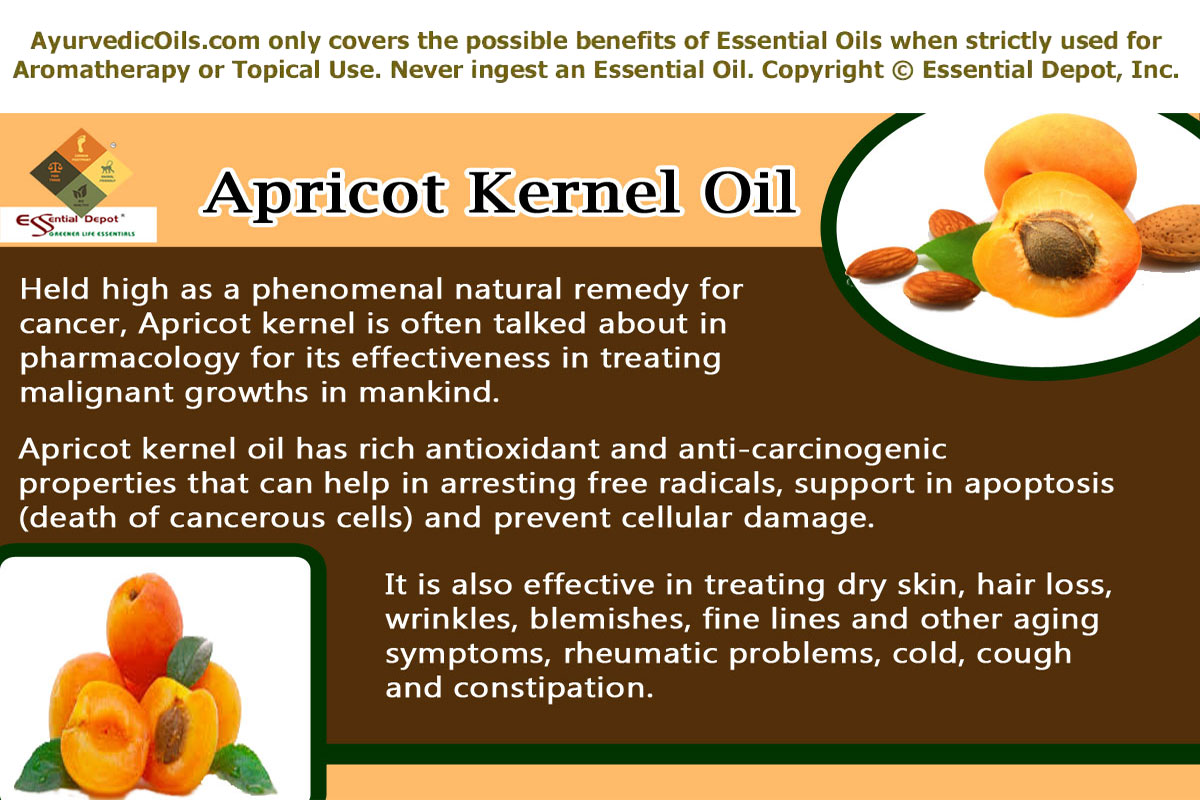
apricot-kernel-bannerThe seed kernels are the source of its rich essential oil and are also called as apricot almonds or bitter almonds, attributed to its bitter taste but the sweetest healing benefits that would coerce you to love it forever.

Often associated witheducation and medicine’ by the Traditional Chinese, Apricot means ‘education circle’ in the Chinese dictionary. Held high as a phenomenal natural remedy for cancer, Apricot kernel is the most talked about subject matter in the world of medicinal research for its effectiveness in treating malignant growths in mankind.

Apricot kernel and its essential oil have been in various Complementary and Traditional Healing systems including Ayurveda for its enormous therapeutic benefits for treating dry skin, hair loss, wrinkles, blemishes, fine lines and other aging symptoms, rheumatic problems, cold, cough and constipation.

Purchase Apricot Kernel Oil – 1 GALLON – CLICK HERE

Purchase Apricot Kernel Oil – 1 QUART – CLICK HERE

Historical uses and importance of Apricot kernel oil:

Apricots are scientifically called as Prunus armeniaca. This drupe fruit is indigenous to Armenia, Himalayas, China and few other parts of Asia. Certain sources also state that Apricot was first cultivated before 3000 BC in India.

The Roman General Lucullus imported Apricot initially to Rome from Armenia. The historical hero Alexander the Great was the first king to bring in Apricots to Greece.

Chinese and Apricots have a historical bonding, where the renowned Chinese physician Dong Feng of the ‘Three Kingdoms Period’ just requested his patients to plant Apricot plants in his orchard on the recovery of their sickness as a token of gratitude for his medical services. This eventually ended up in the growth of numerous Apricot trees along with innumerable medicinal benefits in Dong Feng’s garden.

It is also said that Confucius, the Chinese philosopher taught his students in a place encircled with Apricot woods. Even today, the poetic indication to physicians in China goes like “The Expert of the Apricot Grove.” Wonderful to hear, isn’t it?!?!

The woods of the Apricot trees are also used in various wooden carvings in Armenia and the musical wind instrument named Duduk is known as the Apricot pipe.

Regarded as an aphrodisiac in Europe, Apricots have also been mentioned in “A Midsummer Night’s Dream by William Shakespeare and as a stimulant of normal labour in “The Duchess of Malfi” by John Webster.

The traditional use of Apricot seeds include its effectiveness as a natural alternative for cancer cure and these seeds were used as early as 502 AD for fighting against tumors. In the 17th century the English used the seeds of Apricot fruits in the treatment of ulcers, tumors and swellings.

Apricot kernels were prescribed in Chinese medicine for treating emphysema, asthma, bronchitis and other respiratory conditions. Throughout the history, these bundles of wonders have been in use for treating constipation, cough, expelling mucous and phlegm deposits and for enhancing the health of hair and skin.

Sir Robert McCarrison during his job with the Indian Medical Service in 1930s, explored the health and heartiness of a tribal populace known as Hunzas. Major Robert said that the people of this tribe lived for about 100 years of age mainly due to their nutritious diet with fresh grains, fruits and vegetables, raw milk along with their livelihood that involves lot of natural physical exercises. It was also written that there was no evidence of cancer, obesity, heart problems or diabetes.

The reason behind their cancer-free life was later found by Krebs research, which concluded that Apricot kernels were a vital part of the Hunzas diet regimen, contributing to the discovery of the amygdalin compound in Apricot kernels, the secret behind tumor suppression.

The seeds of Apricots and its essential oil have been used in the manufacturing of perfumes, moisturizing lotions, soaps, cosmetics and in confectioneries as a substitute for bitter almond oil in seasoning culinary varieties.

Remedial properties and chemical constituents of Apricot kernel oil:

Antioxidant, expectorant, laxative, anti-inflammatory, moisturizing, anti-asthmatic, revitalizing and anti-tussive are the prominent healing values of Apricot kernel oil.

The chemical constituents of this oil are oleic acid, linoleic acid, stearic acid, palmitic acid, palmitoleic acid and arachidonic acid in the order of its major presence. It also contains amygdalin or laetrile, the crystalline compound claimed to be responsible for its cancer fighting attributes.

Apricot kernels are indeed a nutrient hub with the presence of Vitamins A, C, E, K, B17, phosphorous, niacin, magnesium, potassium, manganese and copper.

Ayurvedic health benefits of Apricot kernel oil:

Being the oldest remedial system (about 5,000 years old), Ayurveda is adorably called as the Mother of all healing sciences on earth. As a sacred child of India, Ayurveda is believed as a gift to Acharya Dhanvantari, the Lord of Medicine by Lord Brahma, the God of Creation.

The aim of Ayurveda is to gift mankind with absolute health, harmony, prevention of illnesses, healthy aging and longevity with the use of natural remedies including Ayurvedic therapies and a disciplined living.

It’s an ancient adage that the solutions for all the problems are deeply vested within the problem itself. With this principle in mind, Ayurveda states that illness is being in disharmony with nature and the remedies for diseases are enormously present in nature by itself.

The National Institute of Health states, “The aim of Ayurvedic medicine is to integrate and balance the body, mind, and spirit. This is believed to help prevent illness and promote wellness.”

Ayurvedic encyclopedias, namely Charaka Samhita, Sushruta Samhita and Ashtanga Hridaya Samhita by the Ayurvedic philosophers and physicians Charaka and Sushruta talk about all kinds of medical conditions, their symptoms, root cause and remedies.

They never stopped with fever, cold, indigestion, headache and joint pain; instead they were the pioneers of plastic surgery and C-section delivery before thousands of years that lacked both the contemporary techniques and modern medical equipment.

Ayurveda defines that all things on earth including human beings are a vital part of nature and are built up with the five fundamental elements of nature. They are earth, water, space, air and fire.

Human body represents these elements where bones and muscles are the components of earth, blood and other fluids – water, heat and the essential energy – fire, breathing mechanism – air and the spirit is the element of space.

Each and every individual is a distinct part of nature with a unique individual constitution called as Prakriti, which is a combination of 3 doshas (vata, pitta and kapha). Perfect balance between the doshas indicate health and imbalance due to irregular food habits, sedentary life style, improper code of conduct, climatic changes etc, lead to illnesses.

Ayurvedic remedies including herbs, essential oils, meditation, Pranayama (balanced breathing), Panchakarma (detox technique), Ayurvedic routine, prayers, Abhyanga or Ayurvedic massage and other natural techniques are prescribed for striking balance between doshas thus paving way for harmony with nature.

Apricot kernel oil has the power to pacify kapha and vata doshas and aggravate pitta dosha. The natural health benefits of Apricot kernel oil are:
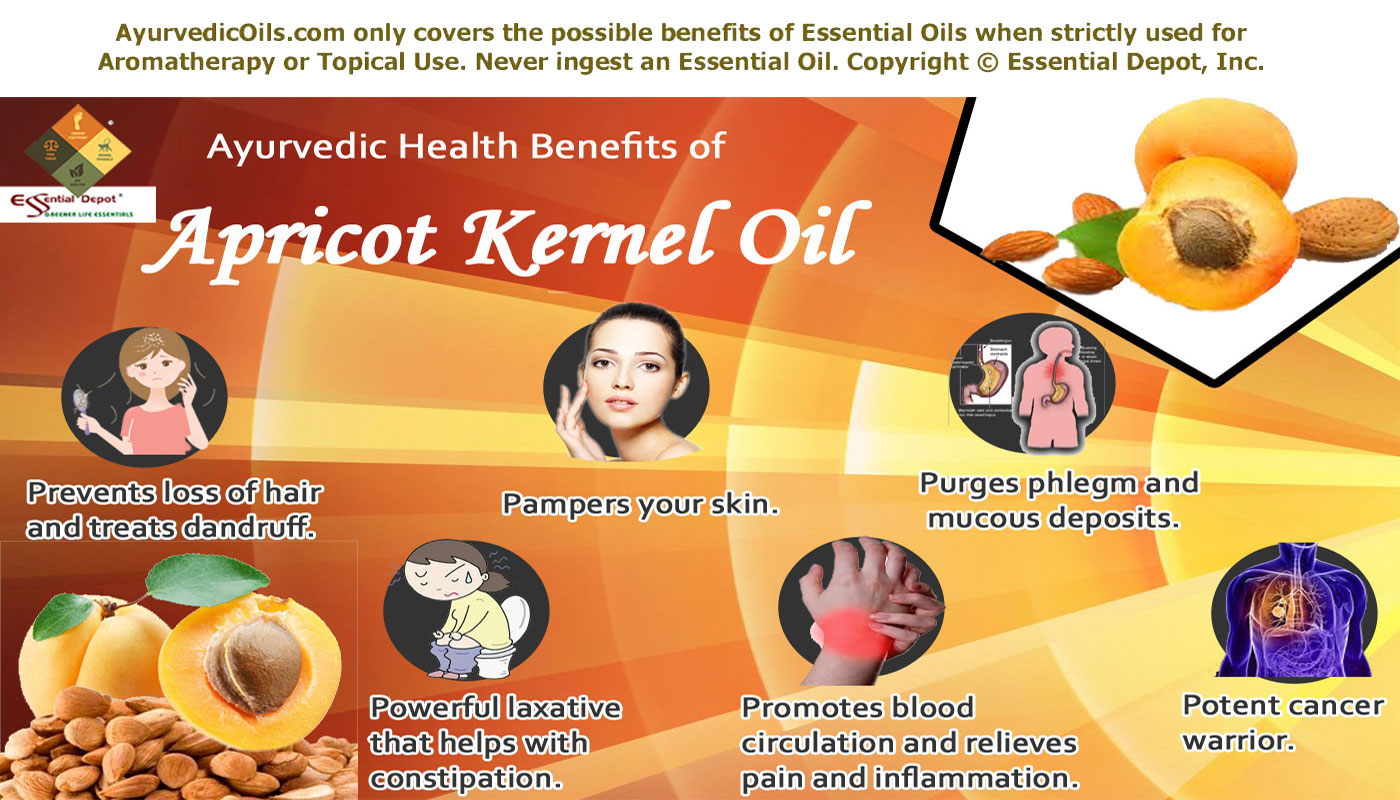
apricot-kernel-broucher1. Potent cancer warrior:

The article on ‘Apricot seeds kill cancer cells without side effects’ posted in Natural news talks about the effectiveness of the amygdalin compound in Apricot kernels for fighting against free radicals and combating the growth of cancerous cells.

An intense research study by Dr. Ernst Krebb, led to the discovery of Amygdalin or the B17 compound found in Apricot kernels and in about 1200 edible plant varieties throughout nature.

Dr. Krebb also recorded in his study that amygdalin is a nitrioloside that bear a resemblance to the B complex structures. It is because of this reason; Amygdalin compound was named as B17.

The antioxidant property of Apricot kernel oil is due to the presence of B17 and laetrile (the resultant of amygdalin when purified and put in a concentrated form). Dr. Krebb tested the positive effects of laetrile on himself and concluded that laetrile extracted from amygdalin is extremely powerful in fighting against cancerous cells and preventing further cellular damage.

This research is still under various controversies due to the fact that benzaldehyde and cyanide. Numerous foods like spinach, millet, bitter almonds, lima beans, bamboo shoots contain cyanide and are still safe for consumption. This is due to the fact that cyanide molecule in these items remain ‘locked’ and are not harmful for the system when they meet up with other molecular substances.

Unlike normal cells, the cancerous cells contain beta-glucosidase, which is the ‘unlocking enzyme’ for benzaldehyde and cyanide in amygdalin compounds of Apricot kernel oil. This reacts and destroys the cancerous cells and the presence of rhodanese enzymes in the normal cells prevent other normal cells from being affected by the otherwise reaction of cyanide and benzaldehyde.

The best possible means to use Apricot kernel oil for fighting cancerous growths is to use it in a promising massage blend. Mix 5 ounce of Apricot kernel oil with 5 drops of Clove oil bud oil, 5 drops of Garlic oil and 5 drops of Juniper berry oil and massage it gently on your system, once in a week.

Garlic, Clove, and Juniper berry oil along with Apricot kernel oil have rich antioxidant and anti-carcinogenic properties that can help in arresting free radicals, support in apoptosis (death of cancerous cells) and prevent cellular damage.

You can also add 1 drop of each of these oils in diffuser during Pranayama (breathing exercise) where most of the toxic remains in the system can be eliminated through exhalation along with the positive therapeutic properties of this oil blend.

2. Pampers your skin:

The oil of Apricot kernel is light, gentle and non-sticky, with these attributes, it has established a prominent throne in the empire of skin care products. This oil helps in moisturizing the skin in case of dry, rough and scaly conditions (emollient properties); heal cuts, wounds, sunburn, psoriasis, eczema and razor burns (antiseptic properties); protect the wounds from getting infectious (antibacterial properties); fight against fine lines, wrinkles and other symptoms of aging (antioxidant and anti-aging properties).

For locking in extra moisture in your skin surface and for treating acne, blend 2 drops of Rosemary oil with 2 drops of Tea tree oil and 2 ounce of Apricot kernel oil and gently work on your skin.

Apricot kernel oil has a rich content of vitamin E, A and C, which are extremely beneficial for treating dry, mature, scaly and sensitive skin. Apricot oil has the potent to penetrate deeply into the skin and repair the damaged skin cells from within.

Regular massaging with this nourishing blend supports in retaining the clarity, elasticity, suppleness and all other signs of a healthy skin.

3. Prevents loss of hair and treats dandruff:

Dandruff, dry hair, excessive hair loss and itchy scalp are the most sickening hair problems. These conditions are caused by lack of nutrition, unhealthful lifestyle practices, damage due to external factors and excessive use of chemical hair care products with concentration of sulphate and paraben.

Apricot kernel oil comes to your rescue with a high content of vitamin E and other fatty acids in treating all types of hair problems with its potent to lock moisture in your scalp and hair.

Massage your hair and scalp with 5 ounce of Apricot kernel oil with 5 drops of Curry leaf oil and 5 drops of Ylang Ylang oil for combating dandruff, dry and itchy scalp, split-ends, premature graying and promote hair growth by deeply penetrating the scalp and nourishing the hair follicles.

You can also add 5 drops of Apricot oil and 2 drops of Curry leaf oil in your mild shampoo and conditioner for adding that extra shine and bounce to your lustrous locks.

4. Powerful laxative that helps with constipation:

Apricot kernel oil is a part of the Traditional Chinese Medicine for inducing diarrhea, especially for discarding toxic remains in the body through metabolic wastes. This oil has exceptional laxative properties that help in treating constipation, where passing hard and bleeding stools ends up in excruciating pain.

Gently massage your abdomen with 6 drops of Apricot oil and 2 drops of Peppermint oil for encouraging regular bowel movements, secretion of bile and other digestive enzymes for trouble-free digestion and excretion.

5. Promotes blood circulation and relieves pain and inflammation:

The oil extracted from Apricot kernels has proven anti-inflammatory and pain-relieving properties that aid in relieving pain and inflammation, especially in the joints.

Massaging the affected parts with 5 ounce of Apricot kernel oil and 2 drops of St. John’s Wort oil, 2 drops of Cedarwood oil and 6 drops of Ajowan oil can assist in alleviating stress and pain, strengthening the system, promoting blood circulation and eliminating toxic deposits through urine and sweat.

You can also follow this massage with heat pack for allowing deeper penetration into the skin cells. This aids in opening and enhancing the flow of prana or vital energy, harmonizing the nervous functions and for granting a sense of complete relief.

Ayurveda states that cold, congestion, arthritis, rheumatism and other inflammatory conditions are a result of amassing of toxins, salt, uric acid and fat deposits in the system. In general, fluid retention disorders are caused due to kapha vitiation and with its power to pacify excess kapha; Apricot kernel oil helps in treating such inflammatory health conditions.

6. Purges phlegm and mucous deposits:

These heart-shaped tiny little seeds are used in various traditional medicines including the Chinese medicine for treating respiratory conditions like asthma, emphysema, cold and bronchitis.

With its antitussive (cough suppressant), expectorant and anti-asthmatic properties, Apricot kernel oil can help in eliminating phlegm and mucous in the lungs and respiratory passages, alleviate cold, cough and congestion and support in problem-free breathing by lessening strain on the lungs, when 4 drops of Apricot kernel oil with 2 drops of Peppermint oil and 2 drops of Black pepper oil is added to steam inhalation and a gentle massage on your back, temples, chest and throat with your vaporizing ointment mixed with this blend is given.

Other health benefits:

Apricot kernel oil is also used in the treatment of anemia, fever, lowering cholesterol for heart health, osteoporosis and earaches.

Disclaimer:

This article is only for the purpose of information and is not for treatment of any health conditions or for substituting any prescription medicines or the advice of your medical professional. We are not healthcare experts and this piece of information is shared only in public concern for passing on the traditional healing wisdom of Ayurveda.

Never take essential oils internally and it is recommended only for topical application. This is because 100 percent pure and organic oils are highly concentrated substances and may cause allergic or harmful reactions, if ingested or used on the skin directly.

Always speak with your Ayurvedic professional or healthcare practitioner before choosing the right essential oils for your unique individual constitution and medical condition. Extra care should be taken in using essential oils if it is for children, nursing and pregnant women.

Thought for the day:

“Anyone can count the seeds in an apple. No one can count the apples in a seed.” -Author Unknown.

Suggested Reading:

  1. Apricot Power: How Laetrile Cured My Cancer by Helen M. Curran
  2. Apricot Greats: Delicious Apricot Recipes, The Top 100 Apricot Recipes
    by Jo Franks
  3. The Way of Chinese Herbs by Michael Tierra
  4. Healing Skin Disorders: Natural Treatments for Dermatological Conditions by Andrew Gaeddert
  5. Carrier Oils: For Aromatherapy and Massage by Len Price, Shirley Price

Reference Links:
  1. Apricot by Wikipedia
  2. Prunus armeniaca by Wikipedia
  3. Apricot seed by Encyclopedia.com
  4. Apricot kernels for cancer: The real story by Dr. Veronique Desaulniers, published in ‘The Truth About Cancer.com’
  5. Apricot Seeds Kill Cancer Cells without Side Effects by Paul Fassa for Natural News

Cananga Oil

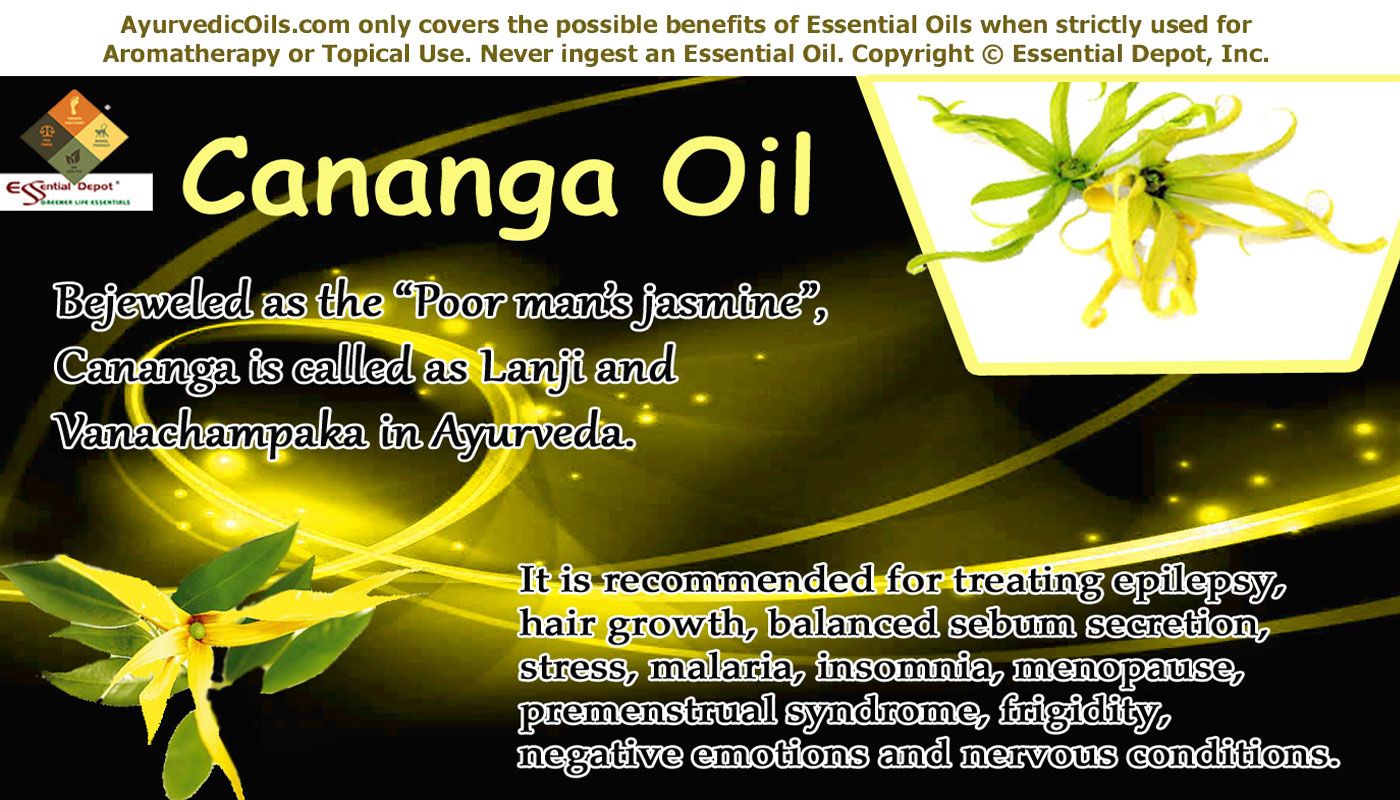
Bejeweled as the “Poor man’s jasmine”, Cananga is a relative of the most mesmerizing Ylang Ylang flowers. Although its floral note resembles that of Ylang Ylang oil, Cananga is comparatively less aromatic as it is regarded much greener than the Ylang Ylang tree and is its cost-effective alternative.

cananga-bannerCananga has been a vital part of the remedial regimen since the traditional times in the treatment of depression, anxiety, impotence, insect bites and high blood pressure.

Known as Lanji and Vanachampaka in Sanskrit, Cananga and its essential oil have been recommended in Ayurvedic treatment for epilepsy, hair growth, balanced sebum secretion, stress, malaria, insomnia, menopause, premenstrual syndrome, frigidity and nervous conditions.

Purchase Cananga Essential Oil – Wholesale – CLICK HERE

Purchase Cananga Essential Oil – Retail – CLICK HERE

Historical uses and importance of Cananga oil:

Cananga is a vibrant member of the sugar apple family, Annonaceae. Indigenous to the tropical parts of Asia, Cananga oil is distributed throughout the world from India, Malaysia, Moluccas islands, Philippines and Java.

Cananga oil is extracted by steam distillation from the freshly picked up, bright yellow flowers those look similar to that of the Ylang Ylang flowers. Few sources state that the first person to distill the essential oil of Cananga Odorata was Albert Schwenger in 1860.

The English Botanist, John Ray explained this tree as ‘Arbor saguisen” and it was also called as Unona odorata and Borga Cananga by few other explorers. The dazzling and fragrant yellow flowers were used for ornamental purposes initially, slowly after which its enormous healing benefits were explored by the traditional folklore people.

The fresh flower petals were used as an effective remedy for asthmatic attacks, where as the dried flowers were used as a treatment for malarial fever. Numerous research studies have proved the effectiveness of Cananga against intestinal infections, rapid heartbeat, typhus, malaria and certain respiratory conditions. Cananga oil is also used in candies, soaps, shampoos, baked goods, perfumes, lotions and skin care creams.

The sea star shaped flowers are the distinctive source of the mesmerizing Cananga essential oil for which it was used on hair for decoration and was scattered on the beds of newly married. Cananga oil is a secret ingredient behind the growth of thick, lustrous and healthy hair.

Cananga was also used as a natural skincare agent, where the leaves and flowers were rubbed on to the skin for nourishing skin health, moisturizing dry skin, alleviating itches, treating insect stings and bites and for balancing the secretion of sebum. It was also employed as natural infusion in bathing.

History reveals that the Victorians along with the Indonesians, Malaysians and other traditional folklore populace used Cananga flowers as a formula in their hair oil for influencing natural hair growth, enhancing the glossy look of the hair, preventing split ends and for moisturizing the dry and itchy scalp, thus preventing from dandruff and other scalp conditions.

Chemical constituents and remedial properties of Cananga oil:

In general, the ratio of chemical components of essential oils is mainly based on the origin, growth, seasonal differences and topography. The major chemical constituents of Cananga oil are germacrene, pinene, methyl benzoate, benzoic acid, caryophyllene, cadinene, farnesol, cresol, geranyl acetate, borneol, eugenol, linalyl acetate, isoeugenol, linalyl benzoate, geraniol, linalool and other sesquiterpenes.

The therapeutic attributes contributing to its colossal remedial values are relaxant, hypotensive, anti-stress, anti-inflammatory, vasodilating, tonic, anti-depressant, sedative, aphrodisiac, antispasmodic, cardio tonic, emmenagogue, calmative, nervine, anti-infectious and antiseborrhoeic.

Ayurvedic health benefits of Cananga oil:

Ayurveda is the ancient remedial system that prescribes the use of herbal medications including herbs and spices, essential oils, yoga, meditation and other Ayurvedic healing techniques like Pranayama (balanced breathing), Ayurvedic routine (Ayurvedic regimen for healthy living), Panchakarma (detoxification technique) and Abhyanga (Ayurvedic massaging).

With the profound meaning of ‘knowledge of life’, Ayurveda is a common sense science that treats illnesses based on its root cause and not by just relying on its symptoms. This traditional healing methodology dates back to 5000 years, where the ancient sages and gurus who practiced Ayurveda lived for more than a 100 years.

Journey towards longevity with the treatment and prevention of illnesses in a natural way is the mantra of Ayurveda. According to this antique science, everything in nature including human beings is made up of five fundamental elements namely fire, earth, water, space and air.

All these vital energies symbolize different parts of the human body, where water stands for blood and fluids in the system, fire is a symbol of the body temperature and Agni (the digestive fire for metabolic functions), earth is a representation of bones and muscles, air is for respiration and ether or space is the eternal soul.

Every person is regarded as a unique entity of Nature with a unique individual constitutional set up known doshas. These three biological forces namely vata (air and space), pitta (fire and water) and kapha (water and earth) are a combination of the five elemental energies.

Vata dosha is in charge for nervous functions, movement of the system, creativity quotient, circulation of blood and air. Pitta takes care of metabolism, body temperature, leadership qualities and decision making abilities. Kapha dosha is responsible for the physique, fluid retention, sustenance, love and natural bonding.

Ayurveda in many ancient texts, denote human body as a temple, where the soul dwells in. It is for this reason it recommends maintaining harmony between the mind, body and soul. Every individual is treated in a unique manner based upon their distinct individual constitution, where absolute balance between these doshas as per Nature’s law indicates health and imbalance due to lifestyle changes, climatic conditions, moral values and lack of physical and psychological activities lead to sickness.

Cananga oil is recommended for balancing vata and pitta dosha and for stimulating kapha energy.

The Ayurvedic health benefits of Cananga essential oil are:

Cananga-broucher1. Fights hard with negative emotions:

Negativity or pessimism is a highly contagious health condition that spoils your mental and physical well-being along with those around you. The ability to think right is the basis for progress in all kinds of chores that you undertake.

Off-putting thoughts or negative thinking drains your mind and soul. Ayurveda beckons mind as the limb of consciousness and negative energies like fear of failure, loneliness, lack of self-confidence, annoyance, disgust, worries, frustration, anxiety, inferiority complex or lower self-esteem, depression, stress and possessiveness would often cause serious harm to the mind.

Ayurvedic essential oils along with Ayurvedic techniques like abhyanga, meditation and Pranayama have the potent to rejuvenate your mind and nurture your soul for enhanced thinking and better quality of life.

Cananga oil has such an enriching aroma that could stimulate the mental faculty with precision and positive thinking. The essential oil of Cananga has the power to fortify the heart chakra, which is responsible for self-love, self-confidence, trust and love for others, focused thoughts and spiritual consciousness.

2 drops of Cananga oil with 2 drops of Vetiver oil added to your diffuser or vaporizer during meditation or Pranayama (the Ayurvedic way of balanced breathing) can help in elevating your inner consciousness, promoting positive thoughts and hope, increasing self-esteem and self-confidence, instilling peace of mind, lessening anxiety, reducing depression and enhancing your creativity quotient and leadership traits with its power to augment vata and pitta doshas.

Cananga oil when added to warm bathing water before going to bed can help in alleviating fatigue, anxiety, stress, nervous depression and other psychological traumas. It also helps in promoting peaceful sleep and ensures a feel-fresh morning at the rise of every new-fangled day.

Ayurvedic massage blend with 5 drops of Cananga oil, 5 drops of Bergamot oil and 5 drops of Rose Geranium oil with 20 ml of Jojoba oil relaxes the tensed muscles, soothes your nerves and brings in complete tranquility to the mind and the soul. You can take up this revitalizing regimen every weekend for kick starting your routine in the next week.

2. Absolute rescuer of a range of skin conditions:

Skin is often the most revealed part of the body and any kind of stressful situations or other health problems affects the skin health and is mostly reflected on the facial skin and the scalp. For example acne, dandruff and wrinkles are most frequently associated with depression, stress, worries and related hormonal fluctuations.

Cananga is a Kushtanut in Ayurvedic philosophy, which is a promising remedy for certain skin diseases. With its antiseptic and antibacterial properties, Cananga is Dushta Vranashodhana for its excellent cleansing qualities of wounds, cuts and infections and is Krumihara for fighting against bacterial and microbial growths in such skin infections.

Applying 1 drop of Cananga oil with 5 drops of coconut oil on wounds, cuts, abrasions and other skin infections can foster quicker healing by curbing the growth of microbes and disinfecting or sanitizing the wounds from within.

With its anti-inflammatory and anti-seborrhoeic values, Cananga is a proven natural remedy for seborrhea, eczema, inflammation, irritation, soreness and redness of the skin. It regularizes the functions of the sebaceous glands, where the sebaceous glands are defined as “microscopic exocrine glands in the skin that secrete an oily or waxy matter, called sebum, to lubricate and waterproof the skin and hair of mammals.”

This assists in keeping the skin and scalp moist and smooth. Mixing 1 drop of Cananga oil with 1 drop of Lavender oil and 1 drop of Orange oil and 2ml of coconut oil and gently massaging your skin surface can help in regularizing sebum secretion. You can remove this pack by wiping off your face with a warm towel. This also relieves from clogged pores and helps relieve acne and fight against wrinkles and other aging symptoms.

Being a tonic to the skin, Cananga nourishes the skin surface with its moisturizing and cooling properties and has been recommended for all types of skin including dry skin, stressed skin, oily skin, aging skin and combination skin.

3. Zings your vitality:

Cananga and its closest pal Ylang Ylang are assured solutions for greeting ahead the zing in your intimacy. Held high as the most popular traditional tonic for treating impotence, premature ejaculation, loss of libido and loss of interest in being together, Cananga with its bracing fragrance is a trusted cure for reproductive conditions both in men and women.

Cananga essential oil has a long-lasting intense floral and sensual aroma that helps in treating mood fluctuations, lack of sexual interest, erectile dysfunctions and intimacy problems due to stress or pre-occupied mind.

The enriching fragrance of Cananga oil reaches the limbic system of the brain through the nasal passages. It is the control center of the system and passes on the therapeutic values in the form of molecules to the nerve impulses and the corresponding parts of the body, thus supporting the secretion of positive hormones.

Adding 2 drops of Cananga oil along with 2 drops of Tuberose oil and 1 drop of Aswagandha oil to your air freshener in the evening can turn them quixotic by spreading its magical aroma. 3 drops of Cananga oil to your bathing tub before bedtime can also help in spicing up your vim and vigor.

4. Foe for feminine maladies:

The book Ayurveda and Aromatherapy by Light Miller and Bryan Miller quotes Cananga odorata oil as “A balancer to the female immune system, it reduces tension, cramps, negative emotions and headaches. It brings out warmth, self confidence, the feminine side and sensitivity.” It also states that this oil is excellent for the skin, reproductive system and nerves.

With its effectiveness to treat hormonal imbalances along with its balancing attributes, Cananga oil is a proven cure for treating problems associated with menopause and premenstrual syndrome (PMS).

Massaging your lower abdomen, inner thighs, lower back, and around your genital area with 3 drops of Cananga oil, 2 drops of Vetiver oil, 2 drops of Cedarwood oil and 15ml of Olive oil can help in balancing estrogen hormones and regularize irregular menstruation, relieve dysmennorhea or painful periods, cramps, headache, mood swings, anxiety, irritability and sleeping difficulties. This can also help in treating frigidity and loss of sexual interest.

Wearing 1 drop of Cananga oil to your wrist or to your handkerchief can help in keeping your mind and nerves calm throughout the day. Cananga is an exceptional skin-friendly oil and has enormous benefits for hair growth as well. These advantages are attributed to its sebum-controlling potential and its ability to promote proper blood circulation in the system.

Adding 2 drops of Cananga oil in your regular shampoo for hair or gently massaging your scalp with 10 drops of Cananga oil along with 5 drops of Citriodora oil, 5 drops of Rosemary oil and 50ml of Coconut oil (slightly heat this blend before massaging) can support in controlling dandruff, moistening dry, itchy and scaly scalp, encouraging the growth of hair by promoting good circulation in the scalp, have power over split ends and can help in adding the glossy and natural shine to your hair.

5. Boosts the functions of the nervous system:

Cananga oil has the power to relax and soothe the central nervous system and controls the function and flow of adrenaline, which helps in pacifying negative emotions like rage, shock, panic, fear or anger. These feelings in turn lead to high blood pressure, nervousness, tension and insecurity.

Cananga and its essential oil have been celebrated for its ability to lessen anxiety and tension, thus improving the level of blood pressure and treating increased heartbeat and rapid breathing. It has tranquilizing and soothing effect on the nervous system.

Numerous studies have substantiated the effect of Ylang Ylang oil on people with high blood pressure and nervous tension. One study published in Planta Medica concluded that Ylang Ylang oil helped in reducing high blood pressure and increased pulse rate along with a boost in attentiveness and alertness.

Few other studies conducted with a group of people with hypertension, where the group was facilitated to inhale the aromatic blend with essential oils like Ylang Ylang, Marjoram, Lavender and Neroli for about 24 hours, concluded that “essential oils may have relaxation effects for controlling hypertension and in reducing systolic blood pressure.”

Cananga oil, when added to your bathing water can also help in augmenting self-confidence and alleviating the feelings of fear, failure, obstinacy and feelings of loneliness along with stress and depression.

Other health benefits:

Apart from these health benefits, Cananga oil is also recommended for enhancing metabolic functions, flatulence, tastelessness, epilepsy, chest infections, intestinal infections and physical exhaustion.

Disclaimer:

This article is only educational purposes and is not destined for substituting professional medical advice or prescribed medications or for treating any medical conditions. We are not healthcare experts and we take up a shared interest to spread the knowledge of Ayurveda, the oldest and the Mother of all remedial practices in the world.

Do not use essential oils internally and dilute them in suitable carrier oils like Coconut oil before using it for topical application. This is due to the fact that 100% organic and pure essential oils are highly concentrated liquids and may cause allergic reactions. Keep essential oils out of reach of children and speak with your Doctor if you are a pregnant or nursing mom.

Consult your healthcare professional or Ayurvedic practitioner ahead of choosing the appropriate essential oils for your unique individual constitution and medical condition.

Thought for the day:

Flowers always make people better, happier and more helpful; they are sunshine, food and medicine to the soul. – Luther Burbank.

Suggested Reading:

  1. Dealing with Depression Naturally by Dr Miriam Kinai
  2. Listening to Scent: An Olfactory Journey With Aromatic Plants and Their Extracts by Jennifer Peace Rhind
  3. The Illustrated Encyclopedia of Essential Oils: The Complete Guide to the Use of Oils in Aromatherapy & Herbalism by Julia Lawless
  4. The Natural Depression Cure: Holistic Depression Treatment by Dr Marion King

Reference Links:

  1. Cananga Odorata by Wikipedia
  2. Ayurvedic Medicinal Plants – Cananga Odorata by Toxicology Centre
  3. Health Benefits of Ylang Ylang Essential Oil by Organic Facts
  4. Composition of the essential oil of Ylang-Ylang (Cananga odorata Hook Fil. et Thomson forma genuina) from Madagascar by Emile M. Gaydou, Robert Randriamiharisoa, Jean Pierre Bianchini, published in the Journal of Agricultural and Food Chemistry