Neem Seed Oil

Neem is the ultimate pride of India and a divine gift of nature for its colossal remedial benefits including its power in treating tuberculosis, malaria, dandruff, fever, leprosy, acne, joint pain, plaque, intestinal worms, gastrointestinal disorders, chicken pox, diabetes and jaundice.
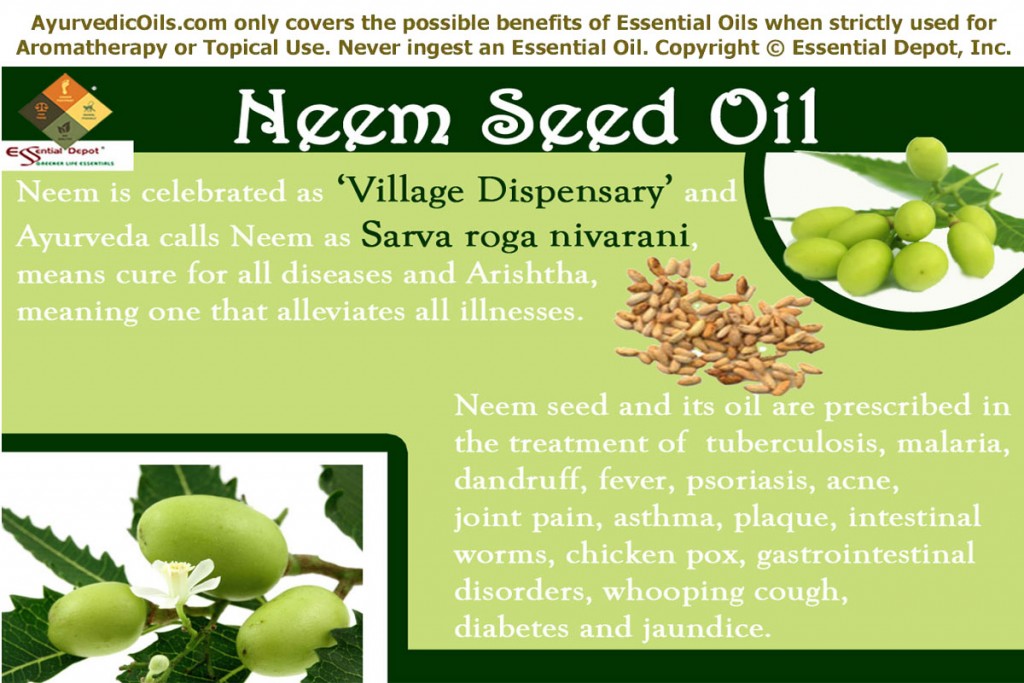
Neem-bannerAyurveda calls Neem as Sarva roga nivarani, means cure for all diseases and Arishtha, meaning one that alleviates all illnesses. Even today, Neem is a trusted solution for treating various health conditions in Indian villages for which it is called as ‘Village Dispensary.’

Neem and its varied extracts are prescribed in Ayurvedic medication for treating skin ulcers, diabetes, urinary infections, hair loss, psoriasis, constipation and digestive difficulties, scabies, asthma, whooping cough, wounds, pain, chicken pox and certain other infectious diseases.

Purchase Neem Seed Oil – Retail – 4 oz – CLICK HERE

Purchase Neem Seed Oil – Wholesale – CLICK HERE

Historical uses and importance of Neem and its varied extracts:

‘The liberated tree of India’ is the direct meaning of its scientific name Azadirachta indica, where the word ‘Azad’ means freedom, ‘dirakht’ means tree, ‘i-Hind’, means of Indian origin.

Neem is the first medicinal plant indicated in Siddha medicine, one among the oldest healing systems on earth. The 4,500 years old Indus valley civilization including the discovery of the cities of Harappa and Mohenjo-Daro talks about the medicinal uses of Neem tree.

Being an evergreen tree, Neem is often found in the front yard of most of the Indian homes for its phenomenal healing powers. WHO or the World Health Organization mentions that about 80 per cent of the developing countries’ populace bank upon natural or traditional medicines for treating various health conditions.

Among all those natural medications, Neem has found enormous medicinal attributes and therapeutic properties. Neem was called as the ‘Tree of the 21st Century’ by the United Nations Environment Programme.

The Siddha medications for treating blood pressure, diabetes, excess cholesterol, urinary tract infections, leprosy and gastro intestinal problems had Neem formulations in it.

In 1992, the National Academy of Science of the United Nations called Neem tree as “A tree for solving global problems.” The 350 years old Palm leaf manuscript preserved in the Centre for Traditional Medicine and Research emphasize on the remedial uses of Neem tree.

Every day many Indian families start their day with the use of Neem, where the Neem twigs are used as a natural toothbrush for combating oral problems.

The tea prepared with Neem leaves decoction, consumed in empty stomach in the morning is said to be a trusted remedy for flushing out toxic remains in the system, killing microbes in the body and increasing the immune power.

All the parts of the Neem tree including its leaves, bark, twigs, gum, fruits, flowers, seeds and the cold pressed Neem oil have enormous medicinal values for mankind.

The Neem leaves paste has been used in various folklore medicinal practices for treating pimples, chicken pox boils, viral infections, bed sores, psoriasis, eczema and wounds. Neem leaf decoction was also used for treating dandruff, hair fall and head lice.

Chemical constituents and therapeutic properties of Neem seed oil:

The primary chemical constituents of Neem oil are triterpenoid compounds like Azadirachtin and Nimbin along with triglycerides, sterols including stigmasterol, campesterol and beta-sitosterol. This oil also contains fatty acids, namely Omega-6, Omega-9, stearic acid and palmitic acid.

These components contribute to its remedial values like antimicrobial, antiviral, antiseptic, antifungal, antihistamine, febrifuge, antipyretic, hepatoprotective, analgesic, diuretic, anti-inflammatory, immune stimulant, antioxidant, emmenagogue, circulatory, vermifuge, anthelmintic, astringent, cicatrisant, spermicidal and nervine.

Ayurvedic uses of Neem seed oil:

Being a part of nature is the greatest acknowledgement one can ever receive. If you wander in search of solace through natural beauty either in the form of a lawn or a mountain, then it is just a symbol of your ignorance.

Beauty, especially the eternal beauty lies within you and your soul has everything that is in nature. Wanna try what I say??? Come lets experience the heaven in us..

Just sit in the most silent or tranquil zone in your home. Take a deep breath, relax and close your eyes. Want to be amid Niagara Falls now? PICTURIZE is all I have to say. Start hearing the roaring voice of the falls, feel touch of the drizzling water on your face and think that you are there and experience the joy of being there..

You’re done. Not more than 10 minutes, your brain would have certainly secreted the positive and the happy hormones and instill lot of optimism and superfluous inspiration that is more than enough to keep you charged for the rest of the day.

This is the power of thinking that nature has deeply vested within you. Your soul is the greatest encyclopedia of Nature and that this why your thoughts travel millions of kilometers in a jiffy.

Wondering what all these philosophical thoughts have to do with the Ayurvedic health benefits of Neem seed oil?

Here’s the catch. All I wanted to say is that Ayurveda is within you and there’s no need to wander in search of this miraculous science outside.

The word ‘Ayur + Veda’ just means the ‘the knowledge (Veda) of life (Ayur). Every remedial practice in this heavenly healing methodology aims at invigorating your prana or the life force.

Plant essential oils are nothing but the prana, essential life force or the vital energy of plants. It is for this reason Ayurvedic essential oils are very special and close in uplifting the life force of mankind with the life force of plants.

The supreme essence of Ayurveda is that it treats every individual and it never treats just their illnesses alone. This derivation starts from the Ayurvedic school of thought that says that every person is a unique part of nature with a distinct individual constitution known as doshas.

Vata, pitta and kapha are the three vital energies and all these combined together is known as Prakriti of a person. Every individual has a predominance of any one of these doshas, which decides their physical attributes, emotional stability, spiritual influence and behavioral patterns.

A disciplined life with healthy lifestyle practices for the mind, body and spirit paves way for absolute balance between doshas. Sedentary lifestyle, irregular food habits, change in climatic conditions and misconduct leads to imbalance of doshas, nature’s alarm for the onset of diseases.

Ayurveda trusts and depends upon nature for its medications. Herbs, essential oils, Pranayama or balanced breathing, yoga, Panchakarma or the detoxification technique, Ayurvedic routine, prayers and meditation are prescribed in order to restore the balance between doshas and to recuperate and prevent illnesses in the future as well.

Neem is indeed a blessing to mankind. The oil extracted from Neem seed has cooling, energizing and rejuvenating properties for the body, spirit and mind.

Neem seed oil has the power to boost vata (responsible for circulatory, nervous and respiratory functions along with sociability and creativity), pacify pitta (metabolic functions, decision-making skills, leadership qualities and body temperature) and kapha (responsible for physique, sustenance, trust and love).

Here we go!!! The Ayurvedic health benefits of Neem Seed Oil.

Neem-Seed-info-broucher1. Neem is the ‘Hero’ of all the fever remedies out there:

Pitta dosha is responsible for body temperature. With its power to pacify pitta energy, Neem oil has the ability to reduce the body temperature very quickly than any other medications.

It is called as Jwarahara, potent fever reducer with its antimicrobial, antiviral and febrifuge properties, contributed by the presence of nimbin and nimbidin.

As a Shramahara, Neem oil alleviates fatigue and lack of energy associated with fever.

Numerous research studies have proved the effectiveness of Neem oil in fighting against sensitive strain and choroquin-resistant malarial parasites.

Neem oil is also efficient in the treatment of viral fever with its potent to wrestle against chikungemya, vaccinia and measles virus.

‘Nila vembu’ or ‘Neem of the ground’ was the redeemer of thousands of people affected by Dengue, Chickungunya and the chronic viral fever with severe headache and body pain.

The ideal method of using Neem oil for reducing fever is massaging your palms and foot soles with 4 drops of Neem oil blended with 15 drops of Evening primrose oil. Wondering why on foot soles? Because foot soles are the home for all the nerve-endings in your system.

Essential oils penetrate deeply through the skin and pass on to the bloodstream quickly. By this way, it passes on the therapeutic values of Neem oil and helps in bringing down your body temperature considerably, granting you speedy relief.

2. Neem is nature’s lucky charm for your skin:

Neem can gift your skin with all the best things to make it glow and look younger. Neem has antimicrobial, antiseptic, cicatrisant, antioxidant, anti-inflammatory and circulatory properties that helps in combating microbes causing acne and other skin infections.

The cicatrisant values of Neem oil aid in healing wounds quickly and its antiseptic values arrest the growth of microbes and protect the wounds from turning septic.

The antimicrobial properties of Neem oil have been proved powerful against bacteria like Streptococcus mutans and Streptococcus faecalis.

Neem is called as Kushtahara for its ability to treat various skin conditions; Vranahara for cleansing and healing wounds firstly; Twachya for protecting and retaining the natural beauty of the skin.

Blend 2 drops of Neem oil with 10 drops of Linseed/Flaxseed oil and 1 drop of Lavender oil and apply it on pimples, blackheads, wounds, burns, cuts, sores, boils, eczema, psoriasis, ringworm, athletes’ foot, ringworm, wrinkles, inflammatory conditions and nail fungus, for revealing its magical healing powers.

Here’s your secret ingredient to clear acne marks and own supple, clear and soft skin. Mix 1 drop of Neem oil, 1 drop of Turmeric oil and 1 drop of Tea tree oil in your mild skin cleanser.

Gently massage your facial skin with this enriching blend daily or once in two days. Wash it with cold water, wipe off and apply rose water on your skin. This will certainly help you notice visible difference in alleviating marks and blemishes on your skin.

What next? Glowing, spotless and wrinkle-free skin is all yours!!! 🙂

3. Neem is your hair’s best comrade:

Long, lustrous and strong hair is the prized possession of every woman. Men often settle with dandruff-free, voluminous and healthy stuff on the scalp.

Thousands of hair-care products hit the market every week and leave us in bafflement in choosing the right remedy for our hair problems.

Natural remedies are often the safe hub to settle for and if you are looking to stick with natural solutions for your hair, then Neem is the best choice.

Neem is nature’s powerhouse of essential nutrients for moisturizing and nourishing your hair and scalp from within.

Linoleic, stearic and palmitic acid are few among those fatty acids that contribute to your bouncy locks.

Neem seed oil has antibacterial, antifungal, antiviral, anti-inflammatory, anti-dandruff and anti-parasitic properties that assist in killing microbial infections that cause split ends, itchy and infectious scalp conditions and keep away from dandruff and head lice.

Peek-a-boo! Nourishing Neem blend is here! Mix 4 drops of Neem oil with 3 ounce of Olive oil, 2 drops of Ylang Ylang oil and 2 drops of Rosemary oil.

Gently massage your scalp with this medicated oil and wrap a warm towel on your head and allow it to rest for about 30 minutes. This helps in penetrating the therapeutic values of these Ayurvedic oils deep into your scalp and hair follicles, just to nourish your hair from the roots.

Wash your hair with a mild shampoo with 1 drop of Neem oil and 2 drops of Lime oil for that glossy, thick, bouncy hair that is free from lice, dandruff and frizz.

4. Neem is the worst enemy for pests and insects:

Few first things that strike our mind, the moment we thick of Neem is its extremely bitter taste and pungent aroma.

This is indeed good for us and utterly atrocious for the pests and insects that are extremely harmful.

Being a natural insect repellent, 2 drops of Neem seed oil can be added to your burner or vaporizer to keep your family safe from mosquitoes, bed bugs and other insects.

You can also add 3 to 4 drops of Neem oil in your hand sprayer and protect the lovely plants in your garden from pests.

Are your cute little cat and bossy dog scratching all over? Then mix 1 drop of Neem oil in its shampoo and that’s it, fleas, ticks, mites and other insects are all gone with the Neem remedy.

5. Neem is the tranquilizer for your intestine and the killer of its worms:

Neem is called as Kriminut in Ayurveda for its ability to alleviate worms and infections in the stomach and intestines.

The antimicrobial attribute of Neem oil is attributed to the presence of Nimbin constituent.

Along with its anti-inflammatory and cooling properties (Sheeta), Neem and its other extracts help in tranquilizing the intestinal linings and stomach, combat intestinal worms, parasites and heal wounds and treat ulcerates.

Neem is called as Laghu for its support in digestion and better absorption of nutrients in the food. It is a Grahi herb as it absorbs excess moisture in the intestines, thus treating wounds and ulcer by cleansing the moisture in them and soothing irritation.

Massaging your abdomen with 2 drops of Neem seed oil mixed with 2 drops of Peppermint oil and 1 ounce of sesame oil might help in pacifying your intestines, reducing irritation and eradicating detrimental microbes and infections.

6. Neem is your redeemer from all oral infections:

Neem has antibacterial and antimicrobial properties that assist in fighting against oral pathogens in treating oral problems.

A 2011 study on ‘Evaluation of Antibacterial and Anticandidal Efficacy of Aqueous and Alcoholic Extract of Neem (Azadirachta indica) by the Institute of Dental Sciences and Research Center’, proved the inhibitory effects of Neem on Streptococcus mutans, Enterococcus faecalis and Candida albicans that are the basis for infectious diseases in the oral cavity.

Half drop of Neem oil blended with 1 cup of warm water as a gargle might be effective in getting rid of bacteria, fungi and other pathogens causing plaque, gingivitis, cavities and other oral problems.

Other health benefits:

Neem and its remedial oil is potent in treating tuberculosis, diarrhea, pneumonia, bronchitis, discard pathogens, alleviate muscular pain, control the secretion of insulin hormone, thus supporting in the treatment of diabetes mellitus.

Disclaimer:

This unique portion of information is predestined only for the use of education and is not suggested to make a diagnosis, thwart or to cure any kind of illnesses. It is not intended to substitute any prescription medicines or the consultation of a certified physician. We, at Essential Depot are not doctors of medicine and this info is shared only for spreading the magical healing of Ayurveda, the pioneer of all medicinal sciences.

Essential oils are recommended for topical use only and keep in mind to attenuate the effects of essential oils by mixing it with suitable carrier oils and never ingest essential oils. This is due to the fact that 100 per cent pure and organic essential oils are extremely concentrated substances and might cause allergic reactions if used on the skin without diluting it.

Take special care in using essential oils, if you are pregnant or nursing and while using it on children. Have a word with your Ayurvedic specialist or medical expert prior to choosing the best oils for your unique individual constitution and health conditions. A patch test on your skin before experiencing the many benefits of essential oils is recommended.

Thought for the day:

I am planting a Neem tree because it is a “Medicine Cabinet In a Tree!”

-Pledge No 1223 – Singapore.

Suggested Reading:

  1. Neem:: A Tree for Solving Global Problems by Report of an Ad Hoc Panel of the Board of Science and Technology for International Development, National Research Council, Policy and Global Affairs, Office of International Affairs
  2. Neem: The Ultimate Herb by John Conrick
  3. Neem: Neem and Its Miraculous Healing Powers: Neem for Digestive Disorders, Stress Relief, Immunity, Skin Problems, Hair Problems, Diabetes, Asthma, Arthritis, … – All Your Questions Answered Book 3) by Sukhmani Grove
  4. Neem: India’s Miraculous Healing Plant by Ellen Norten
  5. Neem: The Tree of Life by Sara Abraham, Ryder Management Inc.

Reference Links:

  1. Neem Oil by Wikipedia
  2. Evaluation of Antibacterial and Anticandidal Efficacy of Aqueous and Alcoholic Extract of Neem (Azadirachta indica) by the Institute of Dental Sciences and Research Center, India, published in the International Journal of Research in Ayurveda and Pharmacy
  3. Neem (Azadirachta indica): Prehistory to contemporary medicinal uses to humankind by Venugopalan Santhosh Kumar and Visweswaran Navaratnam, published in the Asian Pacific Journal of Tropical Biomedicine and PubMed.
  4. Therapeutic Potential of Neem (Azadirachta indica) by Amir Khan and Arvind Kumar Yadav, Dept. of Biotechnology & Biochemistry, Sardar Bhagwan Singh Post Graduate Institute of Biomedical Sciences & Research, India, published in Pharma Research Library


Mustard Essential Oil

‘Sarson ka tel’ or Mustard essential oil is a vital part of Ayurveda, the ancient Indian therapy where it is used for cleansing, stimulating and revitalizing the body. Besides all the controversies across the world, Mustard oil is popular and extensively used in India, Bangladesh and few other Western countries.

Though extracted from the same Mustard seeds, Mustard edible oil is totally different from Mustard essential oil by the method of extraction where the vegetable oil is extracted by cold compressing the seeds and the essential oil of Mustard is extracted by steam distillation of seeds that are soaked in water.

Mustard oil is to Asian countries just like Olive oil is to Mediterranean countries. Besides the myth of being banned in certain countries for internal use, Mustard is a legendary oil used for more than thousands of years in the world’s oldest mythologies like India, Rome and Greece.

Historical importance of Mustard and its oil:

Used as a spice, condiment, herb, cooking oil and medicinal agent, Mustard and its oil are said to have been found since the Stone Age settlements. Among the 40 species of Mustard plants, the most popular and the ones used for extracting essential and edible oils are Brassica nigra (Black mustard), Brassica hirta (White mustard) and Brassica juncea (Brown mustard).

It is still trusted that Mustard was grown in the Indian subcontinent around 3000 B.C.E. Hippocrates used mustard seeds in the preparation of many poultices and medicines. The ancient Romans mixed ground mustard seeds to wine for its unique flavor and remedial values.  It was also used as a natural remedy to treat scorpion stings in the 6th century B.C. by Pythagoras, the renowned Greek scientist.

Mustard was used as a condiment in Greece and Rome for fermenting fish sauce known as garum. The love for mustard made Pope John XXII of Avignon create the post of ‘Grand Moutardier du Pape’ (Grand Mustard-Maker to the Pope). Mustard oil has been a part of North Indian cooking for more than 4000 years and this oil has been the secret behind healthy and lustrous hair growth of Indian women.

Chemical constituents and therapeutic properties of Mustard essential oil:

The essential oil of Mustard has Allyl isothiocyanate, oleic acid, omega-6 linoleic acid, omega-3 alpha-linolenic acid and erucic acid. These constituents contribute to the remedial properties including cordial, tonic, anti-rheumatic, stimulant, appetizer, antifungal, antimicrobial, diaphoretic, hair vitalizer, insect repellant and irritant.

Ayurvedic health benefits of Mustard essential oil: Mustard oil has been used in Ayurvedic healing as a promising body massage oil for improving blood circulation, enhancing the texture of the skin, muscular development and to lessen the dryness of skin. Ayurveda meaning the knowledge of life skillfully explains the vibrant relationship between one’s mind, body and spirit and the way it relates to the world around.

The Ayurvedic approach of healing starts with an Ayurvedic consultation where your unique individual constitution, likes and dislikes, food habits and your medical history is thoroughly analyzed.

Your treatment starts with the tridosha concept as the guiding principle where Ayurveda believes that every individual is unique and is born with a unique fundamental constitution knows as prakriti. It is built up with 3 major biological energies known as doshas namely vata, pitta and kapha.

The dynamic balance between these three doshas determine one’s health and predominance of any one of these doshas is the deciding factor for one’s personality, behavior and attributes.

Ayurvedic remedies are always based on your individual constitution and to balance any one or all the three doshas that are out of rhythm. With its warming properties, Mustard essential oil is said to increase pitta dosha and pacify kapha and vata doshas. It’s time to have a look at the Ayurvedic health benefits of Mustard essential oil:

1. Benefits to the hair:

Ayurvedic Mustard oil is extremely good for hair. The essential fatty acids like linoleic acid (an omega-6 fatty acid) and certain other components present in this oil makes it an effective natural remedy for treating hair loss, premature graying, dull and lifeless hair. Using Mustard essential oil on your scalp augments natural pigmentation and vitalizes your hair follicles by acting on the roots.

This way it prevents early graying and helps you in maintaining a natural dark hair even in your late 40s or early 50s. Indeed Ayurvedic Mustard oil is a long time secret of many grandmothers in India who still have healthy black hair.

Slightly heat 3 to 4 drops of Mustard essential oil blended with sesame oil and gently massage it on your scalp. Leave this blend for about an hour and wash your hair with a mild herbal shampoo or shikakai for nourishing your scalp health, reducing hair fall, enhancing blood circulation, conditioning your hair, strengthening the roots, augmenting its natural shine and to lessen the more salt than pepper on your head.

2. Benefits to the respiratory system:

Mustard essential oil is generally used as a mucolytic in many parts of the world. Herbs and vegetables like wasabi, horseradish and nasturtium along with essential oils that are used as traditional mucolytics and are proved effective in breaking up mucous deposits and help sinus drainage in chronic sinusitis.

The antimicrobial property of Mustard essential oil assists in combating numerous pathogenic organisms and microbes that worsen sinusitis and certain other respiratory problems like bronchitis, asthma and tuberculosis.

A 2009 study on ‘Antimicrobial activity of Mustard essential oil against Escherichia coli O157:H7 and Salmonella typhi’ by the Department of Food Science and Biotechnology, Korea states “Mustard essential oil affected the cell membrane of Escherichia coli O157:H7 and Salmonella typhi. It affected cell membrane integrity, resulting in a loss of cell homeostasis”.

On an Ayurvedic perspective respiratory problems like cold, cough, sinusitis, bronchitis and asthma are caused due to imbalance or increased kapha dosha responsible for fluid retention, congestion, phlegm and mucous deposits. Mustard essential oil is known to pacify and reduce kapha energy and it is used as an excellent Ayurvedic remedy for treating such respiratory problems.

Blend 2 drops of Mustard essential oil with little coconut oil and heat it. Massage this herbal blend on your chest, back and throat for loosening mucous deposits, removing phlegm from lungs and respiratory tract and to help trouble-free breathing. You can also add 2 to 3 drops of Mustard essential oil in hot bathing water that can work wonders on respiratory ailments and certain other pulmonary problems.

3. Benefits to the skin:

Mustard essential oil is an effective antifungal, anti-parasitic, antibacterial, disinfecting and antimicrobial oil that protects the skin from infections, wounds from getting septic and heals minor skin problems like cuts, athlete’s foot, ringworm, insect bites, small lacerations, abrasions etc. Mustard essential oil has been in use for massaging for many centuries.

When gently massaged onto the skin after mixing 2 drops of Mustard essential oil with jojoba oil, it aids in increasing blood circulation with its warming properties, helps open the pores and supports in eliminating the toxins in the body through sweat. This essential oil has high level of vitamin E that promotes healthy skin, moisten the skin, protect the skin from harmful ultra-violet rays, and effectively treat blemishes, wrinkles and fine lines as well.

4. Benefits to the entire system:

The essential oil extracted from Mustard seeds is beneficial to the entire system with its tonic and stimulating properties that foster trouble-free functioning of the body. The pungent aroma of this oil increases hunger by stimulating the digestive juices and by increasing the appetite.

Massaging your tummy and abdomen with 2 drops of Mustard oil mixed with sesame oil can help in burning the excess fat, promotes quicker digestion by encouraging the secretion of digestive juices and assists in treating constipation, flatulence and intestinal gas.

Mustard essential oil penetrates deeply into the skin and is a powerful Ayurvedic remedy for treating excess vata based nervous problems and kapha based problems like inflammation and retention of fluids. Mix 2 drops of Mustard oil with coconut oil and gently massage in circular movements on the affected areas to treat rheumatism, lumbago, back pain, headaches and inflammation.  Adding 1 drop of this oil to a cup of warm water can serve as an exceptional gargle for protecting your teeth and gums from germs.

This is an excellent massaging oil especially during winter to keep the body warm, trigger the functioning of the muscles and to treat numbness with its irritant properties. This oil is also said to slow down the process of aging naturally and aids in preventing cancer.

Disclaimer:

Never take essential oils internally. Pure and organic essential oils are highly concentrated liquids and might cause adverse effects on the skin and system. Always remember to use it after diluting in baths or suitable carrier oils. Ensure that you do a patch test on the skin before using essential oils for massage. Consult your Ayurvedic practitioner for choosing the right essential oil that is apposite for your individual constitution and health condition.

Mustard Essential Oil Possible Skin Issues:

mustard-new

Greener Life Diamond – Bio-Healthy Score => 3 Possible Skin Issues:

See => http://www.essentialdepot.com/GreenerLifeDiamond.html

Mustard oil is regarded as one of the most unsafe essential oils mainly due to the presence of Allyl isothiocyanate and erucic acid (a toxic monounsaturated omega-9 fatty acid). According to the U.S. National Center for Biotechnology Information (PubChem), Allyl isothiocyanate compound is poisonous by skin penetration and ingestion. It is also known to emit toxic fumes when exposed to high temperature.

The European Union has prohibited Mustard oil as a cosmetic ingredient and the International Fragrance Association (IFRA) has forbid the use of this oil in fragrances. Allyl isothiocyanate in Mustard oil is not recommended for therapeutic use, primarily due to its toxicity, irritating nature and rigorous lachrymatory effect (potent to produce tears) that draw a question mark on the safe use of this oil in the healthcare industry.

Generally, essential oils are listed with possible safe levels for therapeutic purposes but there is no viable information on the safe levels for the use of Mustard oil.

The immune system of mammals reacts excessively to allergens thus generating antibodies known as IgE (Immunoglobulin). Allergic reactions are further caused when these antibodies move to cells that discharge chemicals.

The most prominent adverse skin effects of Mustard oil are allergic reactions due to IgE, itchiness, redness, severe skin irritation, followed by blistering and irritation of the mucous membranes as well.

Prolonged use of Mustard oil on skin might interfere the function of the skin, thus augment the loss of water of epidermis and subsequently modifying the epidermal keratinocytes structure.

Few sources also state that inhaling of Mustard oil might end up in irritation of the eyes, nose, mucous membrane, respiratory system along with an obnoxious sensation in the head.

Certain studies state that the topical use of Mustard oil can cause irritant contact dermatitis and other allergic reactions. It is also evidenced that this oil is linked to the development of pityriasis rosea-like skin eruption (cutaneous lesions), which was proved by patch testing.

Tests on Chinese hamster cells proved the genotoxic effects of Allyl isothiocyanate and is also said to cause transitional cell papillomas and hyperplasia, when tested on male rats.

Mustard oil should be strictly avoided by pregnant women as it has the potent to induce uterine contractions and may lead to unusual bleeding and miscarriage and safety measures for using this oil during nursing is also not witnessed.

Mustard oil has the tendency to lower the levels of blood sugar and might interfere with your regular medications for diabetes and low blood sugar may obstruct surgical procedures, thus it is recommended to avoid Mustard oil for about 2 weeks before and after your scheduled surgery.

Reference Links Substantiating the Possible Skin Issues of Mustard Oil:

  1. Essential Oil Safety: A Guide for Health Care Professionals By Robert Tisserand, Rodney Young
  2. Pityriasis rosea-like eruptions due to mustard oil application by Zawar V, Nashik, India, published in the Indian Journal of Dermatology, Venereology and Leprology
  3. Dermatoses Due to Indian Cultural Practices by Divya Gupta and Devinder Mohan Thappa, published in the Indian Journal of Dermatology and PubMed
  4. Black Mustard Side Effects and Safety by WebMD
  5. Allyl Isothiocyanate by U.S. National Center for Biotechnology Information (PubChem)
  6. Leung’s Encyclopedia of Common Natural Ingredients, used in Food, Drugs and Cosmetics by Ikhlas A. Khan and Ehab A. Abourashed

Thought for the day:

I believe a leaf of grass is no less than the journey-work of the stars.  -Walt Whitman

Suggested Reading:

  1. Mustard Seeds: The Tiny Seed That May Save Your Life! (Plant & Seed Legacy Series) by Mary Jo Montanye
  2. The Illustrated Encyclopedia of Essential Oils: The Complete Guide to the Use of Oils in Aromatherapy & Herbalism by Julia Lawless
  3. The Ayurvedic Cookbook by Amadea Morningstar, Urmila Desai
  4. Traditional Systems of Medicine by M. Z. Abdin

Reference Links:

  1. The History of Mustard – From Prehistory to Modern Times by The Nibble.Com
  2. Mustard Oil by Wikipedia
  3. Antimicrobial activity of Mustard essential oil against Escherichia coli O157:H7 and Salmonella typhi by the Department of Food Science and Biotechnology, Korea published in Science Direct.com
  4. What are the benefits of Mustard oil for Sinusitis? By Livestrong.Com

Your resource for quality Essential Oils. Every batch is GC tested to ensure purity and authenticity.

Palmarosa Essential Oil

Palmarosa--bannerPalmarosa oil is an absolute skin supporter for its immense medicinal benefits to the skin. With a much similar aroma like rose, this oil is used for moisturizing the skin and pacifying the mind. Scientifically known as Cymbopogon martini, Palmarosa is indigenous to the Indian sub-tropical regions and is a member of the grass family Graminaceae.

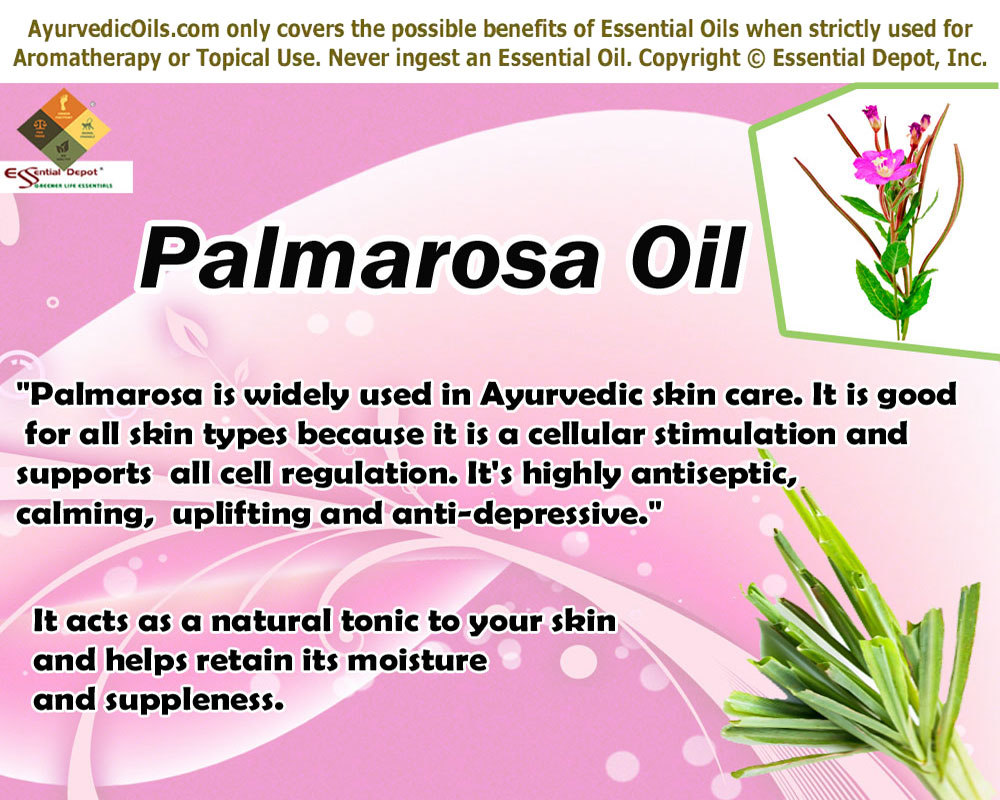
The essential oil of Palmarosa is extracted by steam distillation method from the dried grassy leaves that are harvested before flowering. In her book ‘Ayurveda and Aromatherapy’, Light Miller says “Palmarosa is widely used in Ayurvedic skin care. It is good for all skin types because it is a cellular stimulator and supports all cell regulation. It’s highly antiseptic, calming, uplifting and anti-depressive.”

Purchase Palmarosa Essential Oil – Retail – CLICK HERE

Purchase Palmarosa Essential Oil – Wholesale – CLICK HERE

Historical uses of Palmarosa oil:

The most popular historical use of Palmarosa oil is that it has been used as a substitute as well as to adulterate rose oil with its rosy aroma. This oil was also used in making incense blends in India and was traded from India to Persia after which the western use of this oil began slowly.

It was also prescribed by the Indian doctors to lower fever and fight against infections. The ancient Indians also used Palmarosa oil for treating nerve pain, fever, rheumatism and certain other infectious diseases.

Chemical constituents or Gas Chromatography Report (GC) of Palmarosa oil:

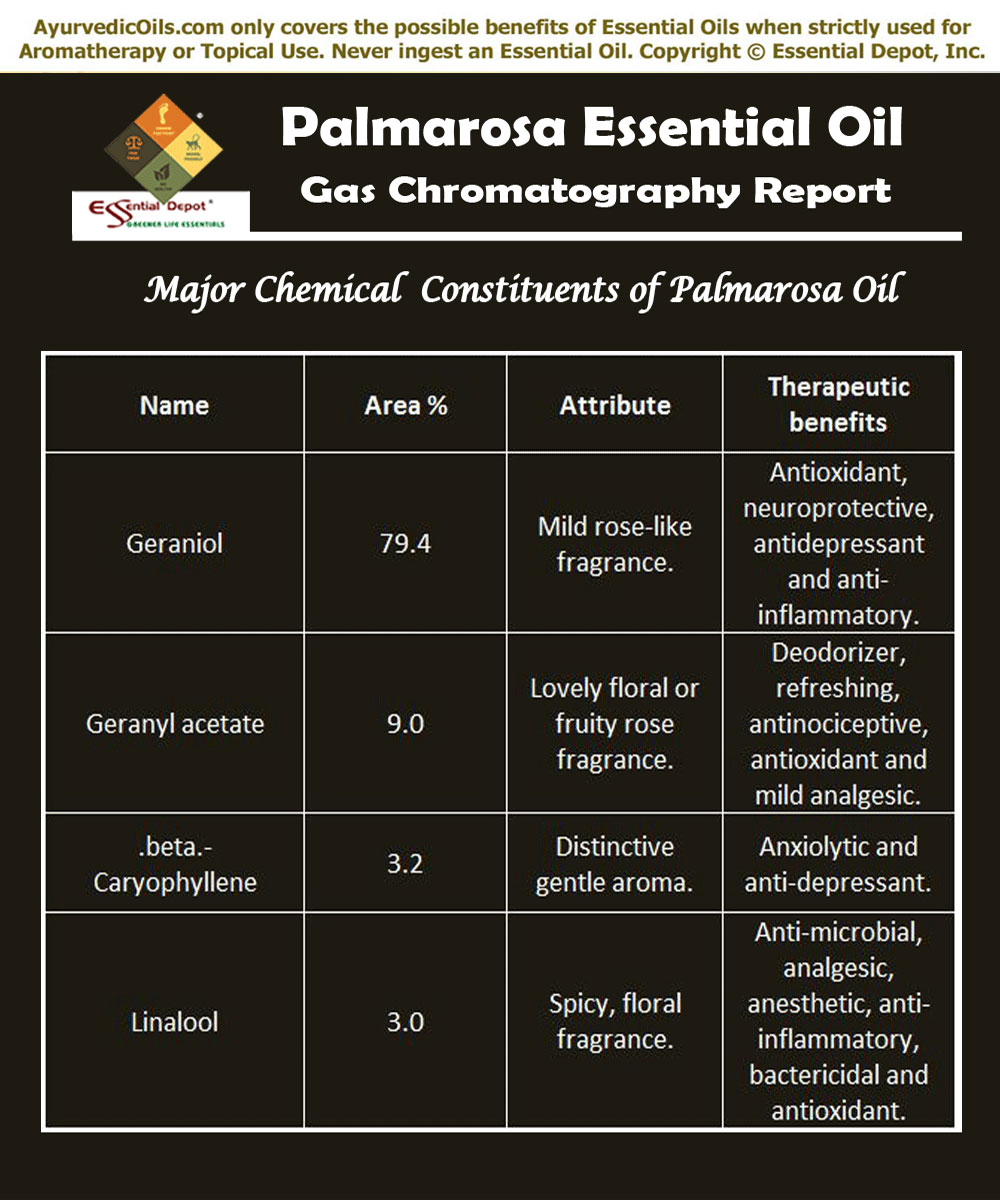
According to the Gas chromatography report, Palmarosa oil constitutes of 14 chemical components that contribute to its fragrance, therapeutic attributes, consistency and quality. Of which, Geraniol contributes to the highest proportion of Palmarosa oil constituents with about 79.4% of its total composition.

Just click on:

I believe that this must certainly help you in getting to know the exclusive information about these prime chemical constituents of Palmarosa oil.

The table crafted below clearly depicts the unique nature and contributions of these biochemical constituents to the healing magnificence of Palmarosa essential oil.

palmarosa-oil

Therapeutic properties of Palmarosa essential oil:

Palmarosa essential oil has regenerative, antiseptic, antibacterial, cytophylactic, febrifuge, aphrodisiac, stimulant, moisturizing, antiviral, hydrating and digestive properties.

Ayurvedic health benefits of Palmarosa essential oil:

The richness of Ayurveda lies in its holistic approach towards health and harmony. Ayurvedic texts state that illness is just an indication symbolizing that there is imbalance between the mind, body and spirit with nature. It illustrates that human body is made up of three energy components namely vata, pitta and kapha together known as doshas in Ayurveda.

Vata is a combination of air and space and promotes biological functions responsible for external and internal movements of the body. Pitta represents fire and water and is responsible for metabolic functions and certain psychological attributes.

Kapha is a blend of water and earth and governs the functions of tissues, retains the balance of water, fat and other fluids in the body. Imbalance of any one of these doshas or all the three doshas results in illness. Palmarosa essential oil is known to reduce the excess of vata, pitta and kapha flow.

The Ayurvedic health benefits of Palmarosa oil are:

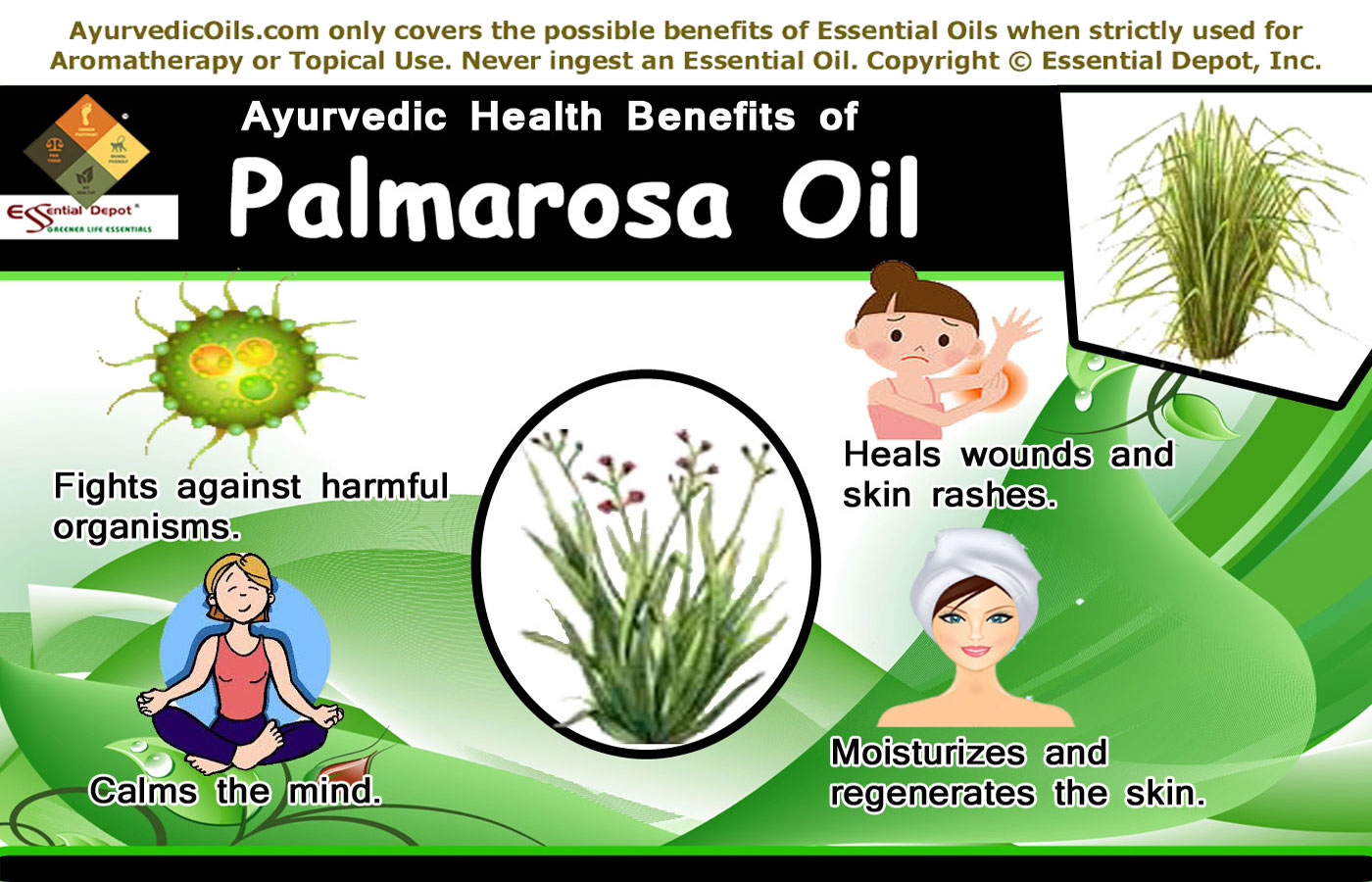
Palmarosa-Oil1. Fights against harmful organisms:

As an effective bactericide and antiviral oil, Palmarosa essential oil helps in killing harmful bacteria, viruses and other microbes. When applied topically after adding few drops of Palmarosa oil to ointments, skin care creams or lotions, this oil inhibits the growth of dangerous viruses that protect themselves by developing a hard cyst around them. Viral infections like athlete’s foot, ringworm and prolonged itching can be treated effectively by applying this blend externally.

A 2009 study on ‘Antibacterial Activity of Essential Oils from Palmarosa, Evening Primrose, Lavender and Tuberose’, proved that among these four tested essential oils, the essential oil extracted from Palmarosa reflected the highest activity against both gram negative bacteria like Staphylococcus aureus and gram positive bacteria like Escherichia coli.

Staphylococcus aureus causes numerous infections like urinary tract infections, skin lesions, pneumonia and meningitis. Escherichia coli are generally present in human intestines and cause food poisoning. You can add 2 drops of Palmarosa oil in warm bathing water or blend it with jojoba oil and use it as a massage oil for inhibiting the growth of bacteria.

2. Heals wounds and skin rashes:

The antiseptic properties of Palmarosa oil makes it an aromatic remedy for healing your wounds, cuts, burns, rashes and other skin infections. Using it as an liniment after adding 2 to 3 drops of Palmarosa oil to your skin care cream or lotion, aids in mending your wounds as well as protect them from being septic.

This is mainly because Palmarosa oil has antibacterial properties that ward off gram negative bacteria like Staphylococcus aureus that is wholly responsible for a wound to become septic. You can also use 2 to 3 drops of this oil in your bath for alleviating pain, spasms, convulsions and other skin infections.

3. Moisturizes and regenerates the skin:

Palmarosa oil is known as one of the best oils for treating problems with dry, dull and oily skin. It acts as a natural tonic to your skin and helps retain its moisture without allowing it to dry and turn lifeless.

Gently massaging your skin with 2 drops of Palmarosa oil and coconut oil will help in regulating the secretion of sebum, hydrating the skin, keeping it soft and supple and fighting against wrinkles and other symptoms of aging.

With its cytophylactic properties, Palmarosa essential oil assists in generating the growth of new skin cells and restores skin health by repairing the damaged skin cells due to environmental conditions, ageing and lack of moisture.

It enhances the defensive mechanism of the cells in the body and strengthens the immune system. The anti-inflammatory and cooling mechanism of this oil aids in treating eczema, psoriasis, boils, dermatitis, inflamed skin and wrinkles.

2 drops of Palmarosa essential oil can drive in the magical remedy for your skin. You can use it as a massage oil by blending it with jojoba oil or add it to your bath tub or to your skin care cream and lotions for visible results.

Palmarosa oil is also said to cure candida, shingles, rashes, acne and blemishes. It is also known for treating acne scars and for reducing the appearance of broken capillaries.

4. Calms the mind:

Palmarosa essential oil has a gentle, misty and lemony-rose fragrance that is comforting and calming to the mind and body. Adding 2 to 3 drops to your diffuser, air freshener, burner, vaporizer, linen or to your pillows grant a feeling of contentment, sense of security, adaptability to the existing situation, rekindles the aura, clarifies thoughts and augments the trust in the sacred stream of life.

Palmarosa oil also aids in treating nervousness, anger, anxiety, fear, possessiveness, jealousy, insomnia and resentment.

Other health benefits:

Palmarosa essential oil has been in use since the primordial times for cooling down fever with its triple healing power of being an antiviral, antibacterial and antiseptic oil.  It is also effective in treating digestive disorders, intestinal problems, stiff and sore muscles, bruising, heart palpitations and for strengthening the heart yin.

Disclaimer:

Always use essential oils for topical application and for aromatherapy uses only. Never ingest essential oils without the proper guidance of your healthcare provider. Keep away from children and do not use essential oils if you are pregnant. Consult your Ayurvedic practitioner before using specific essential oils for your unique health condition.

The MSDS (Material Safety Data Sheet) of Palmarosa oil is readily available for your enhanced safety and better usage.

Gas Chromatography Report (GC analysis) of Palmarosa oil.

Thought for the day:

Beauty is only skin deep. I think what’s really important is finding a balance of mind, body and spirit.    Jennifer Lopez

Suggested Reading:

  1. The Essential Guide to Natural Skin Care: Choosing Botanicals, Oils & Extracts for Simple & Healthy Beauty by Hélène Berton
  2. The Book of Beauty: Making Natural Skin Care Products with Aromatherapy and Ayurveda by Samyukta Blanchet
  3. The Complete Book of Essential Oils and Aromatherapy: Over 600 Natural, Non-Toxic and Fragrant Recipes to Create Health – Beauty – a Safe Home Environment by Valerie Ann Worwood

Reference Links:

  1. Antibacterial Activity of Essential Oils from Palmarosa, Evening Primrose, Lavender and Tuberose published in PubMed
  2. Palmarosa Oil by The Ananda Apothecary
  3. Health Benefits of Palmarosa Essential Oil by Organic Facts
  4. Palmarosa Essential Oil by Tracesetc.com

Save