Davana Oil

Davana-bannerDavana is imported worldwide for its sweet fragrance and illustrious medicinal values and is used to glorify the idol of Lord Shiva in India. Botanically known as Artemisia pallens, Davana is a member of the daisy family, Asteraceae. Regionally called as davanam in Tamil and Davana in Kannada, this fragrant herb is indigenous to the southern parts of the Indian subcontinent.

The essential oil of Davana is extracted from the stem and leaves of this herb by steam distillation method. It is widely used in Ayurveda in the treatment of mental disorders, nervous problems, depression, cough, cold, measles, infections, diabetes and high blood pressure.

Purchase Davana Oil – Wholesale – CLICK HERE

Historical uses of Davana and its essential oil:

Having its roots deeply set in the religious traditions of the Indian Culture, Davana essential oil has an extensive application all over the world. It was used in traditional Ayurvedic medicinal formulations as an aphrodisiac and mood elevator. Davana was a part of the Indian folklore medicine for treating diabetes mellitus and high blood pressure.

With much regional importance, Davana essential oil gained global attention only in the mid of the 20th century after which it has earned a special spot in the hearts of perfumers’ and flavorists’, particularly in United States and Japan where it is a flavor ingredient for bakery, tobacco and beverage products.

The flowers, stem and leaves of this plant are used as an effective antiseptic and disinfectant for quick treatment of wounds, cuts and infectious ailments such as cough, cold, measles etc. Davana essential oil has also been a part of other Complementary and Alternative medicinal practices like Unani and the Traditional Chinese Medicine (TCM).

Chemical constituents and therapeutic properties of Davana oil:

Davana essential oil comprises of davanone, a major sesquiterpene ketone and other essential components such as linalool, dehydro-a-linalool, terpinen-4 oil, isodavanone, nordavanone, davanafurans, methyl cinnamate, ethyl cinnamate, bicyclogermacrene, davana ether, 2-hydroxyisodavanone, and farnesol. All these compounds of Davana oil attribute to its unique aroma and its medicinal values.

Well recognized as a herb of sacred values, Davana essential oil benefits mankind with its anti-depressant, aromatic, antiseptic, antiviral, antimicrobial, anti-fungal, antispasmodic, decongestant, disinfectant, emmenagogue, anthelmintic, stomachic, hypotensive, antioxidant, expectorant, relaxant, vulnerary, aphrodisiac, nervine and mucolytic properties.

Ayurvedic Health Benefits of Davana Oil:

Ayurveda is a holistic healing system that has its origin in India, the land of tradition and the world’s oldest history for more than 5,000 years. Just like this ancient remedial science, Davana herb also has its nativity vested in India and never fails in treating illnesses with its remedial aroma.

Ayurveda suggests natural remedies for treating mankind as it believes that everything is a part of nature and Mother Nature has innate medicines for healing health disorders. An individual is said to be healthy when his/her mind, body and soul are in perfect balance with nature. Illness according to Ayurveda is an opportunity to explore, restore and re-establish absolute health and strike balance with nature.

Just as nature, human body is also made up of five vital elements namely fire, water, earth, air and space, built in the form of three vital biological energies known as doshas. They are kapha, vata and pitta doshas. The predominance of any one of these doshas determines the personality, character and behavioral attributes of a person and balance between these doshas stand for health and heartiness.

Ayurvedic healing starts with the identification of the unique individual constitution that helps in determining doshic qualities, mental and physical attributes of an individual. Ayurveda does not follow the ‘one size fits all’ healing methodology as it trusts that every human being is unique in nature and the remedies for their illnesses should also be unique as per their constitution.

The nobility of Ayurveda rests in treating the root cause of an illness instead of curing its symptoms alone. By treating the actual underlying cause, Ayurveda helps in preventing such illnesses in the future and paves way for longevity through healthy aging. The most predominant Ayurvedic remedies are herbs, essential oils, meditation, yoga, physical exercises, healthy lifestyle, prayers and an Ayurvedic routine.

Davana essential oil is said to pacify vata and kapha imbalances and has a neutral effect on pitta dosha.

The Ayurvedic health benefits of Davana essential oil are:

Davana-broucher-new1. A remarkable antiseptic to relieve you from infections:

Being a natural antiseptic with less toxicity, Davana essential oil is used to treat both internal and external infections. It destroys the micro organisms affecting the internal organs of the body like kidney, bladder, urethra and urinary tract, thus putting an end to sepsis, a fatal inflammation of the whole body.

A 2009 research on ‘The antimicrobial screening of Artemisia pallens’ published in the International Journal of PharmTech Research, USA states that the extracts from Artemisia pallens possess antimicrobial activity against the bacteria Bacillus cereus. Davana herb extracts and its essential oil have been used in Ayurvedic practices for healing wounds and deep abrasions quickly and to curb the spreading of infections to other parts of the body, which might otherwise result in tetanus.

Davana essential oil also has anti-viral property that strengthens your body’s immune system to effectively work against viral attacks. Having the ability to penetrate the protective layer of the virus called cyst, it kills viruses without a trace. Because of this attribute, it has been extensively used to treat viral infections such as cold, cough, influenza, measles etc.

The best way to use Davana oil for arresting the spread of infectious micro-organisms is in Abhyanga or the art of Ayurvedic massaging. Mix 5 drops of Davana oil with 3 ml of coconut oil and massage your body, followed by a warm bath with 2 drops of Davana oil diluted in bathing water. The therapeutic properties of this oil penetrate through the skin and start its healing mechanism. You can also mix 1 drop of Davana oil with 10 drops of olive oil and apply it on wounds and abrasions for quicker healing.

2. A trusted anti-depressant:

Widely used in the field of Ayurvedic aromatherapy for its anti-depressant properties, Davana essential oil actively engages in relaxing your nervous system and induces tranquility in the mind. As a medicinal herb that adorns the deity of Lord Shiva, it provokes divinity, spirituality, peaceful synergy and positive energy in every individual. Add 2 drops of Davana oil in warm bathing water or mix 6 drops of this oil with 3 ml of sesame oil and go for an energizing massage for treating depression and other mental woes.

Davana essential oil grants a soothing effect to the mind and body by effectively alleviating pressure in case of stress, anxiety and rejuvenates the mental health of those who feel depressed and lifeless. You can also add 2 drops of Davana oil to diffuser or burner and inhale it’s comforting fragrance, through which the aromatic molecules present in this oil pass through the nasal passages and reach the limbic system, the control center of human brain.

3. Alleviates female problems:

Nature has gifted humanity with some excellent medicines for treating complex womanly problems like menstrual difficulties, menopausal problems and emotional woes associated with such disorders. Davana essential oil is one such curative power, which with its emmenagogue property regulates the flow of blood in the uterus and pelvic area and releases blocked menstruation, resulting in a regular menstrual cycle.

Massaging your lower abdomen with 2 drops of Davana oil blended with 1ml of sesame oil can act as an effective remedy in treating menstrual spasms, pain in the abdominal area, fatigue, nausea, muscular cramps, restlessness and mood swings.

4. Relieves congestion and eases respiration:

Excess of kapha dosha along with viral and bacterial infections result in cough, cold, congestion and other respiratory illnesses. Severe infections may lead to deposits of mucus and phlegm in the upper respiratory tract and the lungs, causing respiratory disorders and breathing difficulties.

Davana essential oil is known to pacify excess kapha dosha with its decongestant and expectorant properties and helps in expelling heavy deposits of mucus and phlegm in the nasal passages and lungs by lubricating the respiratory tract. This oil also has antiseptic, anti-bacterial, anti-viral and antimicrobial properties that destroy such harmful microbes causing respiratory problems.

Add 2 drops of Davana oil in steam inhalation for relieving from asthma, bronchitis, cough, cold, breathing difficulties, headache and respiratory spasms. You can also add 2 drops of this oil in vaporizing ointments or cold rubs and gently massage it on your chest, back and throat for effective relief.

5. Guards against skin infections and worms:

Being an antiseptic, Davana oil fights against infections and protects your skin from infection prone conditions such as acne, boils, pimples and even stretch marks. It is also vulnerary in nature and aids in speeding up the healing process of wounds and cuts. Mix 2 drops of Davana essential oil in your regular skin care cream or with 1 ml of jojoba oil and apply it on your skin for treating rough, dry and chapped skin. This oil also aids in stimulating the endocrine system.

Davana essential oil is further enriched with its anthelmintic and stomachic properties that fight against worm infestation caused by parasites such as round worms, whip worms, hookworms, thread worms, pin-worms and tape worms.

6. Supports a healthy atmosphere:

Excelling in its disinfectant properties, Davana essential oil can work wonders to purify your atmosphere. The fragrance of this medicated oil spread so quickly and kills the germs and microbes present in the air with its remedial qualities. Add 2 drops of Davana essential oil in fumigants, sprays or vaporizers for fresh and germ-free environment.

7. A relaxant to treat your aftershocks:

Davana essential oil has anti-inflammatory and relaxant properties that effortlessly relaxes the contractions in muscles, blood vessels and also calms down the brain and your nervous system. Massaging your body with 5 drops of Davana oil blended with 2.5 ml of almond oil assists in rejuvenating the nervous system and grants absolute solace. It acts best in inducing mental peace and helps in recovering from after effects of shocks, trauma, heavy medications and treatments, disappointments, failures etc.

8. Matchless natural perfume:

Davana essential oil stands unique in the field of perfume industry for its fragrance differs with the uniqueness of the individual thus making each one special in their own way. A single plant can scent the entire garden. Hence it is used in the manufacture of high quality perfumes and cosmetics and also in food industries, flavoring tobacco, pastries and some beverages.

Other health benefits of Davana Oil:

As per a 1996 research published in Pubmed, Davana essential oil is said to lower glucose level in the blood thereby helpful in treating diabetes mellitus. A 2011 study on the antioxidant property of Artemisia pallens states that it possesses antioxidant properties due to the presence of phenols that effectively reduce the risk of chronic diseases, cardiovascular disorders and cancer.

This oil also has mild insect repellant property. Aromatherapists use Davana oil for its antispasmodic properties in treating spasms and pains. It is used in manufacturing vaporizers, disinfecting sprays and room fresheners. The Davana flowers represent a symbol of tradition and are used in making garlands, floral decorations, bouquets and also for various other religious rituals and customs.

Disclaimer:

This article is only for the purpose of information and is not meant to diagnose or replace any professional medical advice or prescribed medication. Never use essential oils internally. Always remember to dilute essential oils before topical usage, as pure and organic essential oils are highly concentrated liquids and may cause skin irritation or other side effects if used in an undiluted form. Always consult your Ayurvedic expert before using the right essential oils for your health condition and unique individual constitution.

Thought for the day:

God writes the Gospel not in the Bible alone, but also on trees, and in the flowers and clouds and stars. -Martin Luther

Suggested Reading:

  1. Artemisia (Medicinal and Aromatic Plants – Industrial Profiles) by Colin W. Wright
  2. Dying to Look Good by Christine Hoza Farlow
  3. Butterfly Miracles with Essential Oils by LaRee Westover
  4. Davana and its cultivation in India (Farm bulletin) by M. R Narayana
  5. Therapeutic Blending With Essential Oil: Decoding the Healing Matrix of Aromatherapy by Rebecca Park Totilo

Reference Links:

  1. Artemisia pallens by Wikipedia.
  2. Influence of plant growth stage on the essential oil content and composition in Davana (Artemisia pallens wall.) published in Pubmed.
  3. Antimicrobial Screening of Medicinal Plant – Artemisia pallens by the Department of Chemistry, S.P. College, Pune, India.
  4. Study on Effects of Artemisia pallens Wall. on blood glucose levels in normal and alloxan-induced diabetic rats by Division of Ethnopharmacology, Tropical Botanic Garden and Research Institute, Palode, Kerala, India published in PubMed.

Frankincense Oil

Frankinsence-banenrRepresented as an ‘Emblem of Prayer’, Frankincense is yet another Biblical oil that brings you close to heaven by appeasing your mind, relieving your pain, strengthening your positive emotions and implanting enormous beauty benefits.

Extracted from the gum or resin of Boswellia frereana tree by steam distillation, Frankincense essential oil is often held high for its power to spread health and heartiness in a magic of minutes, just like that.

Ayurveda quotes the use of Frankincense as ‘dhoopan’, and burning Frankincense everyday in homes is trusted to bring good health in Indian culture.

Known as ‘Dhoop’ in Sanskrit, Frankincense and its essential oil have been used for more than thousands of years in Ayurvedic healing in the treatment of respiratory illnesses, arthritis, weak female hormone system, rheumatism, skin infections, wounds, womanly problems and for cleansing the air.

Purchase Frankincense Oil – Retail – 4 oz – CLICK HERE

Purchase Frankincense Oil – Wholesale – CLICK HERE

Historical uses and importance of Frankincense and its essential oil:

Frankincense is represented as a ‘symbol of the divine aroma’ and as an ‘emblem of prayer’ in various chapters of the Bible including Psalm 141:2; Luke 1:10 and Revelation 5:8, 8:3. Best known as one of the three gifts gifted to Infant Jesus by the wise men, the existence of Frankincense dates back even before the birth of Jesus Christ. Given the credit of the most spiritual oil of the Middle East, it has flawless healing benefits with an inbound immaculate aroma.

People of all religions consider Frankincense as a symbol of sacredness and it is witnessed with the presence of this mesmerizing fragrance in various religious ceremonies. Frankincense is an important symbol of trading carried out in Arabian Peninsula and North Africa for more than 5000 years ago that the temples of the ancient Egyptian Queen Hatshepsut are adorned by murals depicting sacks of Frankincense traded from the land of Punt.

Prepared from the resin of Frankincense or olibanum trees by steam distillation method, this oil is a part of the traditional medicinal system including Ayurveda, Traditional Chinese Medicine and in certain other folklore remedies in treating wounds, arthritis, digestive disorders, rheumatism, and weak immune system and in promoting healthy skin.

Frankincense has its name etched in Naturalis Historia by Pliny the Elder. The renowned book on ‘Ayurveda and Aromatherapy’ by Bryan Miller and Light Miller quotes the use of Frankincense since ages as “Clay tablets, revealed that, in Babylon, 57,000 pounds of Frankincense were burned every year.” It also says that about 60 tons of this aromatic resin was used in the annual feast of the God Baal in the Assyrian civilization.

Since ancient times, Frankincense is burnt in homes for keeping away from insects, cleansing the atmosphere, warding off sickness and evil spirits and to help reach one’s prayers to the Divine. This holy herbal medicine is burnt even today in numerous Indian homes during the dusk to fulfill their special prayers and guard against bad spirits and harmful insects.

Chemical constituents or Gas Chromatography Report of Frankincense oil:

According to the Gas chromatography report, Frankincense oil consists of 9 major chemical components that contribute to its unique fragrance, therapeutic properties and quality.

Just click on:

For learning more about the extensive information of these chief constituents of Frankincense oil.

Alpha-thujene is the predominant constituent of Frankincense with about 53 % area.

The table below on the Gas Chromatography report talks about the principal chemical constituents and its role in granting the therapeutic and other attributes to Frankincense oil.

Frankincense-OilStudies on the chemical composition of Frankincense oil reveal that it contains monoterpenes, sesquiterpenes and diterpenes such as a-pinene, b-pinene, isoterpenolene, a-phellandrene, b-phellandrene, sabinene, linalool, octanol, octyl acetate, bornyl acetate, incensole and incensyl acetate in different ratios depending upon the species of the Boswellia trees from which the resins are obtained.

Therapeutic properties of Frankincense oil:

Frankincense oil is commonly used for its aromatic, antiseptic, astringent, antibacterial, anti-inflammatory, anti-cancer, anti-tumor, immune stimulant, disinfectant, carminative, cicatrisant, cytophylactic, digestive, diuretic, emmenagogue, sedative, tonic, uterine, vulnerary and expectorant properties.

Ayurvedic Health Benefits of Frankincense Oil:

Ayurveda is an ancient healing science that focuses on longevity and healthy aging through prevention of diseases and a balanced lifestyle that assists in being in harmony with nature.

Ayurvedic healing methodologies were strongly implanted to the human civilization by the powerful Ayurvedic encyclopedias namely Charaka Samhita and Sushruta Samhita.

Charaka Samhita enlightens Ayurveda as a discipline that heals the mind, body and soul and says, “The three – body, psyche, and soul – act as a tripod. The world stands upon them, and within them, the world abides.”

With this thought, Ayurveda regards human body as a temple, where the spirit dwells in and keeping the mind and body clean without any physical illnesses or mental chaos is the way to harmonious living.

The science of Ayurveda rests on the principle of five elements of nature namely fire, water, earth, air and space. According to Ayurvedic philosophy, everything in the universe is a part of nature and contains all these five elements in it.

Human body also consists of these elements in the form of biological energies known as doshas, in various forms so as to represent a unique individual constitution.

Vata dosha represents air and space and is responsible for circulation, nervous functions, respiration and movement. Kapha dosha is a combination of water and earth and is in charge of the structure of the body along with its sustenance. Pitta symbolizes fire and water and is responsible for body temperature and metabolic functions. Balance between these doshas indicates health and imbalance leads to illnesses.

Ayurveda recommends natural remedies like essential oils, herbs, yoga, physical exercises, healthy balanced diet, Ayurvedic routine, meditation and prayers in order to treat these doshic imbalances and treat the illnesses by analyzing its root cause instead of diagnosing its symptoms.

Frankincense is said to have a sattvic or cleansing effect on the mind as well as the nervous system. It assists in burning impurities in the subtle nerve channels. The essential oil of Frankincense clears excess kapha and pacifies vata and pitta doshas.

The Ayurvedic health benefits of Frankincense essential oil are:

frankinsence-broucher1. Strengthens your immune system:

Frankincense essential oil is an exceptional gift of nature that serves as an antiseptic, disinfectant and immune stimulant. Just inhaling the invigorating aroma of this supreme oil by adding 2 drops of this oil to your burner or diffuser, helps build a protective aura around yourself and acts as a shield in fighting against germs and disease causing microorganisms.

A 2002 study on the chemistry and immunomodulatory activity of Frankincense oil conducted by the department of Pharmacognosy of Mansoura University, Egypt states that Frankincense oil exhibited immuno-stimulant activity in addition to its anti-inflammatory, immunomodulatory and anti- leukotriene properties. This study encourages the utilization of Frankincense essential oil for several auto-immune disorders.

The number of leukocytes in the human body determines the strength of the immune system of an individual. Inhaling the fragrance or using Frankincense essential oil in a massage blend (5 drops of Frankincense oil added with 2.5 ml coconut oil) increases the production of leukocytes in the body with its cytophylactic property.

2. Fights against cancerous cells:

Frankincense essential oil has anti-tumor and anti-cancer properties, the attributes of monoterpenes that effectively helps in fighting against the cancerous tumors.

A 2012 research on Frankincense essential oil prepared from hydro distillation of Boswellia sacra gum resins has proved that this oil induces human pancreatic cancer cell death in cultures. It also reverses tumor growth in a heterotopic xenograft mouse tumor model. Studies have also reported that cultured human bladder and breast cancer cells are more sensitive to Frankincense essential oil and yield good results.

3. Pacifies your digestive system:

As a very good source of β-phellandrene and α-pinene, Frankincense essential oil acts as an effective carminative and helps in preventing and expelling the formation of gas in the stomach and intestines. It also acts as a natural antacid and promotes the secretion of bile and other digestive juices.

Mix 2 drops of Frankincense oil with 1 ml sesame oil and massage this blend on your abdomen for relieving flatulence, constipation and other gastro-intestinal problems including stomach pain, feelings of discomfort in the chest and abdominal area.

4. Combats oral infections:

The antiseptic, antibacterial and antifungal properties of Frankincense oil acts as a defensive shield that protects one from germs, bacteria, pathogens and fungi. This defensive mechanism of Frankincense essential oil makes its presence vital in making dental care products like toothpaste, mouthwash, mouth freshener etc.

Add 1 drop of Frankincense oil in a cup of warm water and use it as a natural gargle to keep away from oral problems like toothache, bad breath, cavities, mouth sores and few other oral infections.

5. Pampers your skin health:

Frankincense essential oil often evolves as a perfect rescuer in case of skin problems as it acts as an effective astringent, which helps in retrieving its natural beauty. This oil works on wrinkles and other aging symptoms with its ability to shrink the body tissues and bring it back to its original shape and assist in tightening the skin.

As a cicatrisant, it helps in the formation of scar tissue and yields excellent results in treating scars, fading the after marks of acne, pimples, boils, pox, stretch marks and fat cracks due to pregnancy and childbirth. Add 2 drops of Frankincense essential oil with 1 ml of jojoba oil or to your regular skin care cream and apply it in circular movements to reduce the appearance of wrinkles, scars, marks and micro-wrinkles around the eyes and cheeks.

As an anti-aging agent it helps in the regeneration of healthy cells while keeping the existing ones healthy. Because of its firming and toning activity it strengthens the gums and hair roots and contracts the muscles, intestines and blood vessels that loosen with aging. Frankincense oil acts as a coagulant and helps in preventing blood loss in case of wounds and cuts. It also assists in healing wounds and other skin infections speedily.

6. Helps treat womanly problems:

Frankincense oil acts as an emmenagogue that stimulates the flow of blood in the pelvic area and the uterus, thus regulating the menstrual cycle and functions of the female reproductive system.

It is also uterine in nature and regulates the secretion of estrogen hormone in the appropriate level, thus reducing the risk of cyst formation or uterine cancer in women.

Add 2 to 3 drops of Frankincense essential oil with 1 ml of Evening primrose oil and massage it slowly on your lower abdomen for relieving problems associated with menstruation like abdominal pain, nausea, digestive disorders, restlessness and mood swings. You can also add 2 drops of Frankincense oil in warm bathing water for calming your nerves and promoting peaceful sleep.

7. Relieves respiratory illnesses:

Stagnation of water, toxic substances and infectious micro-organisms in the body pave way for respiratory problems. This is mainly due to excess of kapha dosha and Frankincense essential oil lessens excess kapha.

This oil also has antiseptic, anti-bacterial, anti-inflammatory and expectorant properties that protect one from infectious microbes and helps reduce phlegm deposits in the respiratory tract and inflammation of the nasal and respiratory passages.

2 drops of Frankincense oil added to steam inhalation or mixed with vaporub and applied on the chest, back and throat aids in easing cough, cold, bronchitis, laryngitis, breathing difficulties, asthma and certain other respiratory ailments.

8. Helps in fighting against arthritis:

Frankincense oil has been used since ancient times to treat arthritis, rheumatism and muscular pain. With its anti-inflammatory, diuretic and kapha reducing qualities, this oil also aids in eliminating excess water deposits, salt, uric acid and toxic substances in the body causing pain, swelling and inflammation.

A valuable source states that this oil possesses potent anti-inflammatory, anti-arthritic and analgesic effect that actively treats arthritis, osteo arthritis and pain in muscular joints. Mix 4 drops of Frankincense oil with 2 ml of coconut oil and massage it gently on the painful area or you can also add 2 to 3 drops of this oil to hot compress for quick relief.

9. Alleviates stress and anxiety:

Frankincense essential oil awakens insight, soothes anxiety and frees one from all sorts of worldly pressure that affect the mind and the body. Various studies have proved that incensole acetate in Frankincense oil is an effective anti- depressant and reduces abnormal behaviors due to anger, stress and anxiety.

Adding 2 drops of Frankincense oil in your vaporizer, burner or diffuser assists in attaining spiritual enhancement that balances the mind, body and soul to experience eternal happiness. This healing effect can also be attributed to the presence of carbon based compounds like sesquiterpenes that directly act on the limbic system, known as the control center of the human brain.

Other health benefits:

Frankincense essential oil is also used in the manufacture of soaps, disinfectant cleansers, incense sticks, cosmetics, perfumes, body lotions, oral hygiene products and much more.

Disclaimer:

This article is for the purpose of education only and is not intended for treatment or for replacing any prescribed medication or professional medical advice. Never take essential oils for internal use and always use externally in a diluted manner, as organic and pure essential oils are highly concentrated liquids and may cause allergic reactions if used directly on the skin.

Always consult your Ayurvedic practitioner before choosing the appropriate essential oil for your unique individual constitution and health condition.

The MSDS (Material Safety Data Sheet) of Frankincense oil is readily available for your enhanced safety and healthier usage.

Gas Chromatography Report of Frankincense oil.

Thought for the day:

To be overcome by the fragrance of flowers is a delectable form of defeat.
-Beverley Nichols

Suggested Reading:

  1. Frankincense & Myrrh by Martin Watt, Wanda Sellar
  2. The Ayurveda Encyclopedia: Natural Secrets to Healing, Prevention, & Longevity by Swami Sadashiva Tirtha
  3. Fragrance & Wellbeing: Plant Aromatics and Their Influence on the Psyche by Jennifer Peace Rhind
  4. Holistic Cancer Protocols with Essential Oils by Dr. Deborah McFarland

Reference Links:

  1. Frankincense by Wikipedia
  2. Frankincense in Ayurveda and Aromatherapy by Vishnu Dass, Ayurvedic Herbology
  3. Chemistry and Immunomodulatory Activity of Frankincense Oil by Botros R. Mikhaeil, Galal T. Maatooq, Farid A. Badria, and Mohamed M. A. Amer Department of Pharmacognosy, Faculty of Pharmacy, Mansoura University, Mansoura 35516, Egypt, published in Naturforsch
  4. Frankincense essential oil prepared from hydrodistillation of Boswellia sacra gum resins induces human pancreatic cancer cell death in cultures and in a xenograft murine model, published in BMC Complementary and Alternative Medicine


Your resource for quality Essential Oils. Every batch is
GC tested to ensure purity and authenticity.

Myrrh Gel Essential Oil

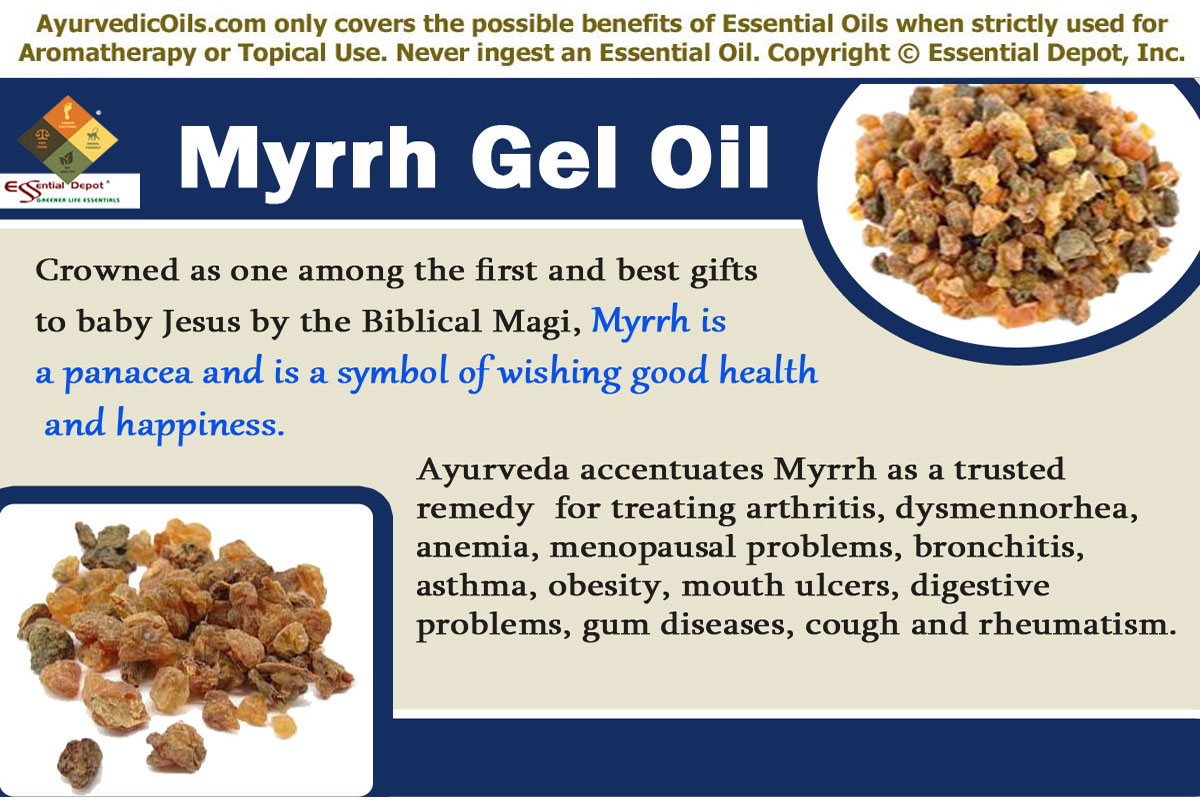
Mrrh-gel-bannerCrowned as one among the first and best gifts to baby Jesus by the Biblical Magi, Myrrh is asserted as a panacea for many diseases and is a symbol of wishing good health and happiness. This sacred herb has its name engraved in almost all the major religious practices of healing and has been in use throughout history as a promising medicine, renowned perfume and sanctified incense.

Myrrh essential oil is hydro distilled from the resin of Myrrh trees. Ayurveda accentuates Myrrh as a trusted remedy for treating arthritis, dysmennorhea, anemia, menopausal problems, bronchitis, asthma, obesity, mouth ulcers, digestive problems, gum diseases, cough and rheumatism. Myrrh resin has been a vital ingredient in many rasayana formulas in Ayurvedic treatment.

Historical importance of Myrrh:

Botanically known as Commiphora myrrha, Myrrh is indigenous to Somalia, Yemen, Ethiopia and Eritrea. The word ‘Myrrh’ is derived from the Aramaic word murr, meaning ‘was bitter’. Myrrh has many religious rituals stringed to its historical fame. The Islamic herbal medicine encyclopedia quotes “The Messenger of Allah stated, Fumigate your houses with al-shih, murr, and sa’tar”, where murr indicates Myrrh.

The book of Matthew states that gold, frankincense and myrrh were among the gifts to Jesus Christ. New Testament cites Myrrh as an incense presented at the time of Christian liturgical celebrations. The Eastern Orthodox Church makes use of Myrrh scented oil as a symbol of tradition during the sacraments of unction and chrismation.

Myrrh was held high in the Traditional Chinese Medicine as a special herb with ‘blood-moving’ powers to eliminate stagnant blood from the uterus and is also effective on spleen meridians, liver and heart. It is for this reason, Myrrh has been used in the treatment of uterine tumors, menopause, amenorrhea, rheumatic problems, dysmennorhea, arthritis and other circulatory problems.  It is also said that Myrrh has been used in the Chinese ma yao since 600 BC.

It is said that the Greek soldiers took Myrrh with them to the battlefield for cleansing and healing their wounds, as this herb has anti-inflammatory and antiseptic properties. It was used by the ancient Egyptians for treating hay fever, herpes and also in fumigations and embalming.

This herb is used in folklore medicine in making rheumatic plasters and for treating muscular pains. Tibetans trust the magical powers of Myrrh to assuage stress and certain other nervous disorders.

Myrrh is a popular ingredient in many liniments, tooth powders, gargles, toothpastes and mouthwashes especially for its antiseptic and analgesic properties that aid in treating many oral problems, wounds and skin ailments.  It is also used in making tinctures for healing wounds in the Veterinary practice. Assyrians and Babylonians burned Myrrh during religious ceremonies.

Therapeutic properties and chemical constituents of Myrrh essential oil:

The remedial values of Myrrh gel essential oil are analgesic, anti-inflammatory, emmenagogue, antiseptic, antimicrobial, carminative, stimulant, tonic, stomachic, astringent, antifungal, circulatory, diaphoretic, antispasmodic, anti-catarrhal, immune booster and expectorant. The chemical components contributing to these properties are eugenol, triterpenoids, polysaccharides, a-pinene, limonene, cresol, triterpene acids, cadinene, cuminaldehyde, sesquiterpenes and acetic acid.

Ayurvedic health benefits of Myrrh gel essential oil:

Myrrh is a part of many Ayurvedic medications, especially for its positive effects on the nervous system and the circulatory system. Everything in Ayurveda has a strong reason behind it and that is the focus on treating the root cause of an illness and preventing it in the future also.

Ayurvedic practices do not treat human beings and their illnesses as one among the ten instead it believes that every individual is unique by birth and each and every one of their health condition needs to be treated in a unique manner.

Ayurvedic principles trust that every one of us on earth is built up of three vital energies known as doshas. They are kapha, pitta and vata doshas. The wisdom of Ayurvedic healing lies in its holistic and inimitable approach towards humanity by identifying their attributes, personal traits and health mechanism based on their predominant dosha.

Generally vata predominant people are lean, tall, creative and have a dark complexion and its imbalance causes constipation, stress, sleeplessness, anxiety and loss of sexual interest. People with the predominance of pitta dosha have a fair complexion, sharp decision making skills, short temper and are perfectionists.

Pitta imbalance leads to loss of temper and digestive disorders like heartburn and ulcers. Kapha predominant people are kind at heart, affectionate and obese with an average complexion. Imbalance of kapha energy will lead to overweight, sluggishness and poor process of digestion.

Ayurvedic remedies are based on your individual constitution and center natural medications to treat the imbalance of doshas. Myrrh essential oil is known to pacify vata and kapha energies and increase pitta dosha.

It’s time to have a look at the Ayurvedic health benefits of Myrrh gel essential oil.

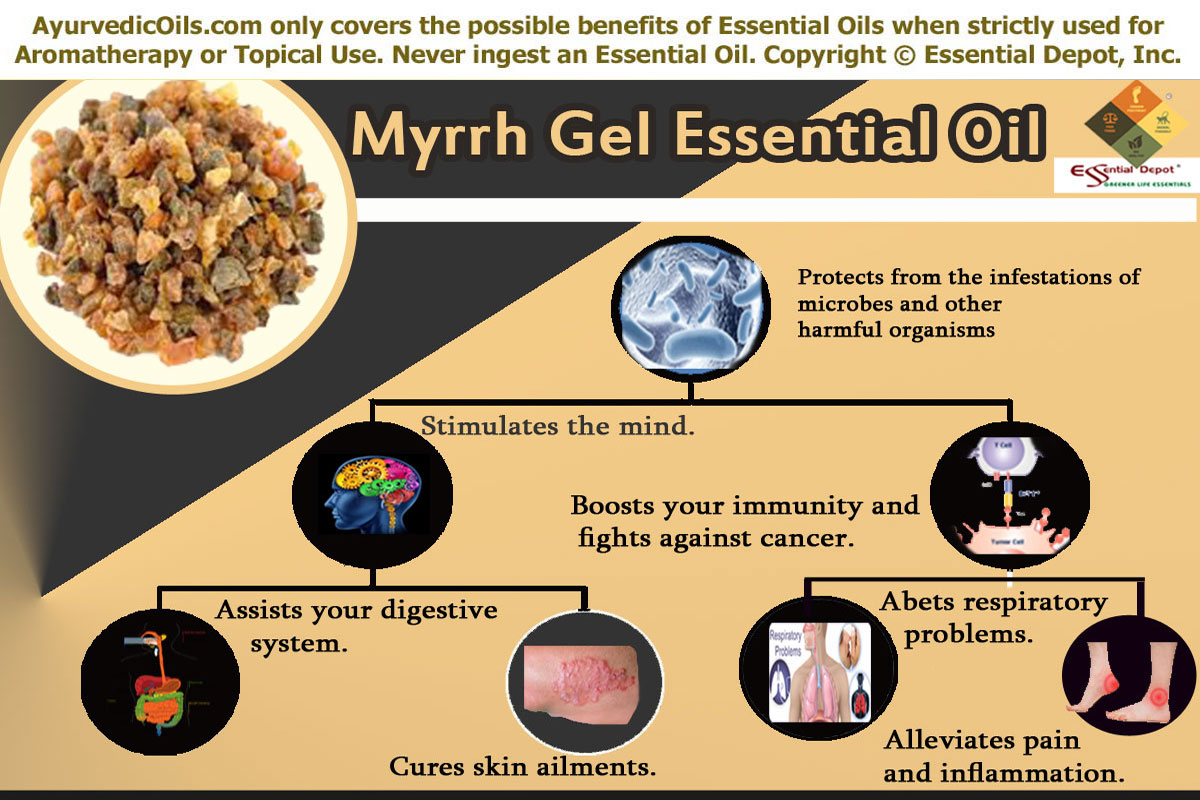
Myrrh-gel-broucher1. Protects from the infestations of microbes and other harmful organisms:

Myrrh essential oil is known for its anti-fungal, antiviral and antimicrobial properties. It assists in killing bacteria, fungi and certain other detrimental microbes by making the body resistant to such infections.

Myrrh oil has natural breath freshening properties that aid in treating bad breath known as halitosis. Add 2 drops of Myrrh oil in warm water and use it as a gargle for treating oral problems like toothaches, pyorrhea, abscesses, mouth ulcers, gingivitis and gum problems. This blend also helps in fighting bacteria causing cavities.

Applying 2 drops of Myrrh oil blended along with coconut oil on wounds, cuts, athletes foot, and other skin infections will aid in preventing the wound from getting septic as Myrrh oil fights Staphylococcus aureus, the bacteria responsible for wounds becoming septic. This oil is also used in treating cough, measles, pox, cold, fever, diarrhea, mumps, food poisoning and other health conditions caused due to microbial infections.

2. Boosts your immunity and fights against cancer:

A weak immune system is the underlying cause for the body becoming vulnerable to diseases and infections. Myrrh essential oil reinforces the immune system and augments the body’s natural disease resistant power by enhancing the body’s nutrient absorption capacity.

This way it protects the body from pathogens in case of airborne or waterborne diseases like diarrhea, cold, cough, dysentery, typhoid, bronchitis, vomiting and few other digestive problems. Add 3 to 4 drops of Myrrh oil with jojoba oil and massage gently on your body. This helps in transmitting the therapeutic molecules of Myrrh oil by penetrating deeply into the skin and to your blood stream.

Myrrh has been proved effective in fighting against the free radicals and aid in preventing cancer. A 2001 study by the Rutgers University in NJ found that Myrrh essential oil has certain compounds that assist in killing cancer cells and showing promising effect for treatment and prevention of prostate and breast cancer.

Elemene has been identified as the unique component of Myrrh essential oil and has been proven to show improved effect on treatment of cancerous brain tumors.  You can add 2 drops to your diffuser for regaining confidence and energy. Gently massage your affected parts with 5 drops of Myrrh oil blended with coconut oil for combating the growth of free radicals worsening the effects of cancer.

3. Cures skin ailments:

Myrrh essential oil has been used as a trusted natural remedy for skin problems since the Biblical times. This is mainly because of the antiseptic, analgesic, vulnerary and astringent properties of this oil.  A 2010 study by King Saud University, Saudi Arabia traced that Myrrh was particularly potential to increase the count of white blood cells in laboratory rats treated for gastric ulcers and skin injuries with Myrrh.

Blending 2 drops of Myrrh oil with coconut oil and applying it on wounds, cuts, boils, athlete’s foot, bed sores, chapped skin, ringworm, eczema, skin ulcers, hemorrhoids, weeping wounds and itches can help heal such skin problems quickly and protect them from infections also.

Myrrh essential oil has been in use as a rejuvenating facial aid for more than hundreds of years mainly due to its ability to invigorate dull skin, revivify mature complexions, reduce wrinkles and leave it glowing from within. Mix 2 drops of Myrrh oil with jojoba oil and rub it on your face soothingly, leave it for 5 minutes and then wash your face with a mild cleanser for nourishing your skin and help it look supple and younger.

4. Abet respiratory problems:

Myrrh essential oil has expectorant and anti-catarrhal properties that help in treating respiratory problems like cold, asthma, sinus infections, cough, sore throat, congestion, bronchitis and breathing difficulties.

Add 2 drops of Myrrh oil to steaming water and inhale the aroma to get immediate relief from chest congestion and to support the expulsion of phlegm from respiratory tracts and lungs. You can also add 2 drops of this oil to hot bath or to your cold rub and gently massage it on the chest, back and throat for instant aid.

5. Assists your digestive system:

Myrrh oil is carminative and stomachic in nature, aiding in relieving gases and promoting the process of digestion. It helps in restoring the appetite, treating indigestion, nausea, flatulence, stomach pain and constipation by stimulating the flow of saliva, bile and other digestive juices. You can either use 2 to 3 drops of Myrrh oil in steam inhalation or diffuser for calming the digestive system. Massaging your tummy and abdomen with 2 drops of Myrrh oil blended with sesame oil can help in easing sluggish digestion.

6. Stimulates the mind:

Myrrh essential oil is said to grant mental clarity, alleviate stress, and treat depression, tension, fatigue and anxiety. It is used in Ayurvedic healing for enhancing the intellect and cleansing the blood. Inhaling the sacred aroma of Myrrh oil during meditation can help in opening the mind, increasing concentration and treating poor memory. Massaging your body with 4 drops of Myrrh oil along with sweet almond oil helps in uplifting the mind, relieving anxiety and nervous tension.

Myrrh essential oil has a calming and pacifying fragrance that helps open the heart chakra that is associated with love, forgiveness and acceptance. 2 drops of Myrrh oil added to burner, vaporizer or diffuser assists in discharging fear, hurting experiences and depressive feelings that stop you from going ahead. Myrrh oil strengthens your spiritual acquaintance, trust and self-confidence.

7. Alleviates pain and inflammation:

Myrrh has been a promising remedy in Ayurveda and other traditional healing methodologies for treating pain, gout, arthritis, osteoarthritis and rheumatoid arthritis. The essential oil of Myrrh has diaphoretic properties that increase sweating and helps expel excess water, toxic substances and extra salts from the body.

The anti-inflammatory properties of this oil supports in reducing inflammation. By eliminating the toxic substance and lessening inflammation, Myrrh oil is effective in treating arthritis and rheumatic pain.

Blend 2 drops of Myrrh oil, 2 drops of Frankincense oil along with coconut oil and massage soothingly on the affected parts for relieving pain and inflammation. You can also add 3 drops of Myrrh oil to hot compress or in hot bath for similar effects.

Other health benefits:

Myrrh essential oil is also helpful in treating menstrual cramps, delayed menstruation, uterine problems, hair fall problems and acts as a tonic for the entire system by stimulating the digestive system, nervous system and the circulatory system.

Disclaimer: Never take essential oils internally. Essential oils are highly concentrated liquids so always dilute them in suitable carrier oils before using it for topical application. This article is only for your information and is not meant to replace any prescribed medication or professional advice. Avoid using Myrrh oil if you are a pregnant or nursing woman. Keep it out of reach of children. Consult your Ayurvedic practitioner before using the appropriate essential oil for your unique individual constitution and health condition.

Thought for the day:

Adopt the pace of nature: her secret is patience.              – Ralph Waldo Emerson

Suggested Reading:

  1. Frankincense & Myrrh: Through the Ages, and a complete guide to their use in herbalism and aromatherapy today by Martin Watt, Wanda Sellar
  2. The Ayurveda Encyclopedia: Natural Secrets to Healing, Prevention, & Longevity by Swami Sadashiva Tirtha
  3. The Illustrated Encyclopedia of Essential Oils: The Complete Guide to the Use of Oils in Aromatherapy & Herbalism by Julia Lawless
  4. Sacred Woman: A Guide to Healing the Feminine Body, Mind, and Spirit
    by Queen Afua
  5. Herbal Remedies Bible: Life Saving And Healing Herbs For All Ailments: Easy Herbal Remedies For Over 100 Ailments by Dane Foster

Reference Links:

  1. Myrrh by Wikipedia
  2. Myrrh Essential Oil Can Help Fight Cancer by Ezinearticles.com
  3. A Wise Man’s Cure: Frankincense and Myrrh by Jennie Cohen published in History in the Headlines
  4. Medicinal Qualities of Myrrh by Rebecca Joy Knottnerus published in Dr. Christopher’s Herbal Legacy